Prologue | A Photo of a Church Below the Snow Peaks
When people talk about West Asia, most travelers from East Asia probably picture deserts, camels, wind chimes, and turbaned Silk Road caravans. But one day, as the hiking enthusiast I am, I came across a photo on Xiaohongshu: a magnificent church set against a snow-capped mountain, captioned “I photographed the cover of Lonely Planet in Georgia.” The image lodged itself in my mind: Where is Georgia? And what is this church, up there in the snow?
As I dug deeper, I found myself entering a region I had never known before, geographically and culturally. I had been to South Korea, Japan, Vietnam, the Philippines, Austria, and Germany, yet Georgia was unlike any of them. Next to the warm, famous islands of Southeast Asia, the snow peaks and gorges of the Greater Caucasus felt far more overwhelming; next to globalized Europe, its culture and history are far less familiar, and so more mysterious; next to the high-rises of East Asia, its buildings of stone and timber seem frozen in a cinematic Middle Ages. Any one of these would have been enough to draw me in.
“I’m going to that mysterious land,” a voice in my head announced.
Unlike my previous destinations, Georgia is a country without highly developed infrastructure and with vast mountainous terrain — which means the public transport that works so well in Japan and Korea doesn’t really apply here. So I decided to travel by car. It was a brand-new challenge: I had little driving experience, and driving in a country far from home, culturally different and linguistically opaque, forced me to take safety seriously — from nature and from personal security alike.
So I had to prepare thoroughly.
To better capture the grandeur of the Greater Caucasus, I sold my Nikon Z30 and bought a used Sony A7C II — a lightweight full-frame camera with a rich selection of lenses. Although I’d held my license for two years, I had no long-distance driving experience, so in the two months before departure I made many long drives; having gotten the hang of it, I even bought my first car 20 days before we left. I systematically gathered trip reports about Georgia — car rental, hiking, lodging, culture, and more…
At last the day of departure came. Beforehand, I arranged leave from school and tied up my work one piece at a time; then I handed my car to a friend, shut off the water and power in my apartment, and — suitcase in tow, backpack on my shoulders — set out from the capital airport as the sky slowly darkened, beginning the journey to Georgia…
Before You Go · A Short History of Georgia
Georgia sits at the crossroads of Europe and Asia. In antiquity, the kingdom of Colchis lay in the west and the kingdom of Iberia in the east. In the early 4th century (around 326 AD), King Mirian III of Iberia, moved by Saint Nino, proclaimed Christianity the state religion — making Georgia one of the earliest Christian nations, and Orthodox Christianity remains central to its identity to this day.
In the Middle Ages, the unified Kingdom of Georgia reached its Golden Age under David IV “the Builder” (who won the Battle of Didgori, mentioned later) and Queen Tamar (11th–13th centuries), its territory and influence at their peak. But the 13th-century Mongol invasions and the strife that followed sent the kingdom into fragmentation and decline.
For the next several centuries, Georgia lay between the two great empires of Ottoman Turkey and Persia, its lands changing hands many times. In 1783, the eastern kingdom of Kartli-Kakheti signed the Treaty of Georgievsk with Russia and became a Russian protectorate — this is what the “Russia–Georgia Friendship Monument” we would later see on the Military Highway commemorates. Yet when Persia’s Agha Mohammad Khan marched into Tbilisi in 1795 and the city was severely damaged in the fighting, Russia offered no help; in 1801 Russia went further and incorporated Georgia into its empire, ending the millennium-old Bagrationi dynasty and abolishing the autocephaly of the Georgian Church.
In 1918, Georgia was briefly independent as a democratic republic; in 1921 the Soviet Red Army entered Georgia, and it soon became part of the Soviet Union. In the Soviet era, this land produced two Georgians of great weight in modern history — Stalin, and Beria, who long headed the Soviet interior and security apparatus. In 1991, with the collapse of the USSR, Georgia regained its independence, and afterward passed through civil war, the separatist conflicts in Abkhazia and South Ossetia, and the 2008 war with Russia. Today’s Georgia leans broadly westward: on one side a deep Orthodox tradition, on the other a younger generation drawn to a European, modern way of life — a tension we felt everywhere on this trip.
Chapter 1 | Landing: The Tbilisi Beyond the Photo
In July 2023, at eight in the evening, we took a BYD Qin ride-hail to the capital airport. The sky had already darkened, but we couldn’t contain our excitement — this was the farthest journey the two of us had ever taken together. Counting the layover in Astana, the whole trip would take nearly 24 hours; for two people in their twenties, the challenge felt thrilling, as if we were setting out on an epic expedition — and Georgia’s culture and landscape truly live up to the word “epic.”
To keep from going hungry on the plane, we bought a fried pork cutlet, pasta, and sandwiches at the airport and ate our fill — who could have guessed this would be the best meal we’d have all week.
Air Astana’s quality and service pleasantly surprised us: even in economy, every seat had a crisp screen — something I’d only seen on Cathay Pacific — and the in-flight meal was good too; I still remember that enormous egg dumpling.
The first leg took five hours; at 4 a.m. local time we landed in Astana, my first time on Kazakh soil, another Central Asian country I’d long wanted to visit.
Here we faced a nine-hour wait. At first we assumed there’d be a fast transit corridor, but this turned out to be a small airport where we had to clear immigration and pass security again — luckily we’d already picked up our second boarding pass back in Beijing, sparing us a second check-in. We’d done our homework: there were supposed to be capsule rooms at Astana airport where travelers could rest, but they were fully booked — grim news at 4 a.m., when we were exhausted and parched (there wasn’t even a free water fountain).
So we decided to find food first, and luckily, on the way, we discovered recliners on the second floor of Terminal 2!
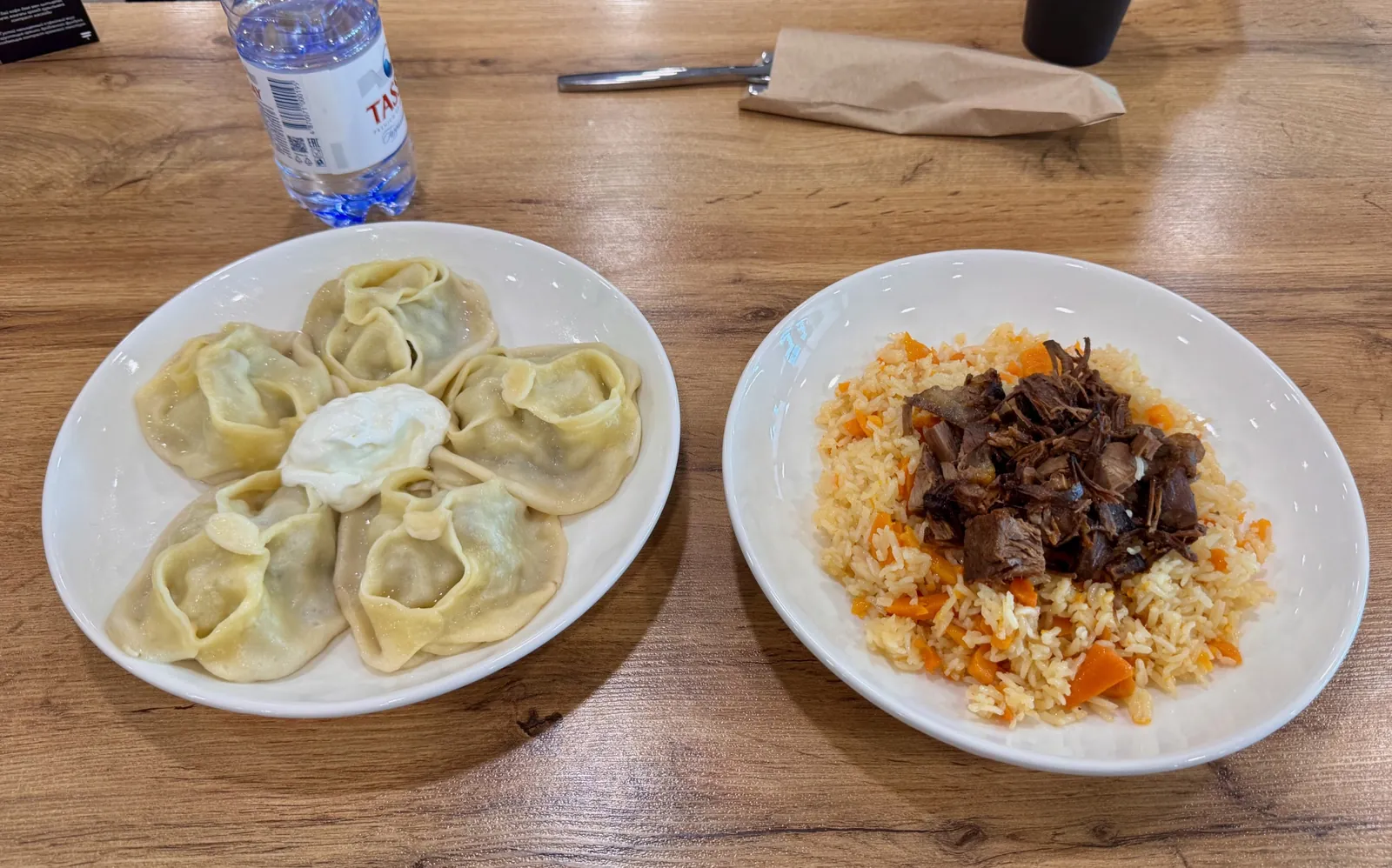
That was a welcome find; we slept like the dead on those chairs — surprisingly comfortable. After waking, we ate a plate of baozi with yogurt and beef jerky over rice at a restaurant that looked authentic. It wasn’t cheap, around US$28. Neither dish quite agreed with us: the beef jerky was astonishingly salty, saltier than anything I’d ever eaten; the baozi weren’t bad, but hardly delicious — lighter than the jerky, yet a touch greasy. At last, having survived the endless nine hours, we boarded the second flight.
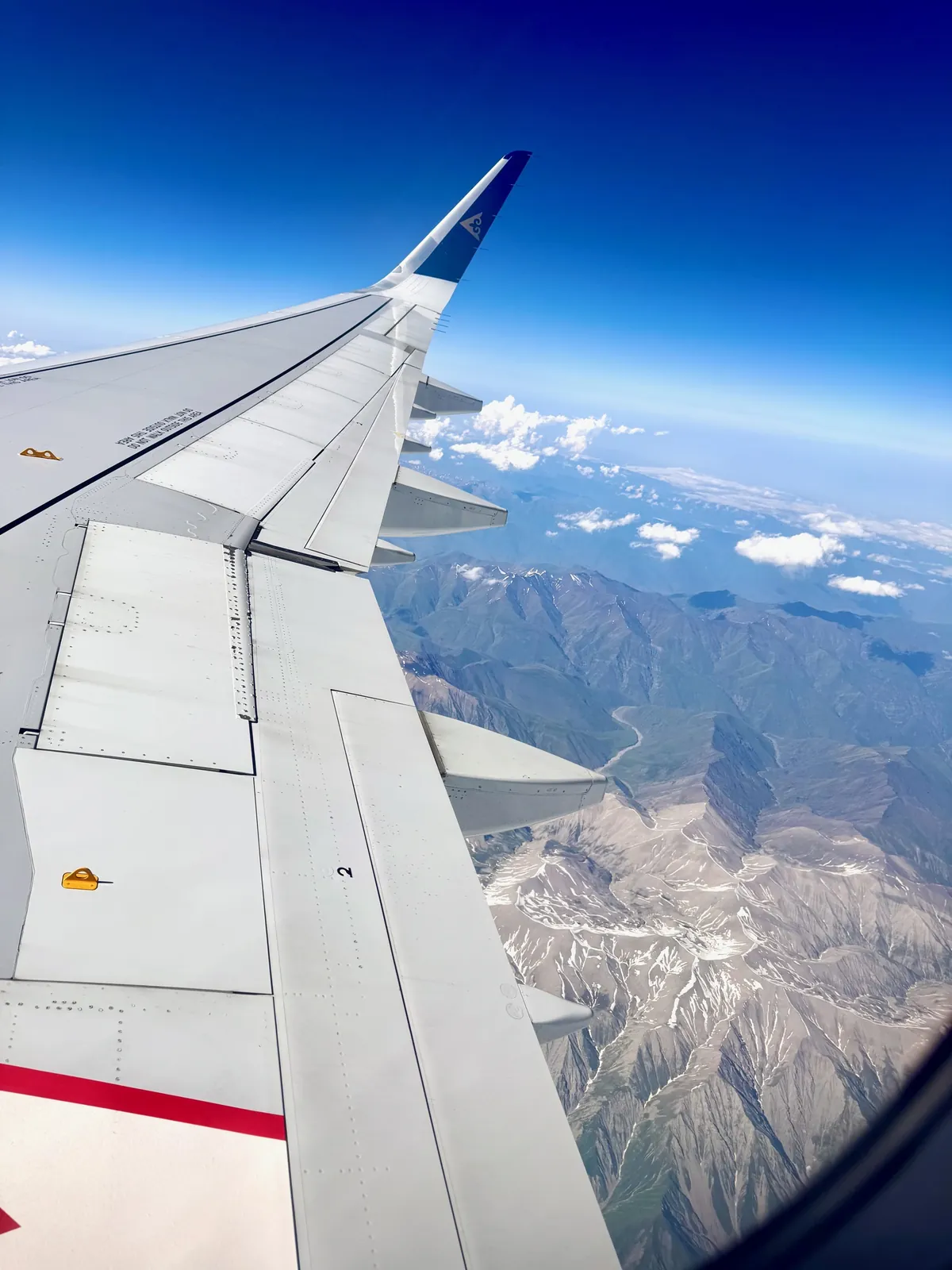
At 6 p.m. local time, we landed in Tbilisi. At the airport we bought a Magti data SIM and exchanged some local currency. I’d recommend this SIM to anyone — it keeps a steady signal even in the mountains.
In the car from the airport to the hotel, my first impression was that the place felt a little old and worn, much like the feeling I’d had landing in the Philippines, as if time had stopped; outside the window stood old Soviet-style buildings — honestly not quite the ancient capital and medieval houses I’d imagined. The temperature was very pleasant, and the light just past six had the quality of dusk. To our surprise, it didn’t truly get dark until around 8:30.
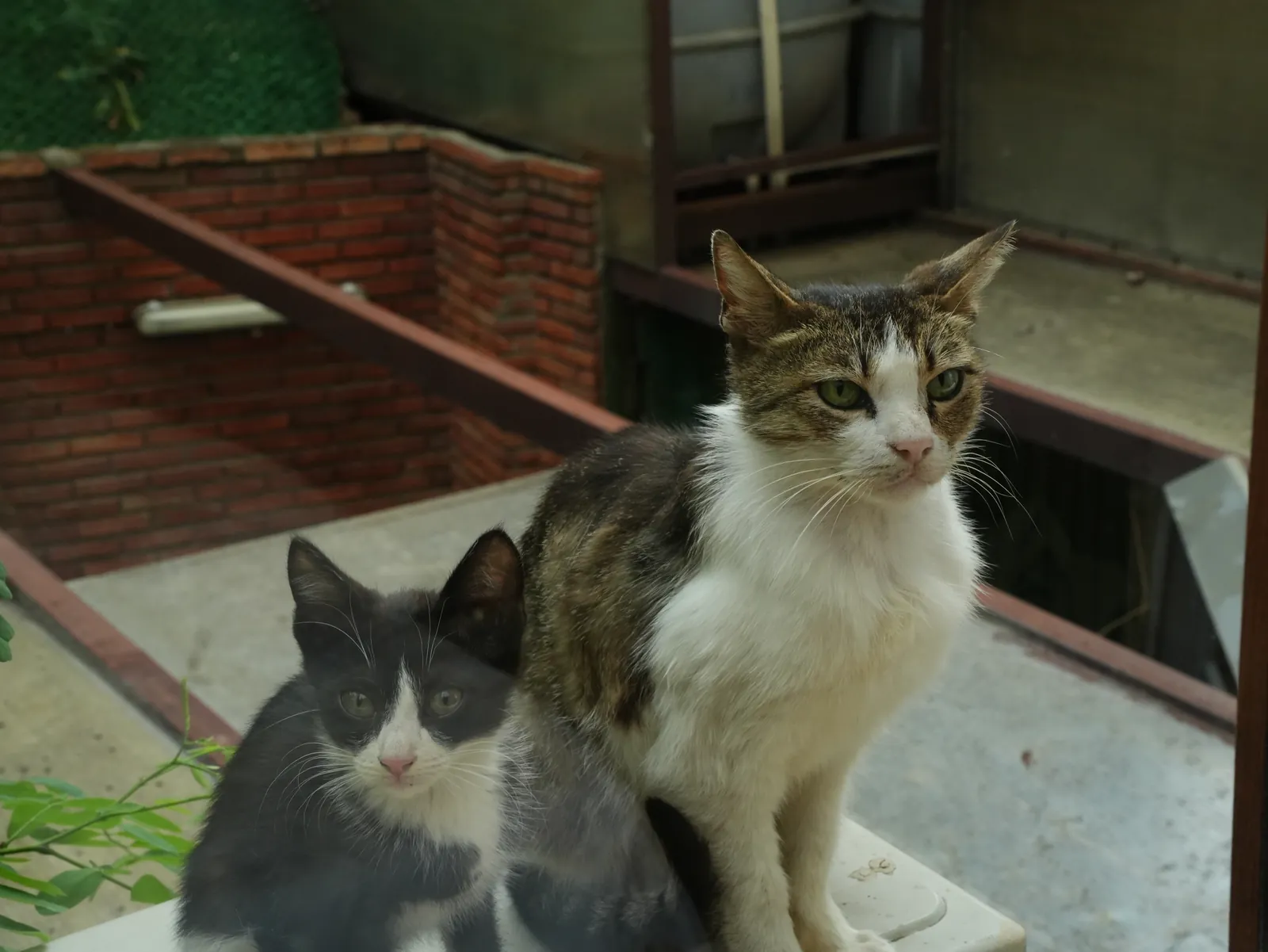
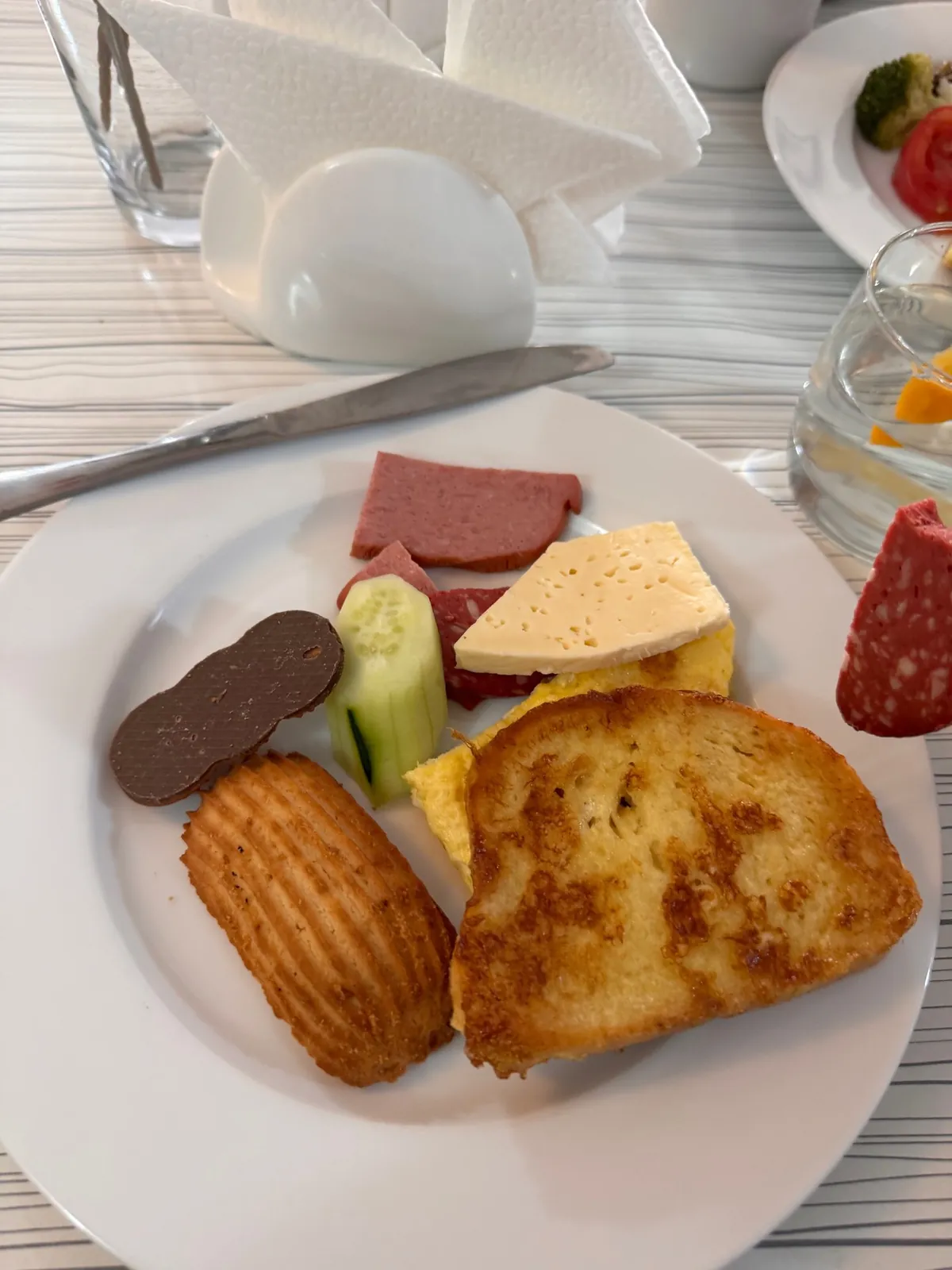
The LIVA Hotel we stayed at is right across from the Trinity Church — a five-story detached building that looked a bit like a Japanese single-family house. Unlike the street-view room we’d booked on Agoda, our window faced an inner courtyard. But that turned out to be a delight: the walled courtyard was home to a family of four cats — two big, two small, one like a dad, one like a mom. The room was a little cramped, and at about US$52 a night I first thought it wasn’t worth it; but I soon realized it was only a few dozen meters from the church gate, and the free breakfast was delicious. Again and again on this trip, simple food — sausage, eggs, bread — proved how reliable it is in Georgia.
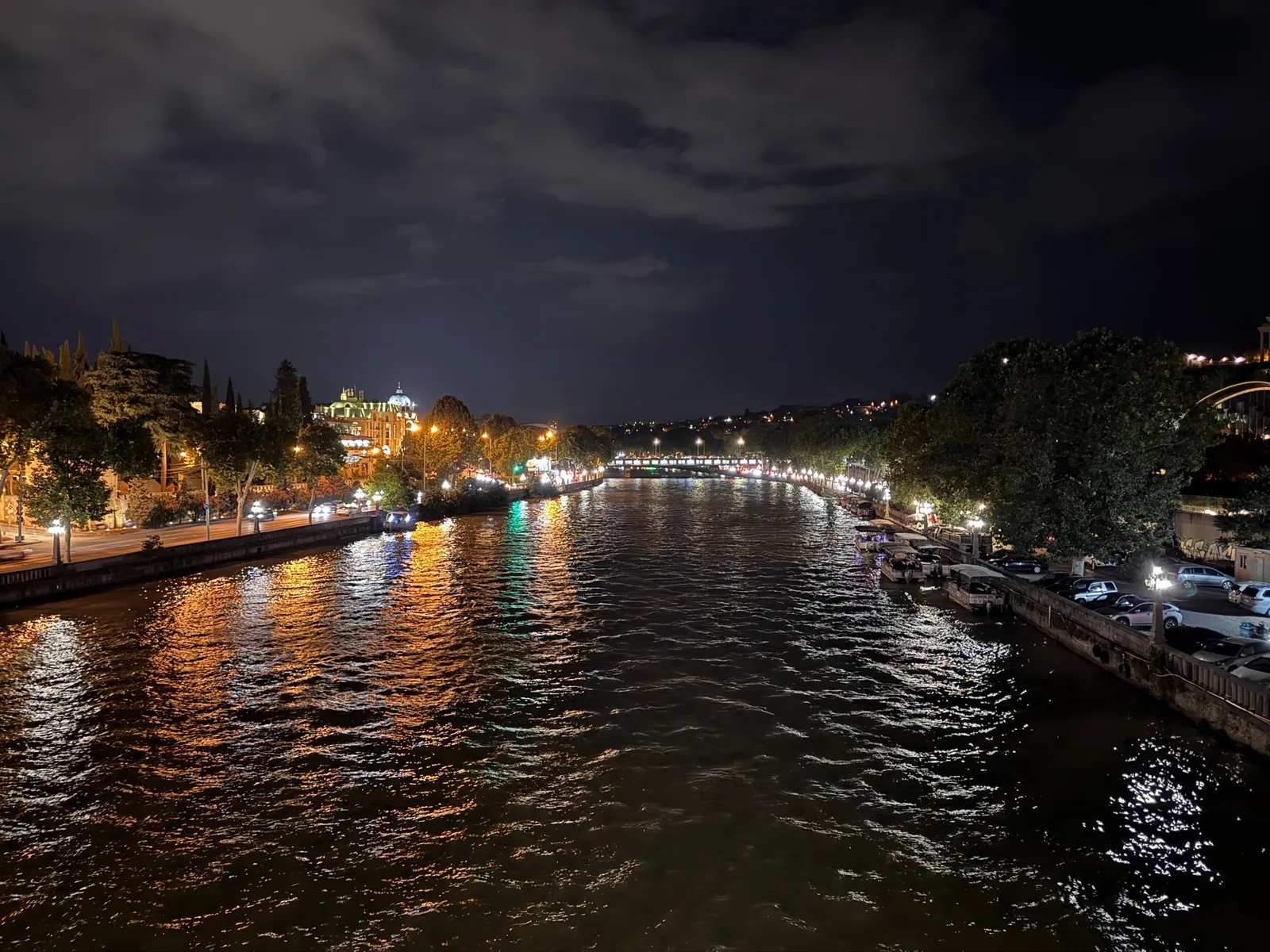
That night we walked across the Bridge of Peace and had dinner at a popular restaurant. Misting fans overhead kept the outdoor seats cool enough. Still, the meal really wasn’t to our taste. The Georgian dumplings, like the ones in Kazakhstan, tasted strongly gamey and salty; perhaps it’s simply how the locals like them and we just weren’t used to it. The chicken wings came coated in tomato sauce — a preparation we’d never seen, and one we couldn’t quite get used to. We filmed the whole thing on our Insta360, quietly reviewing the food, grateful the next table couldn’t understand Chinese; as for our expressions, a single glance said it all. The one thing that satisfied us was the Coke Zero — Coke is good everywhere in the world.
On our first day, we went first to the Trinity Church, also known as Sameba Cathedral , standing on Elia Hill on the left bank of the Kura River.
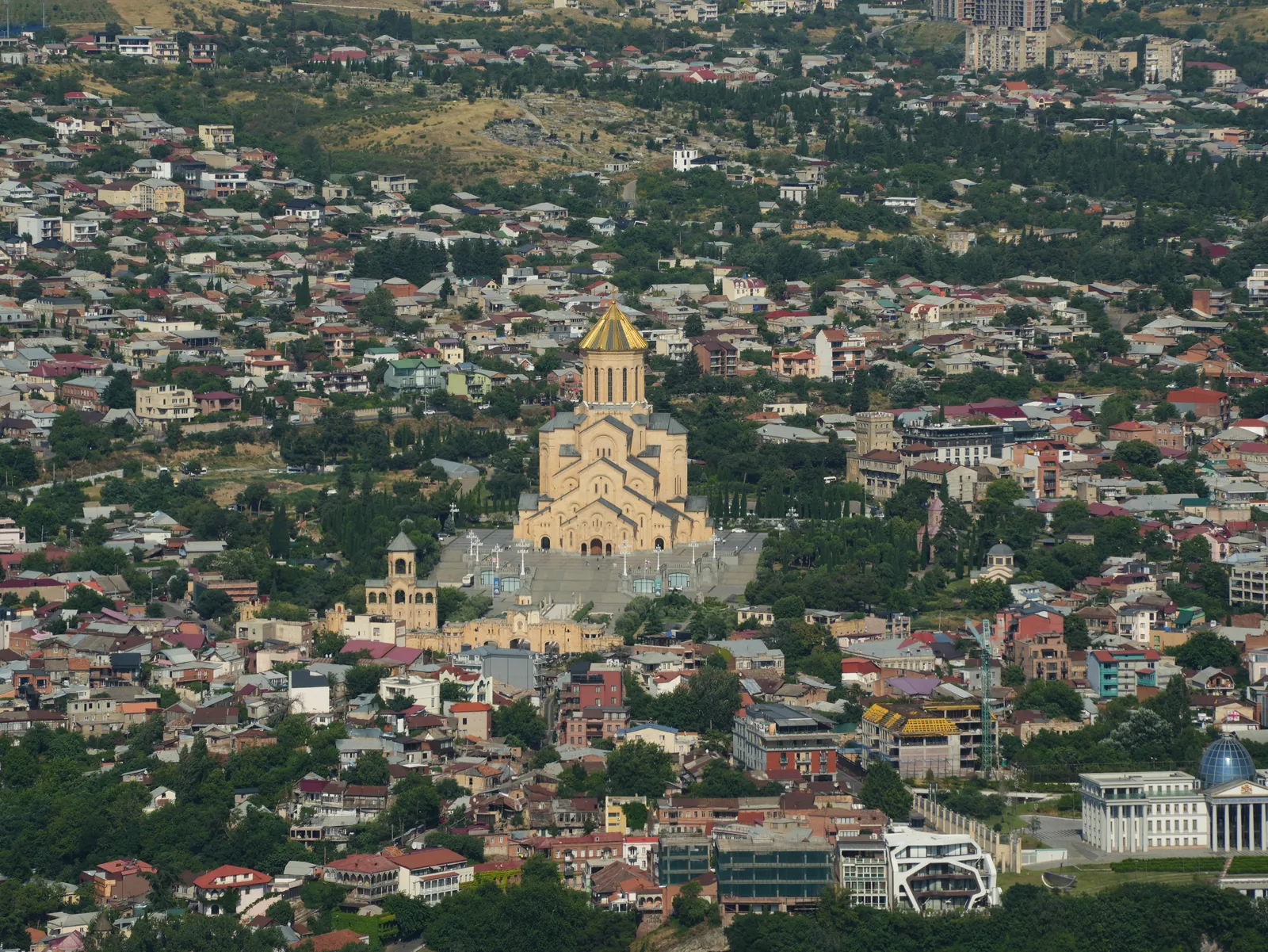
Sameba Cathedral is the mother church of Georgian Orthodoxy and one of the largest religious buildings in the Caucasus. The idea to build it emerged in 1989 — the very year national consciousness was awakening in Soviet Georgia — to mark 1,500 years of the Georgian Church’s autocephaly and 2,000 years since the birth of Christ. Years of upheaval delayed the work again and again; the foundation was finally laid in 1995 and construction completed in 2004, nearly a decade in all. The church stands over 100 meters tall to the tip of its cross, its dome sheathed in gold, funded almost entirely by public donations, and dazzling in the sun.
The wind was fierce that day. The grounds around the church are beautifully kept, with small trees and flowers arranged like a great estate; people of every country, color, and faith had gathered here to take photos. I have no religious faith, and my country has no tradition of widespread religious belief, yet when I stepped inside the church, the devout gestures of the worshippers and the soaring dome still filled me with awe.
It seems to me that those who carry a faith must know a certain fullness and calm within — a faith gives you something to lean on, and a place to belong; to dwell inside a belief so vast and so old must bring a quiet steadiness that others don’t come by so easily. At first I assumed the church was ancient, but learning its history made me realize how new it is, and how much political and national meaning it carries.
Coming out of the church, we headed to the Dry Bridge Market . It’s Tbilisi’s most famous open-air flea market, named for a bridge whose riverbed long ago shifted away and dried up. Stalls crowded together, laden with cameras, medals, swords, oil paintings, and silverware. Given that most of those decades-old cameras break easily, I figured that even if I bought one it probably wouldn’t work anymore; what really tempted me was a 20-lari medal from the Great Patriotic War. I paced back and forth in front of its stall, on the verge of buying it. But an AI told me it was very likely a later reproduction, and I found the same one on Taobao, so in the end I let it go — a modern replica, with little commemorative value.
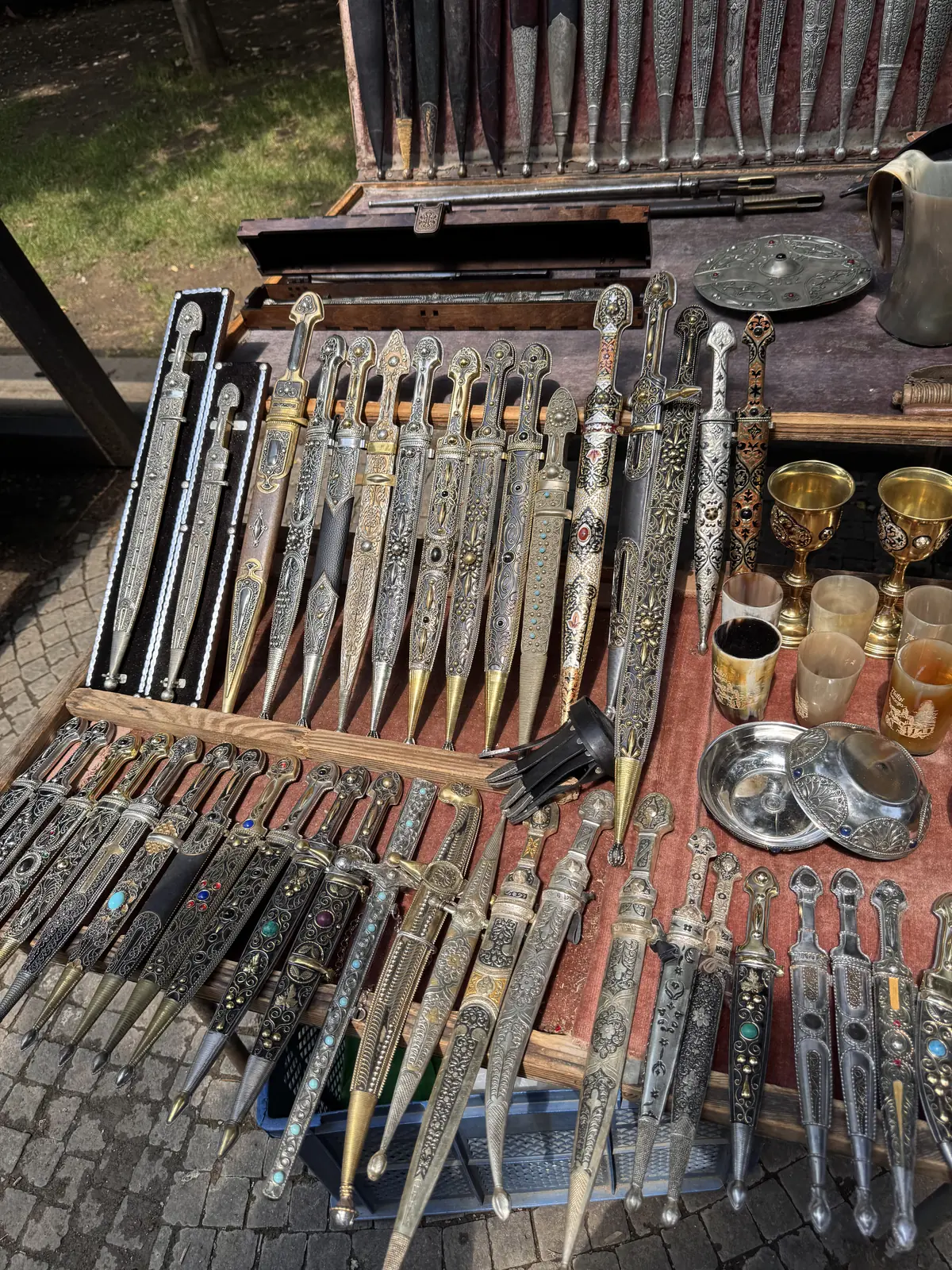
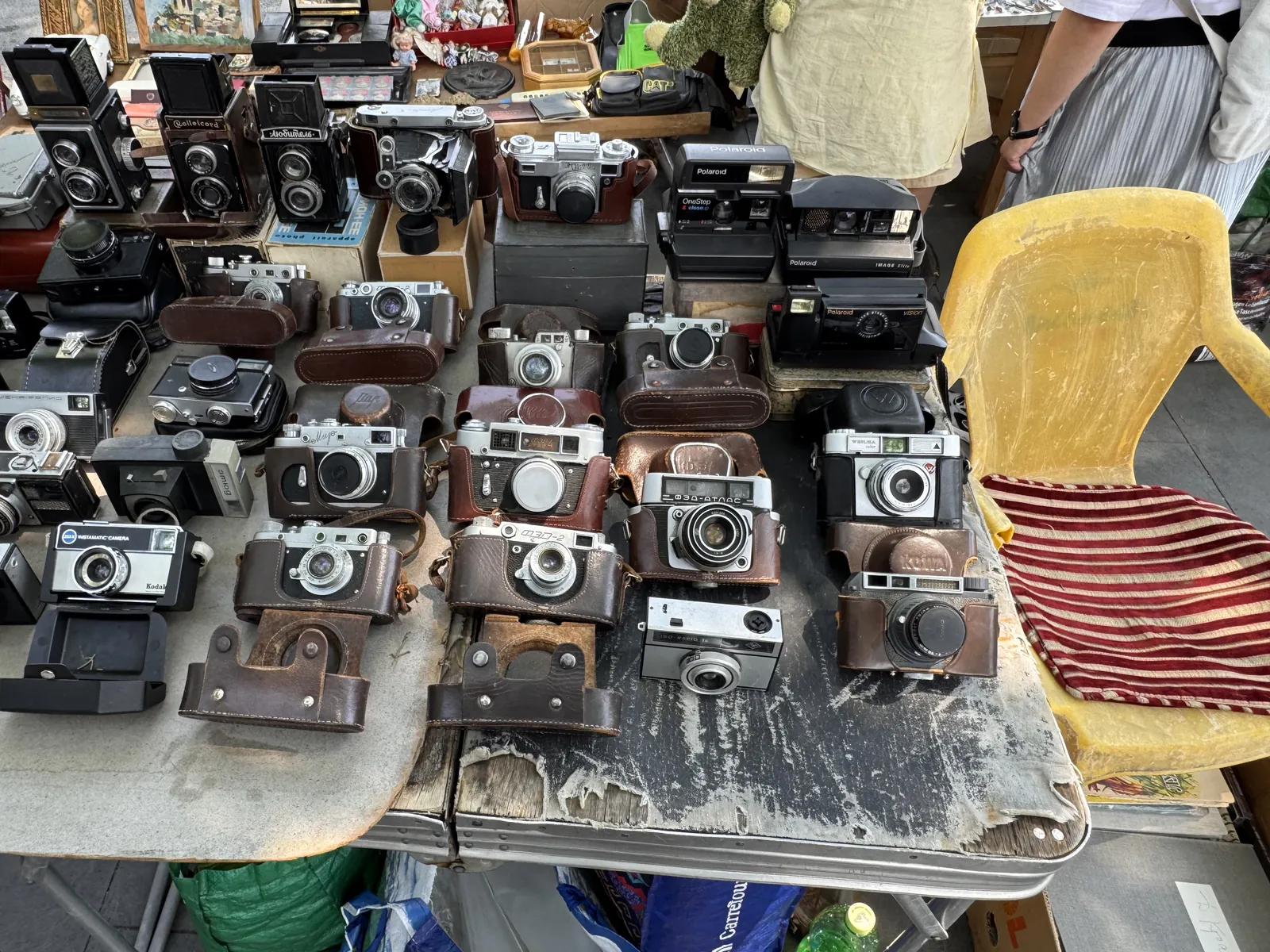
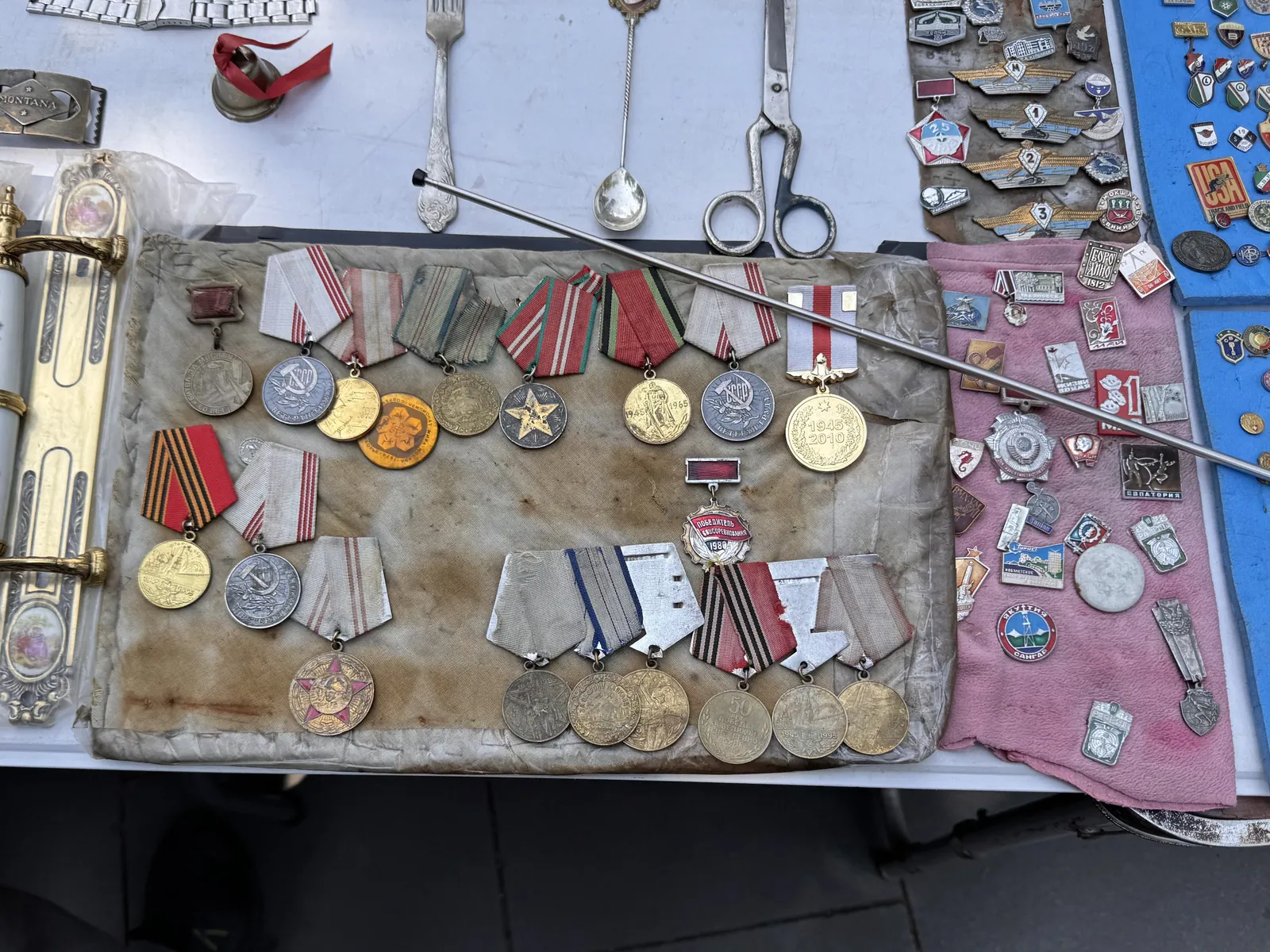
The Dry Bridge Market emerged in the early 1990s. After the collapse of the Soviet Union, Georgia’s economy briefly collapsed too, and many families brought whatever they had — valuable or not — here to sell, just to get by. And so a survival stall gradually grew into a permanent flea market, which is why it’s also called the “Market of Memories.” Today it’s managed by Tbilisi City Hall and has long been a well-known cultural landmark in the city.
We then cut through two parks and rode the funicular up to Mtatsminda Park . The park sits at over 700 meters, one of Tbilisi’s highest points and a weekend backyard for locals. The funicular itself was fun — you can look out over the whole city through the windows.
Mtatsminda means “Holy Mountain” in Georgian. This funicular opened in 1905, designed by the French engineer Blanche with the architectural work led by Tbilisi architect Szymkiewicz, built specifically to develop this hilltop plateau; the track runs about 500 meters at a gradient of nearly 30 degrees. Beside St. David’s Church on the mountainside lies the Pantheon — formally established as a cemetery in 1929, where many Georgian writers, artists, and national heroes are buried. The funicular was shut down in 2000 and did not reopen until 2012.
As it happened, we only wanted to try the funicular, so following Xiaohongshu’s directions we went to the ticket office — only to learn that what they sell is the amusement-park ticket, and the way to reach the park is via the funicular. In other words, the funicular is a freebie that comes with the park ticket.
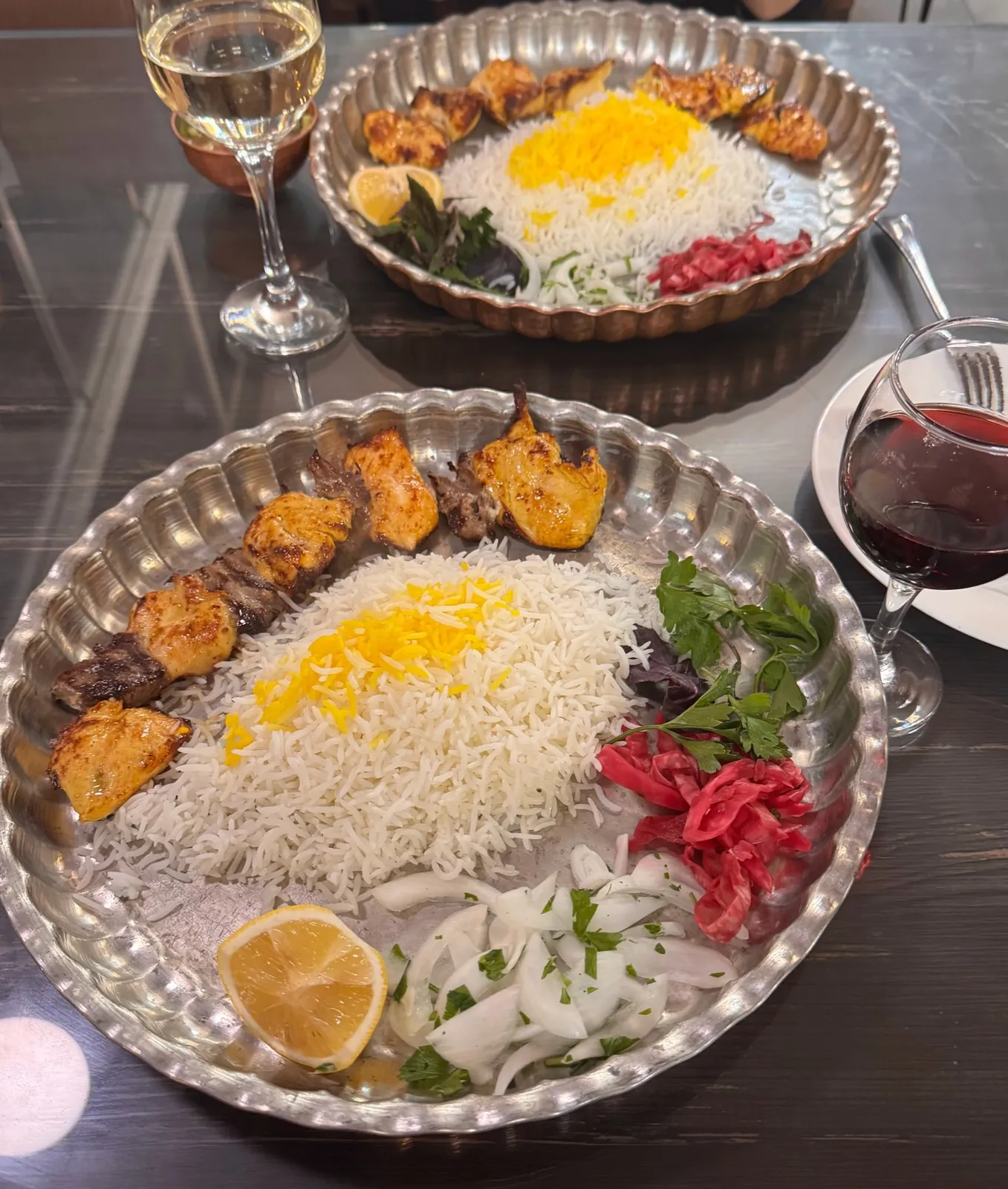
At the top, the most striking sight was still the golden dome of the Trinity Church; our hotel stood right across from it, just meters from the gate. The rides didn’t appeal to us — roller coasters, drop towers, and log flumes exist back home too — so we just ate a hot dog and looked out over Tbilisi from the summit. We’d meant to stay for the blue hour after sunset, but in the end hunger drove us back down early.
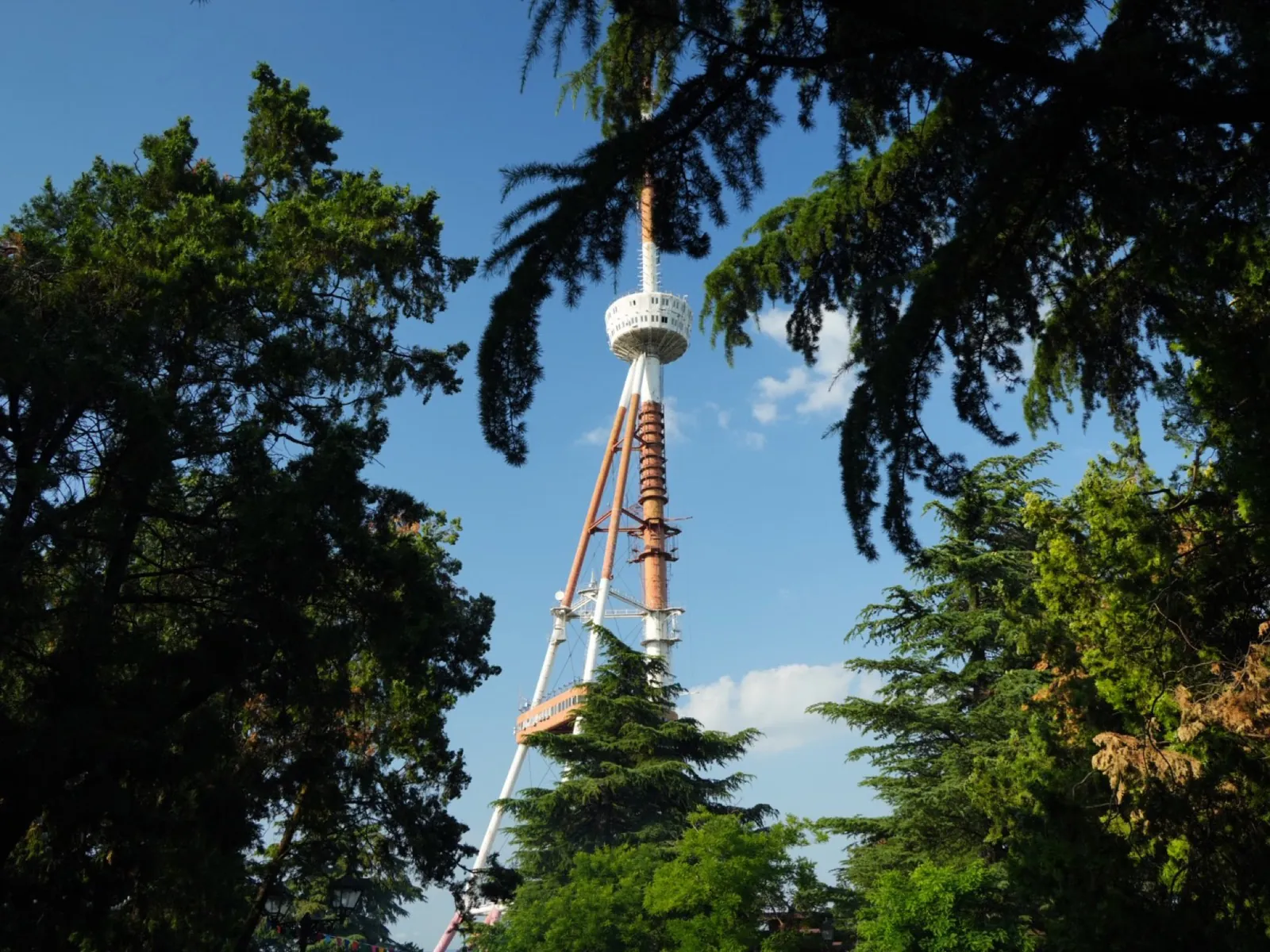
Back down, we followed Google Maps’ recommendations to two popular restaurants in a row — one closed, one requiring a reservation — striking out both times; after much wandering, it took Google’s third suggestion before we finally sat down to Persian food. It was the first time I’d seen long-grain rice — before this I’d only eaten northeastern Chinese rice. The long, slender grains were soft and suited a Chinese stomach well. The staff here were warm, with live piano to boot; three waiters came by in turn with smiles to ask how we liked the food, and we nodded along with grateful approval.
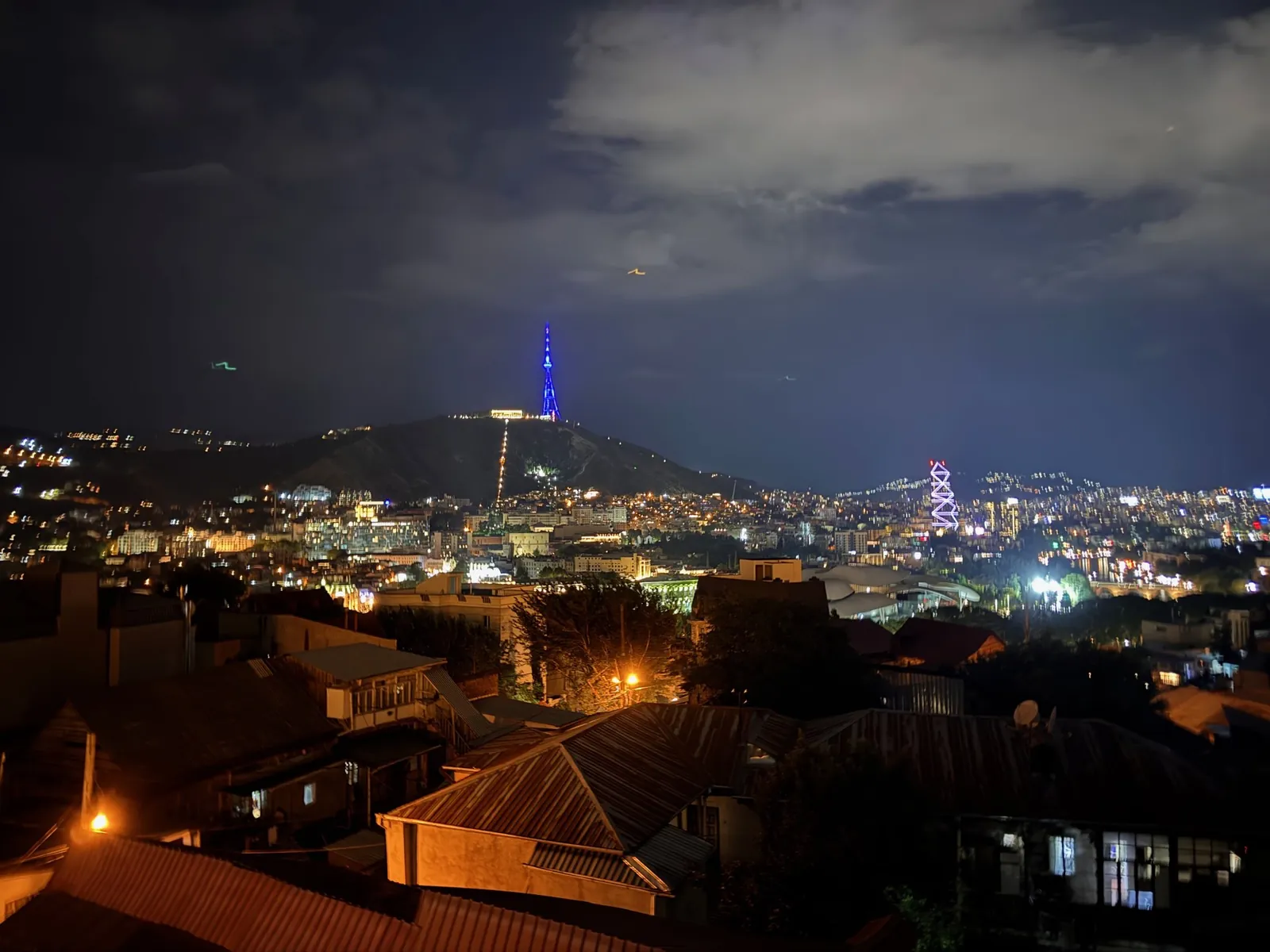
Here we formally tasted, for the first time, a semi-sweet white wine and a semi-sweet red, and over the wine we talked about the city and how each of us felt. Pleasantly tipsy, we walked back to the hotel, still not ready to call it a night, so we bought soda-flavored cocktails from the shop by the door and carried them up to the rooftop to keep drinking.
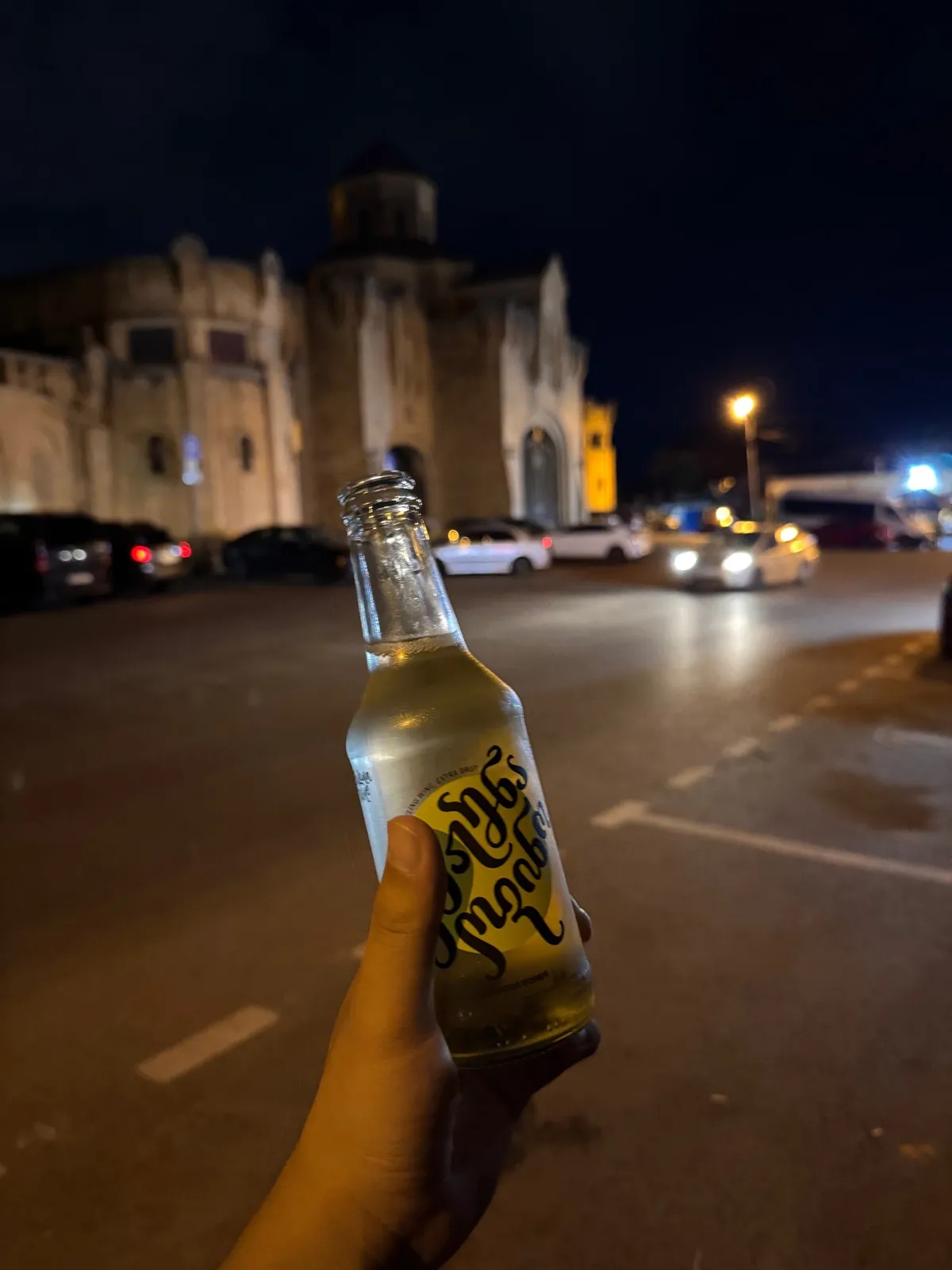
Gazing out over the Tbilisi night, in that moment there was nothing but wind and freedom.
Chapter 2 | The Road Leads to the Greater Caucasus
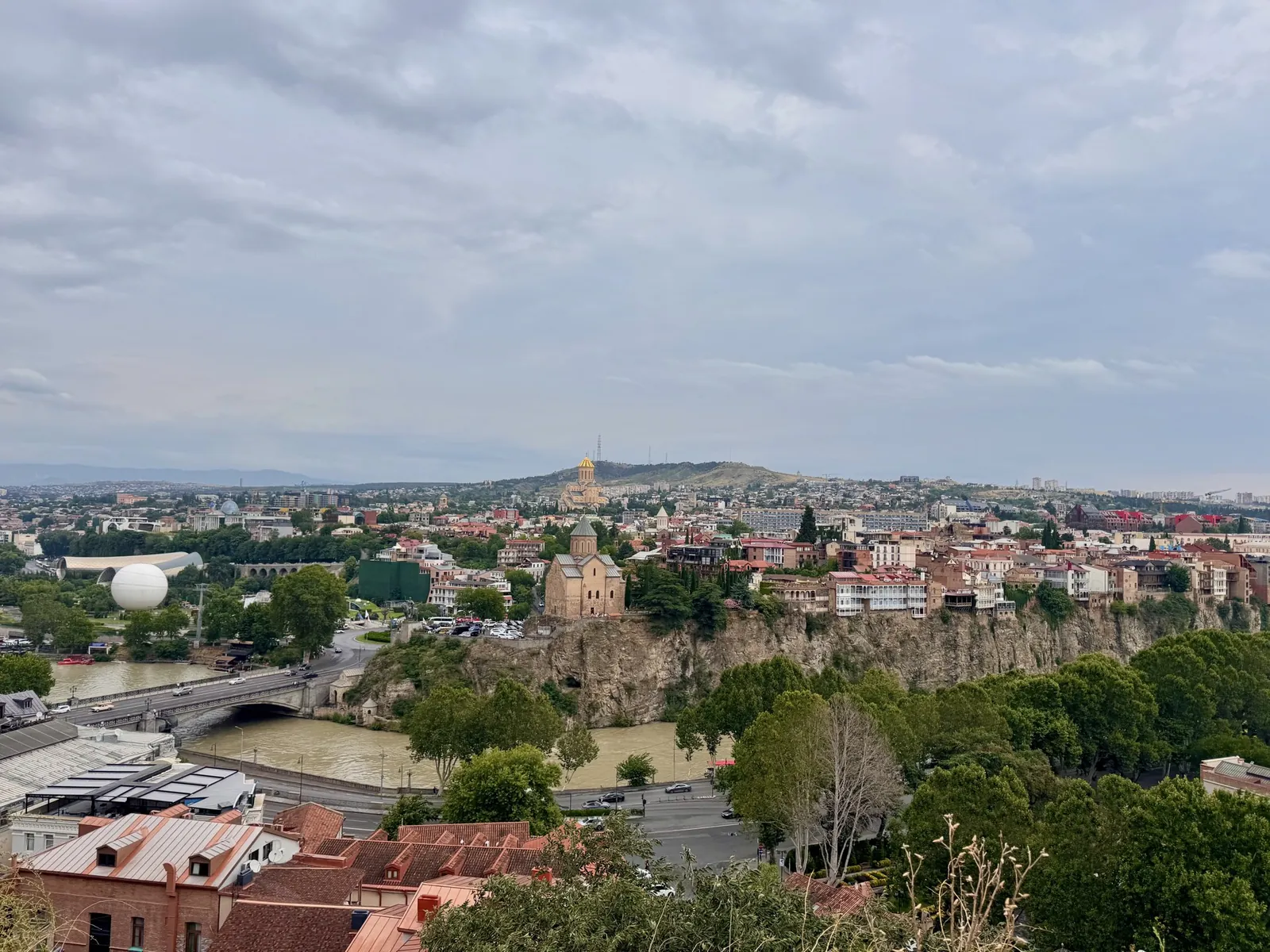
On the morning of the second day, before picking up the car, we first climbed up to Narikala Fortress — a genuinely grueling trek, not because it was steep, but because the roads here are narrow and often jammed, so we could only inch uphill through the gaps between cars.
Narikala Fortress dates back to the 4th century AD and is one of the oldest structures in Tbilisi, looking down for centuries over the old town and the Kura River, a witness to the city’s rise and fall.
Sadly the fortress was closed that day, and the church beside it turned us away because we were wearing shorts. Here we met many deeply devout people — at the church door, we watched a man step out and, before leaving, kiss the wall of the church and cross himself. A woman also kindly reminded us not to bare our teeth near the church, and we respected the local custom.
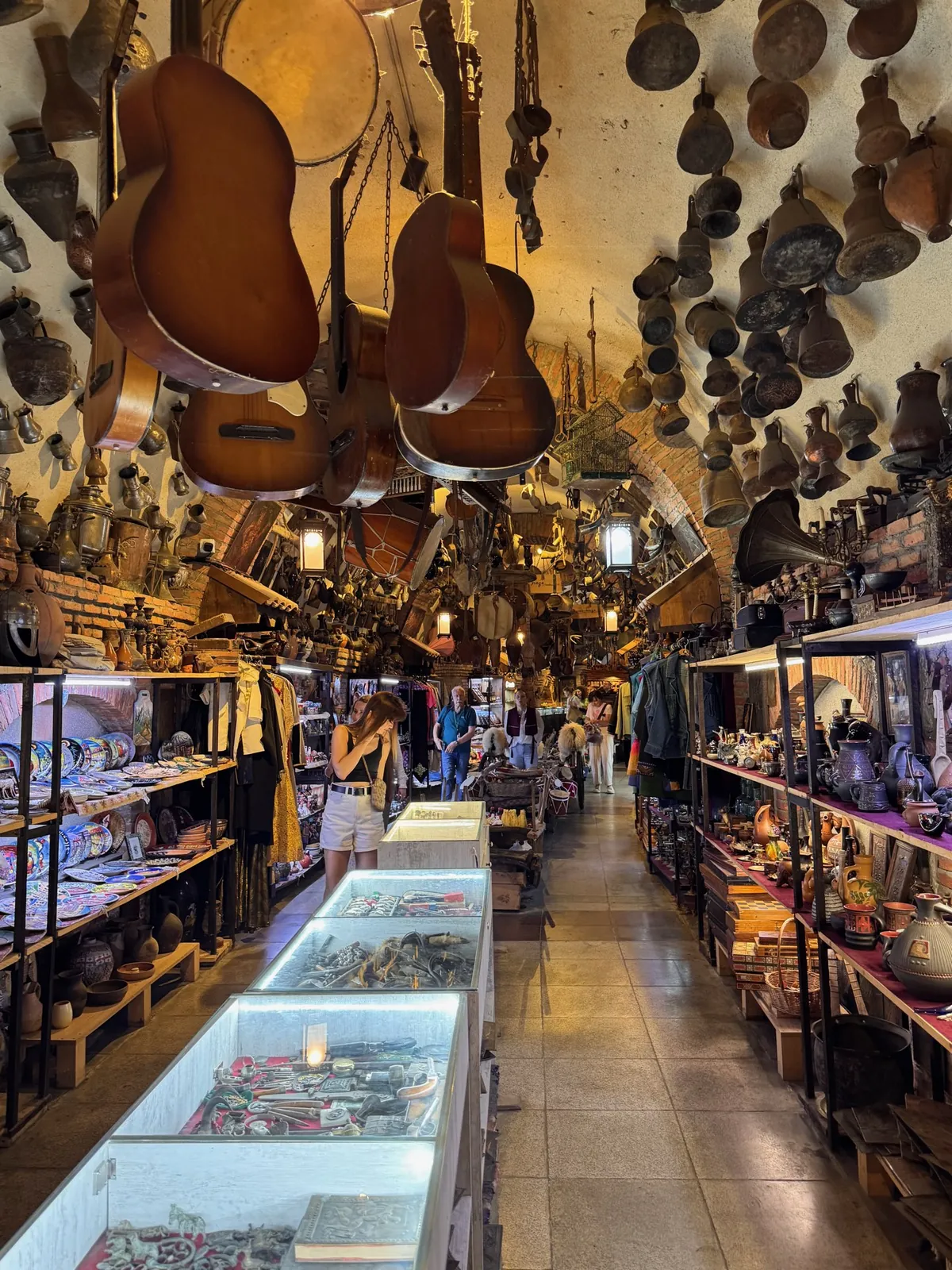
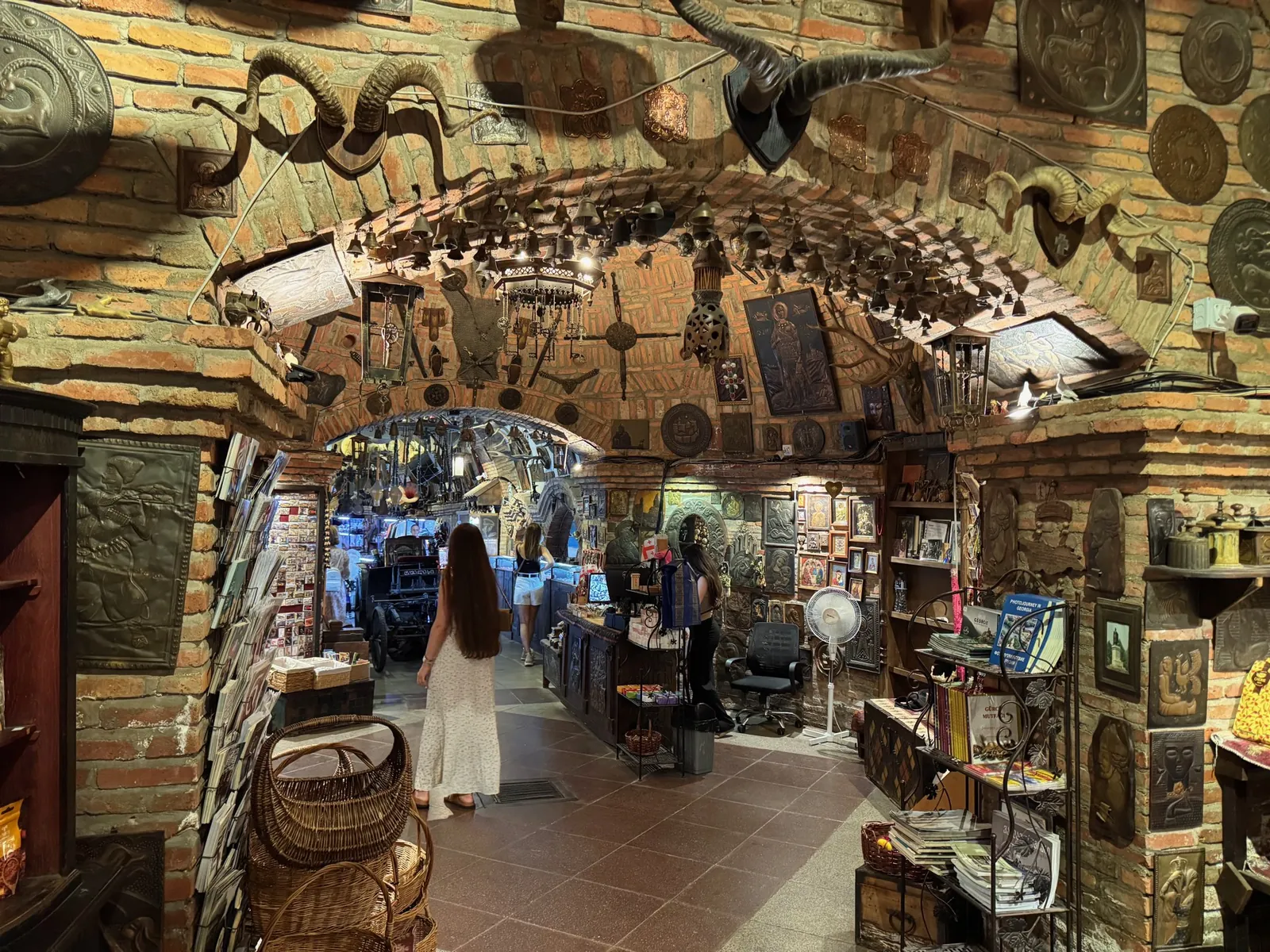
Afterward we headed down to Meidan Bazaar . Once a place where Silk Road caravans traded and rested, it’s now an underground bazaar selling souvenirs — great for photos, like the black-market scene from Harry Potter — though the goods themselves, I felt, don’t quite match the Dry Bridge Market. At a nearby café we ordered a juice and waited a full 50 minutes — only later did we realize the staff had completely forgotten what we’d ordered.
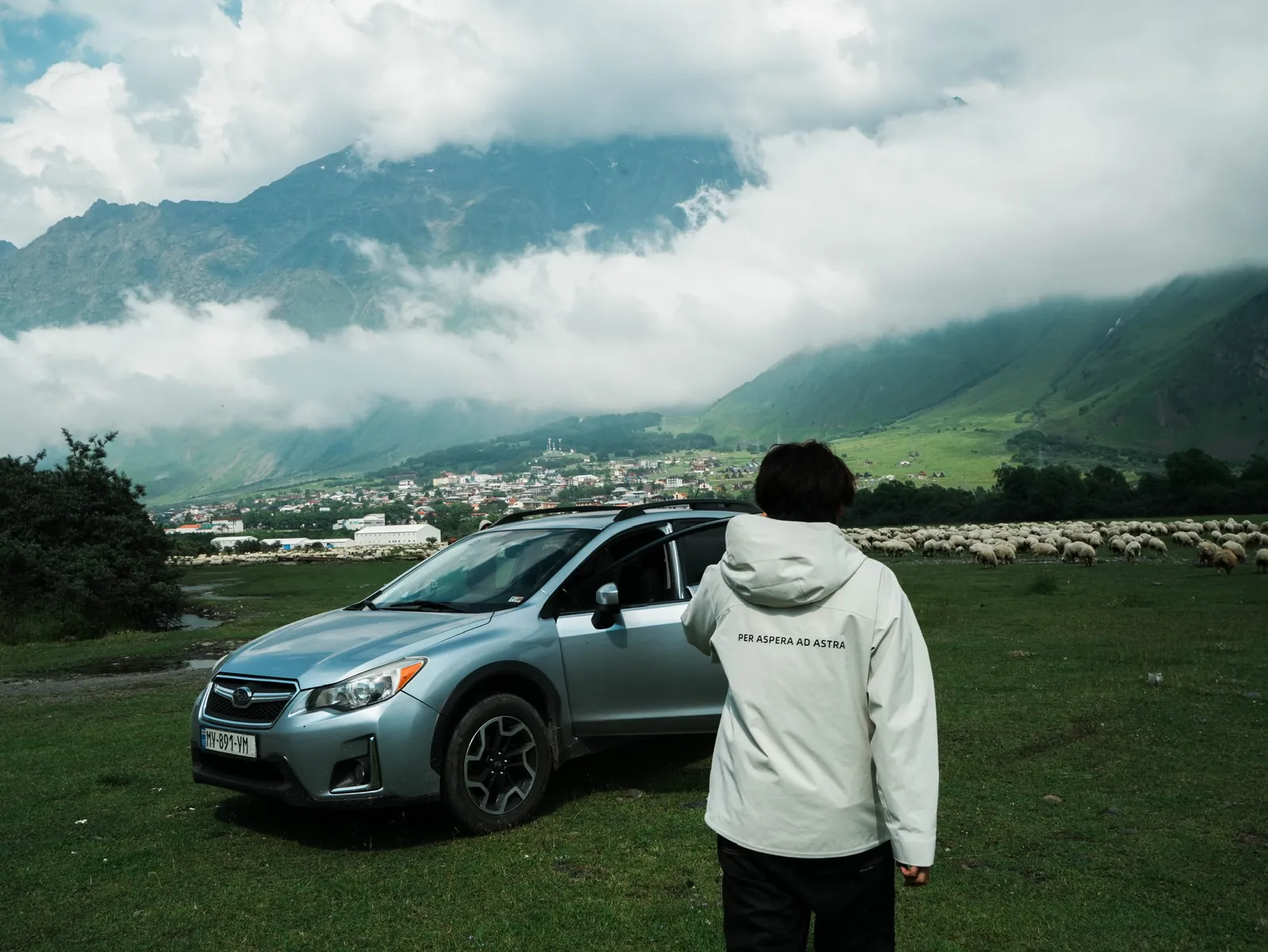
When it came time to collect the car, we saw the vehicle we’d booked outside the hotel — a four-wheel-drive Subaru Crosstrek — and our Georgian road trip officially began.
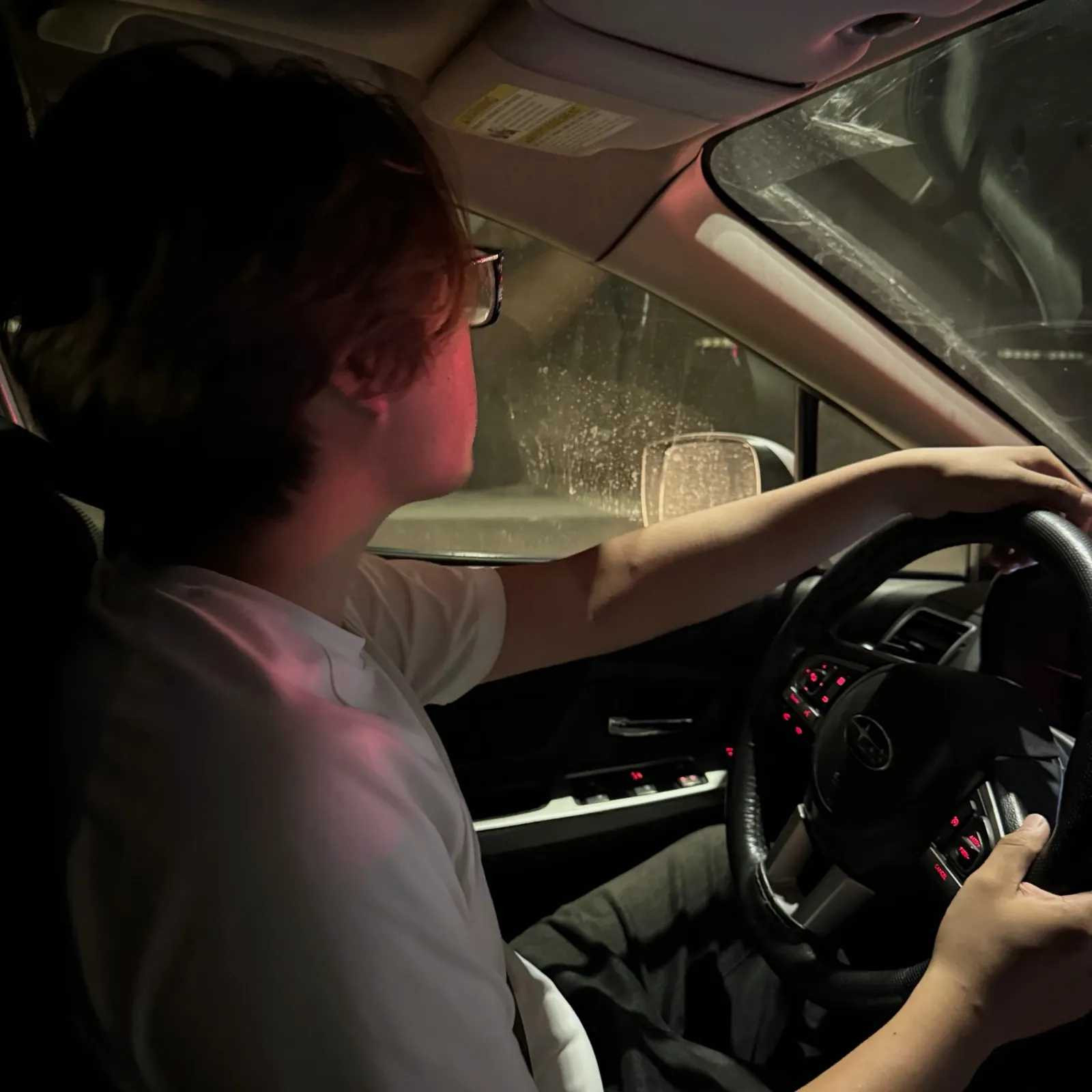
I’ve always loved driving, so I was thrilled the moment I got the car; it’s just that the streets of Tbilisi’s old town are so narrow that driving them is nerve-racking. Still, nervous as I was, I had confidence in my driving. The real torment was Tbilisi’s arterial roads — so many tunnels and forking ramps that one lapse sends you the wrong way.
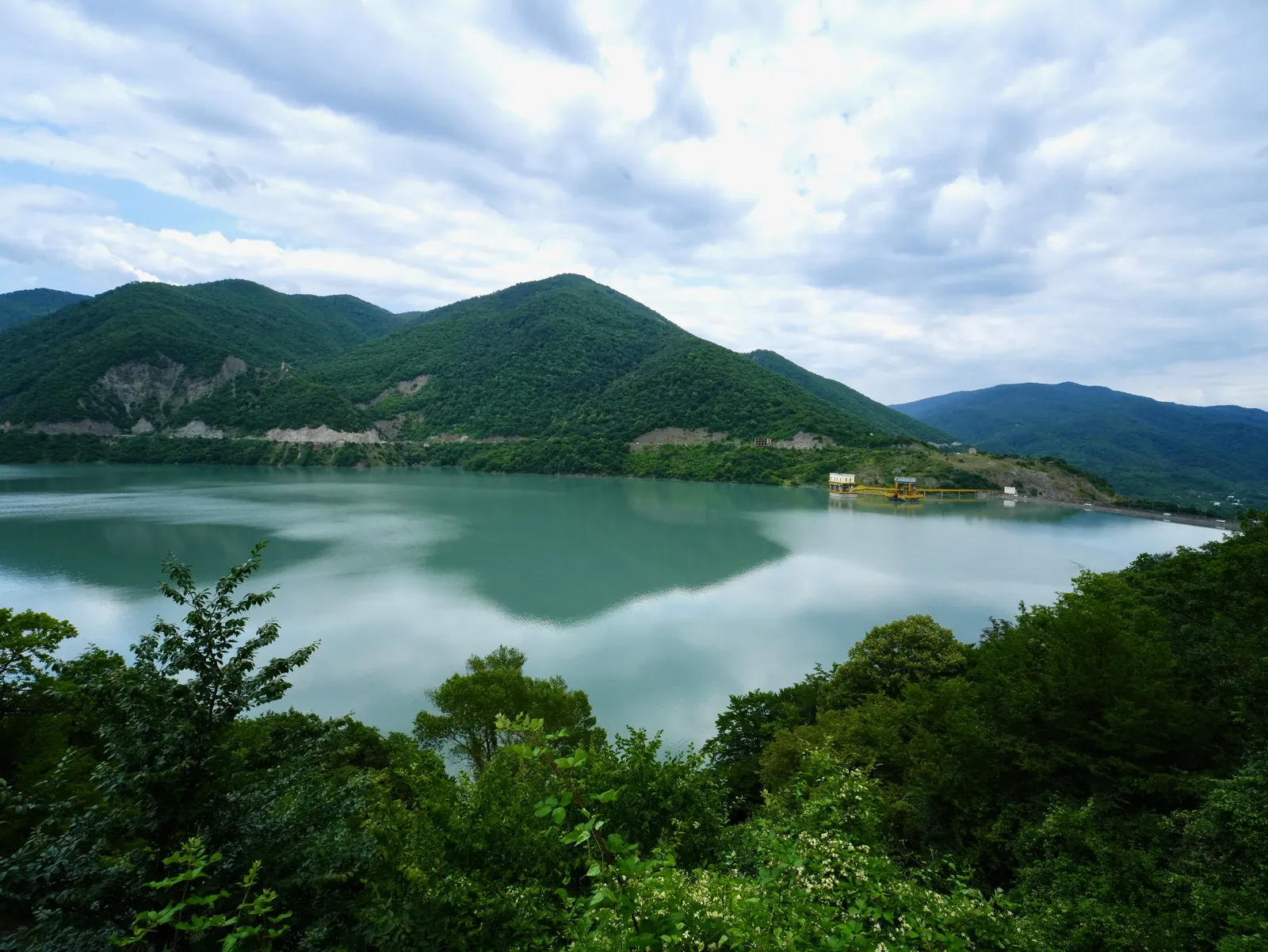
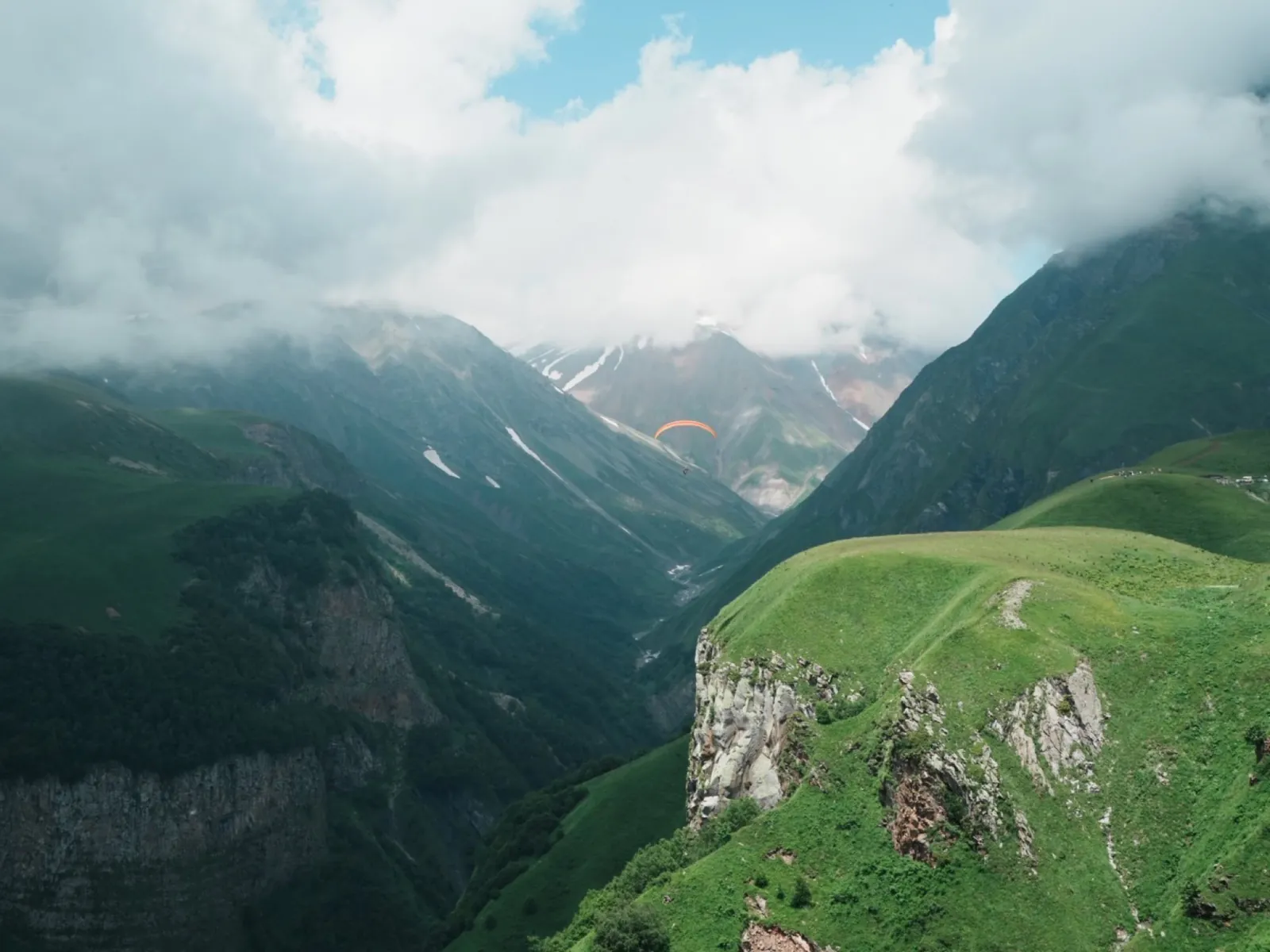
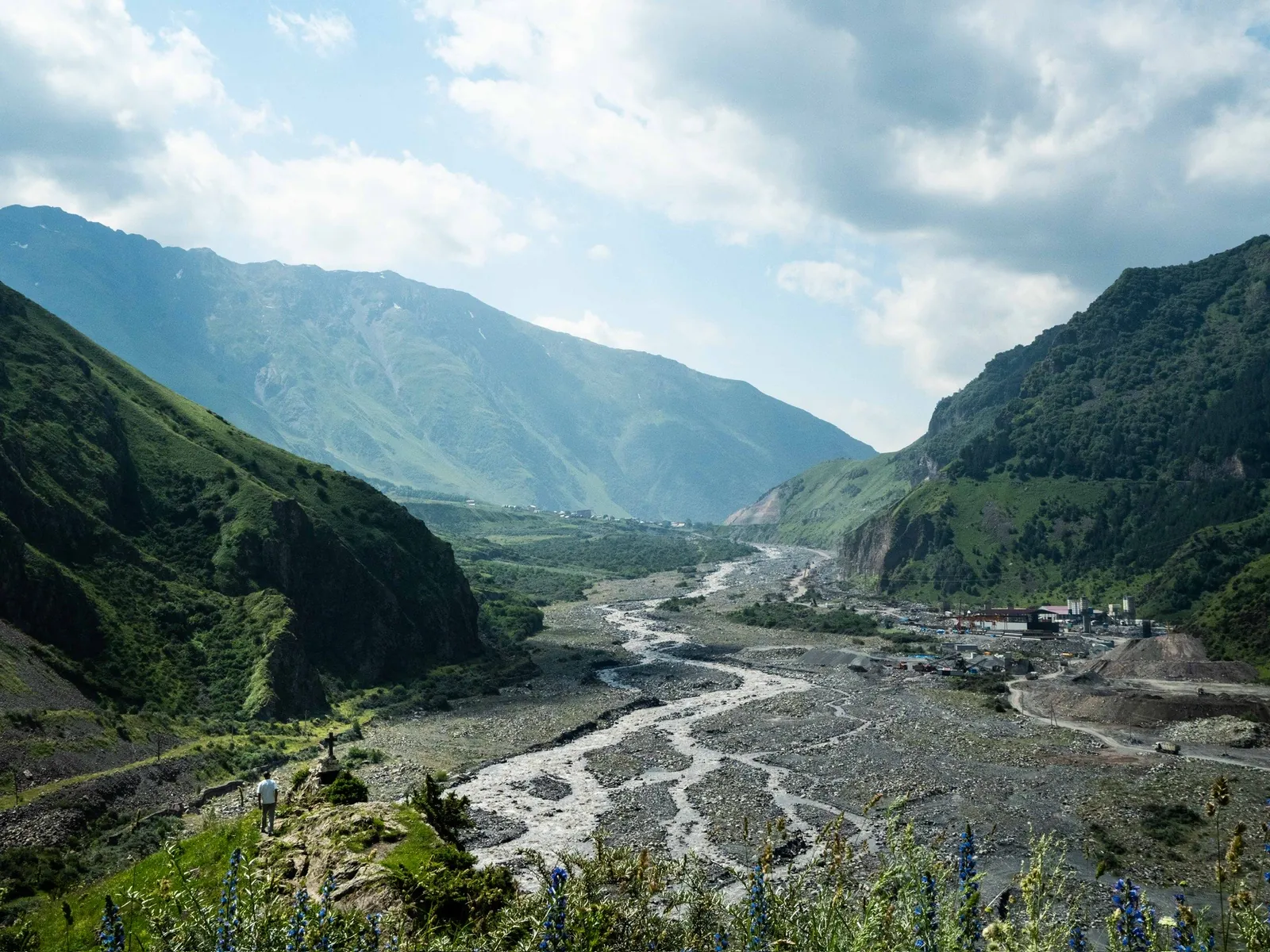
Heading north from Tbilisi, the first sight along the Military Highway is Zhinvali Reservoir . Built in the 1980s by damming the Aragvi River, it supplies water for a hydroelectric station and is also an important drinking-water source for Tbilisi. Its blue-green surface, cradled by high mountains, is quite stunning. Farther north, the road burrows almost entirely along the river valley into the Greater Caucasus, flanked on both sides by towering peaks.
Continuing north past the reservoir, you come to Ananuri Fortress — a place I’d urge every traveler to stop and see: the scenery is superb, and the parking is cheap. The fortress is wonderfully old, with a church tucked inside; a side path leads all the way down to the riverbank, where there are plenty of activities by the water — though we never made the descent ourselves.
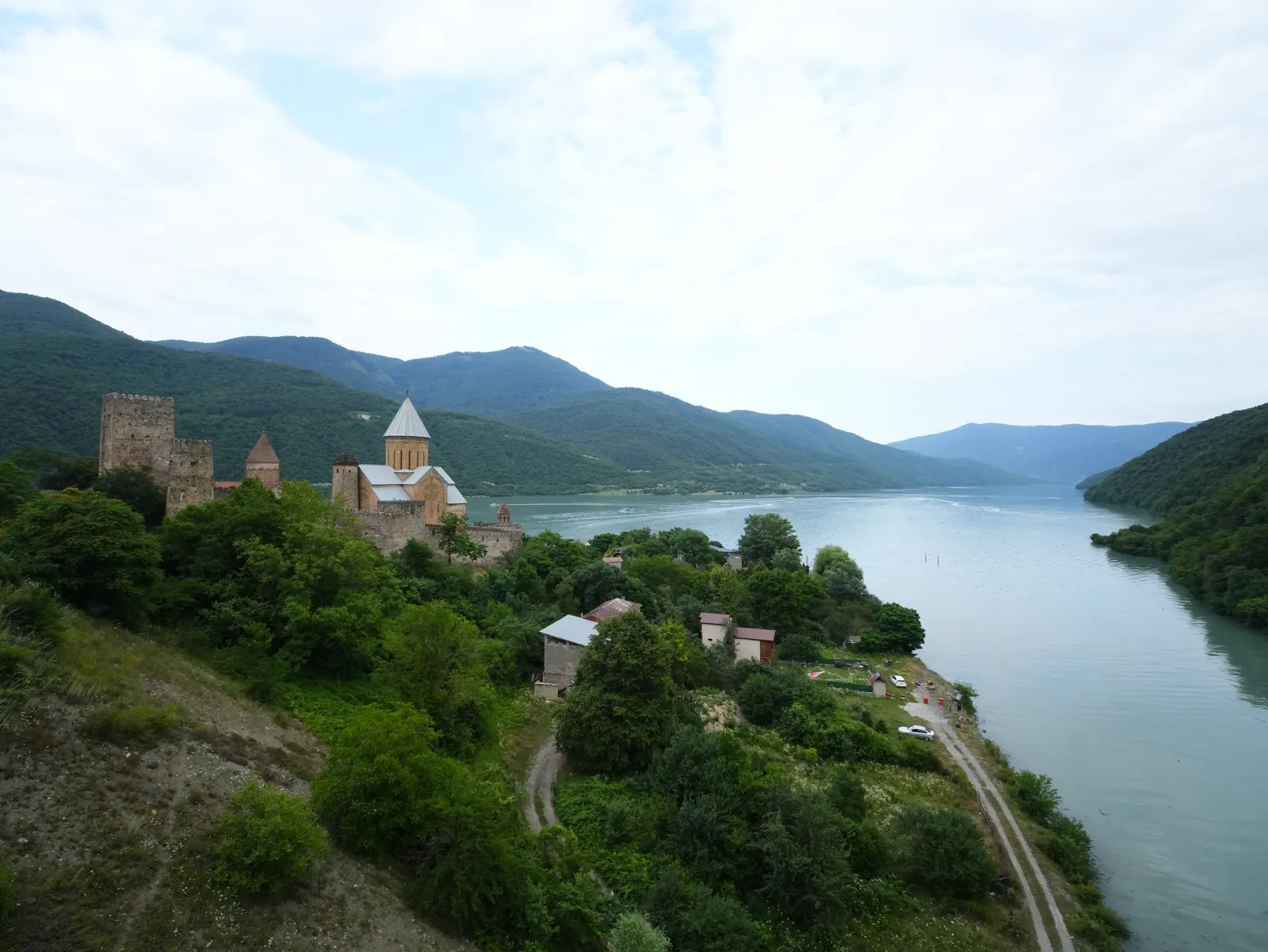
Ananuri Fortress stands on the Aragvi River about seventy kilometers from Tbilisi. From the 13th century it was the seat of the dukes (eristavi) of Aragvi, and over the centuries it saw countless battles. Most of the surviving walls and towers date to the 16th–17th centuries. In 1739 a rival duke, Shanshe of Ksani, stormed and burned the fortress, and the Aragvi family was all but massacred; four years later the local people rose up, drove out the usurpers, and invited King Teimuraz II to rule. The Church of the Assumption within the walls, built in 1689, is covered in exquisite stone carvings and cross reliefs — a masterpiece of medieval Georgian church decoration. When the Zhinvali Reservoir filled in the 1980s, the fortress that once stood above the river valley came to overlook a broad expanse of blue water; in 2007 Ananuri was added to UNESCO’s World Heritage tentative list.
As for the fortress itself, it is weathered and unmistakably military, full of details designed for medieval warfare: the walls are pierced with loopholes that are “wide inside, narrow outside” — the broad inner opening lets defenders draw their bows with ease and adjust their angle freely, while enemy arrows can hardly find the narrow outer slit; other vertical shafts open straight downward, which I suspect were for dropping stones on enemies at the foot of the wall — though another theory holds they were ancient latrines. A popular-science book I read as a child described how medieval toilets worked rather like “dumping from a height,” with waste simply falling from the overhanging wall; that’s hard to verify today, so take it as an amusing aside.
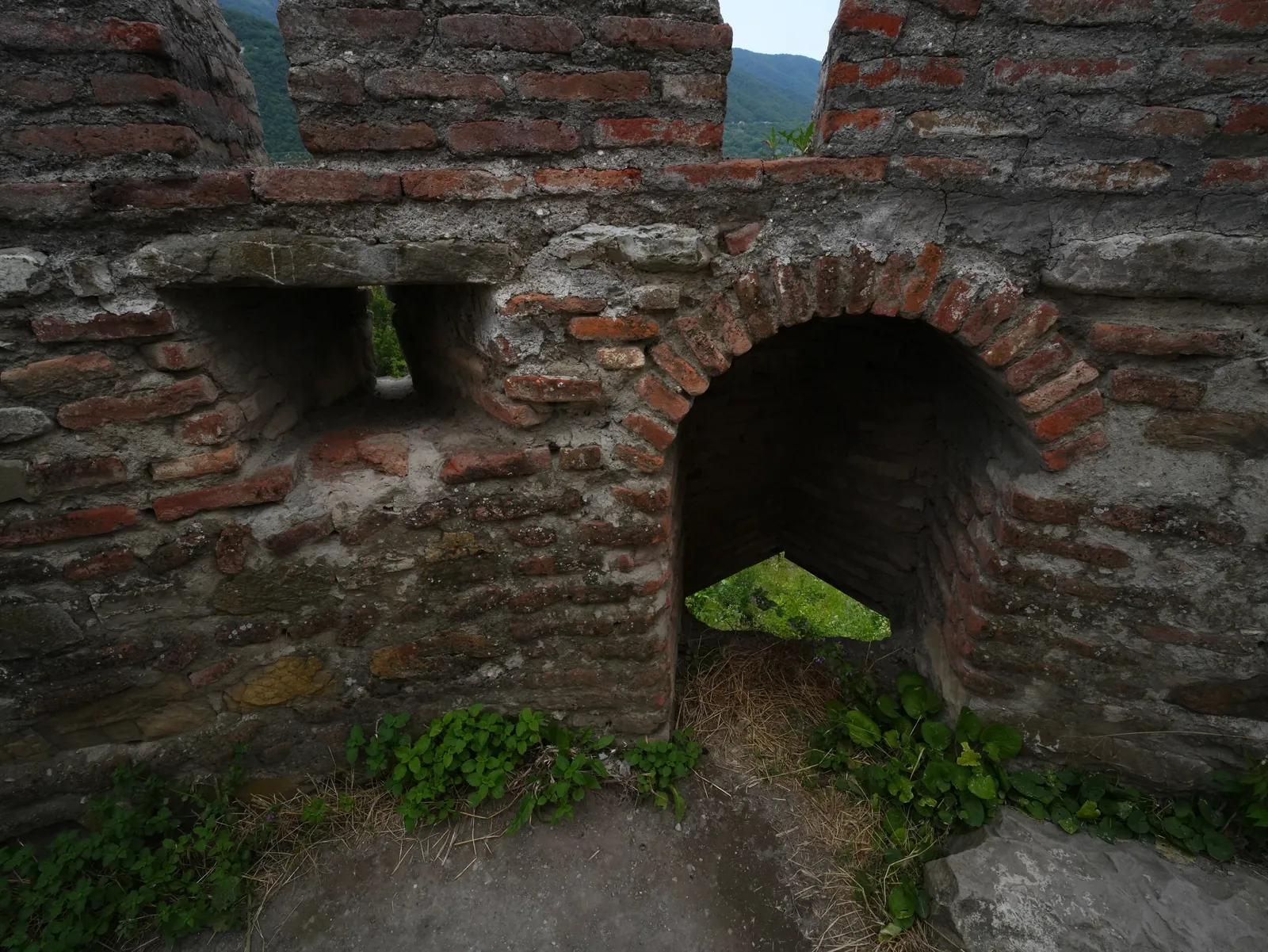
All in all, the fortress is full of details worth savoring, steeped in a medieval atmosphere — well worth a dedicated visit for anyone who loves history or old architecture.
Speaking of this Military Highway, it’s worth a word about China. The Gudauri–Kobi section we passed is often closed by avalanches in winter; Georgia is building a roughly nine-kilometer Kvesheti–Kobi tunnel here to bypass the dangerous stretch, and the winning contractors are two Chinese firms — China Railway Tunnel Group, building the roughly 9 km tunnel, and China Railway 23rd Bureau, building the access road — with the project funded by the Asian Development Bank and others. In recent years, quite a few of Georgia’s roads and tunnels have involved Chinese companies. China–Georgia relations have also grown closer of late: in 2017 the two signed a free trade agreement, making Georgia the first country in the region to sign an FTA with China; Georgia then joined the Belt and Road Initiative, the two established a strategic partnership in 2023, and mutual visa-free travel and direct flights began in 2024; the Anaklia deep-sea port on the Black Sea was also awarded to a Chinese-led consortium. For Chinese travelers today, visa-free entry and direct flights make a trip like this much more convenient.
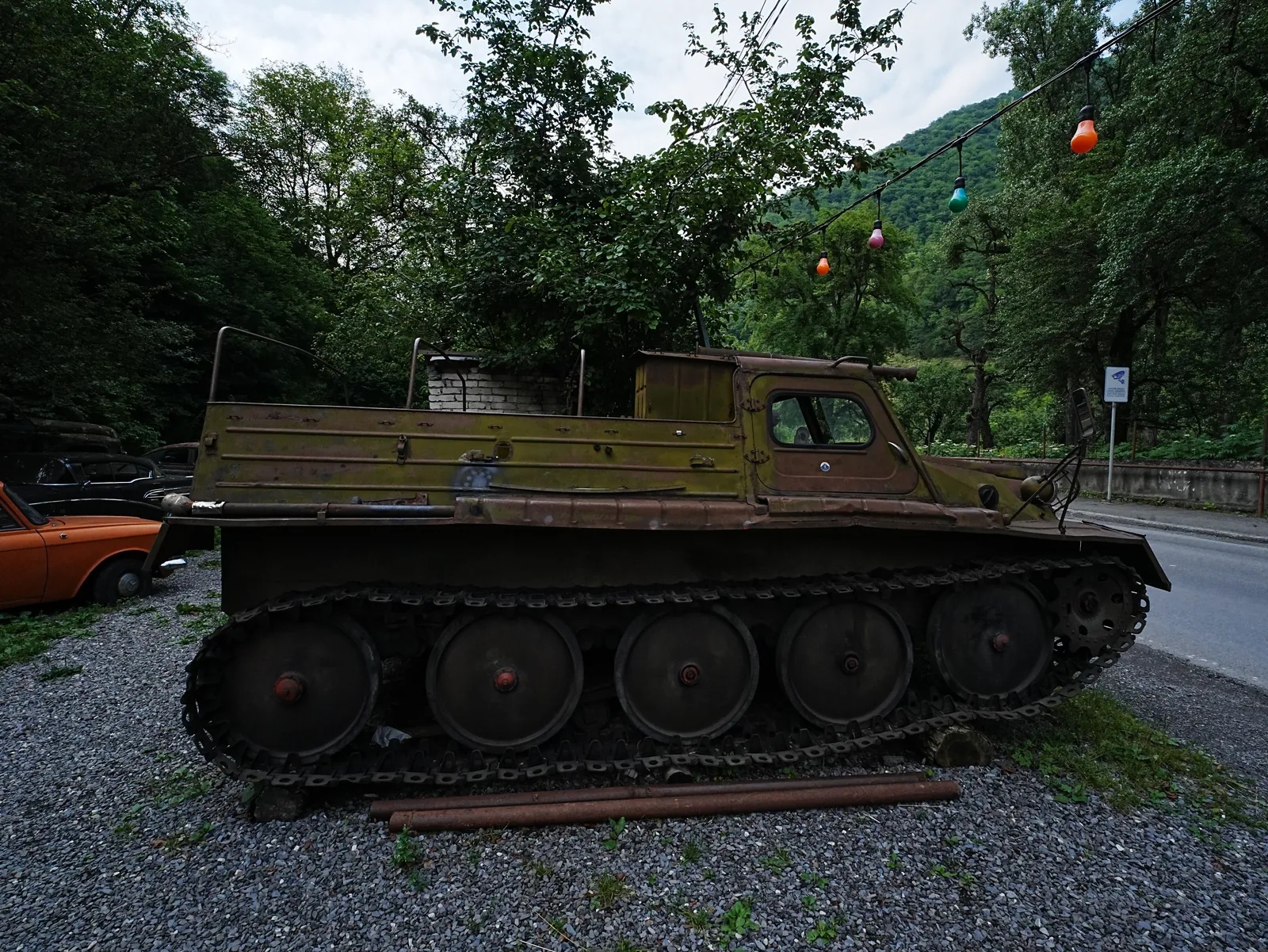
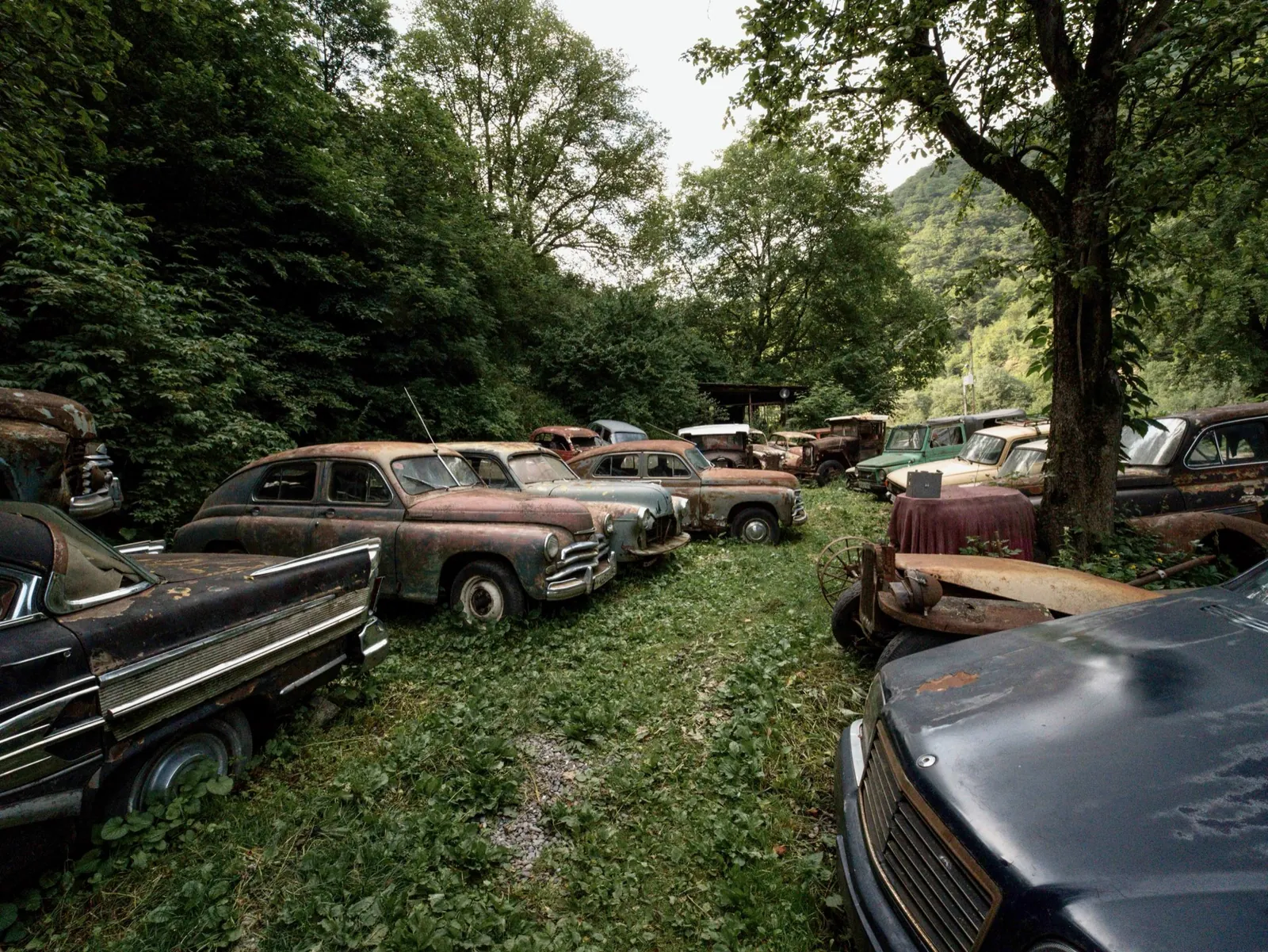
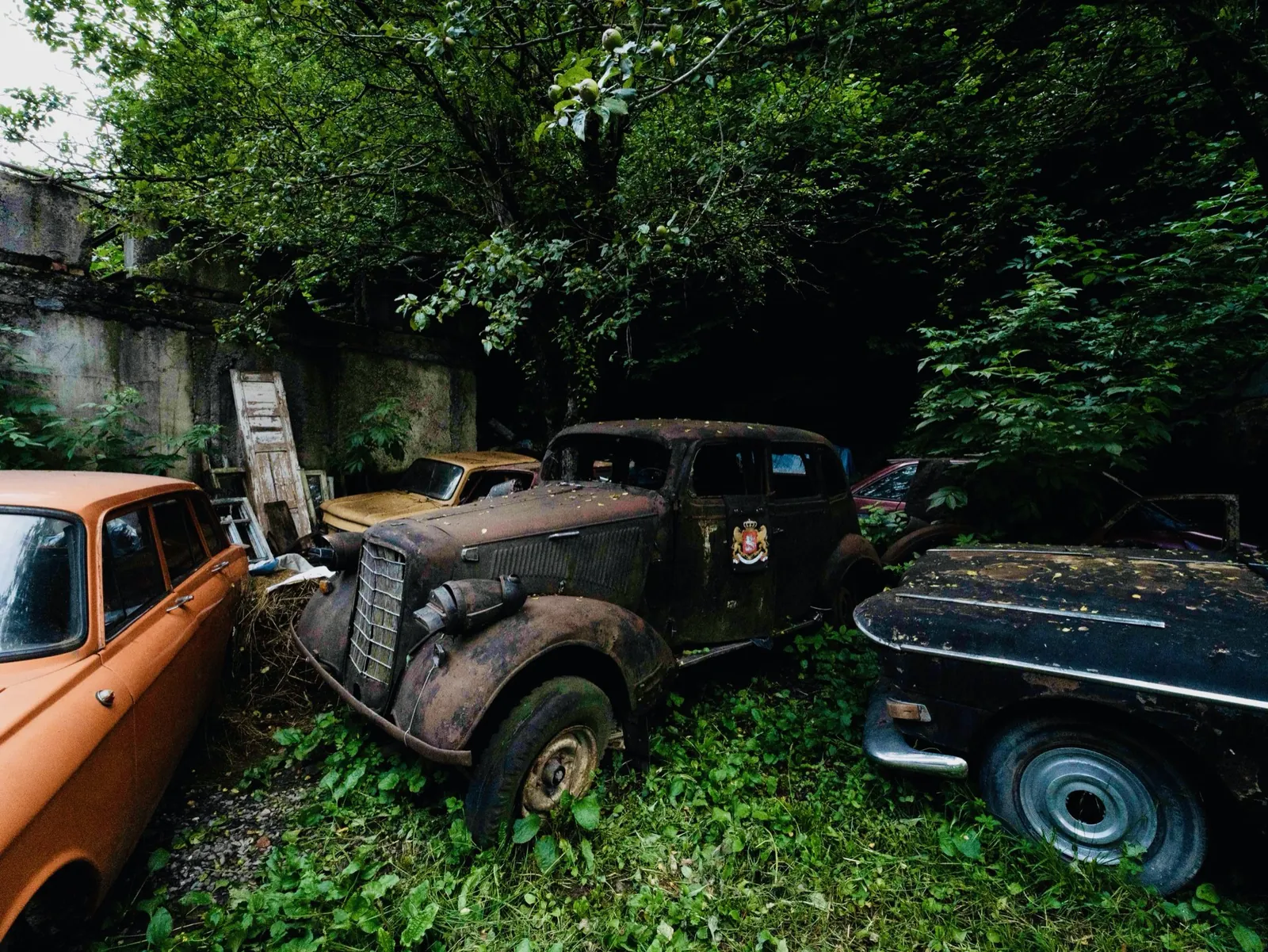
Along the way, a WWII-era armored vehicle made me stop the car — who could resist a tank parked by the roadside? It may well have actually served in the Soviet army and can still run today. Thinking it belonged to no one, I parked to take photos; unexpectedly, a villager waved me over and led me around the tank — and only then did the yard reveal itself: behind the tank lay a damp, cluttered lot where vintage cars stood in two rows, most of them rusted down to little more than hollow, perforated shells, their interiors in utter disrepair. He walked me slowly along the rows, introducing his collection one by one, like a connoisseur reciting his treasures. The scene was nothing like any museum in most people’s imagination, and so it never occurred to me that this was, in fact, a “museum” — I took him simply for a passionate car enthusiast.
I assumed he was just being kind — until he started pushing jars of honey at 100 lari each; when I politely declined, he pivoted: this was a museum, he said, and I owed a 20-lari admission fee — mind you, never once before that moment had he uttered the word “museum,” let alone mentioned any charge; he only brought it up after showing me all the way around. That was when I realized there’s no such thing as a free lunch.
Honestly, had these cars been properly kept and restored, any one of them would fetch a very good price today — enough, perhaps, to astonish the world; watching them rust away like this in the weeds was genuinely saddening. The sum wasn’t much, and I do believe assembling this collection took real effort, but a fee like that should be stated up front — more than unhappy, I felt resigned.
In the end I gave 15 lari; he called me his friend and shook my hand. My girlfriend didn’t blame me — she only said it was “paying for my dream.” We felt there was a hint of being conned, but in my heart the 15 lari was still well spent; I’m glad to give this collector a bit of sponsorship.
Post-trip research · The “tank” that wasn't
After the trip, while writing this travelogue, I made a point of researching the background: the village is Pasanauri, sitting at the confluence of the Black and White Aragvi rivers — and it is also known as the birthplace of khinkali, Georgia’s famous soup dumplings. The roadside collection belongs to a local named Jimsher Patashuri, who reportedly started with a 1941 Lend-Lease Willys jeep and kept going, the collection eventually growing to include trucks, police cars, and even armored personnel carriers. And the “tank” that made me stop isn’t a tank at all — it’s a GAZ-47, a Soviet tracked snow-and-swamp all-terrain vehicle from the 1950s, which even Georgian media casually refer to as a “tank.” He came across it by chance, and hauling it home alone cost him a small fortune.
Reference: while writing this I found a detailed article about this “scrap metal cemetery museum” — saved here for anyone curious: Pasanauri Scrap Metal Cemetery Museum: Exhibits and History.
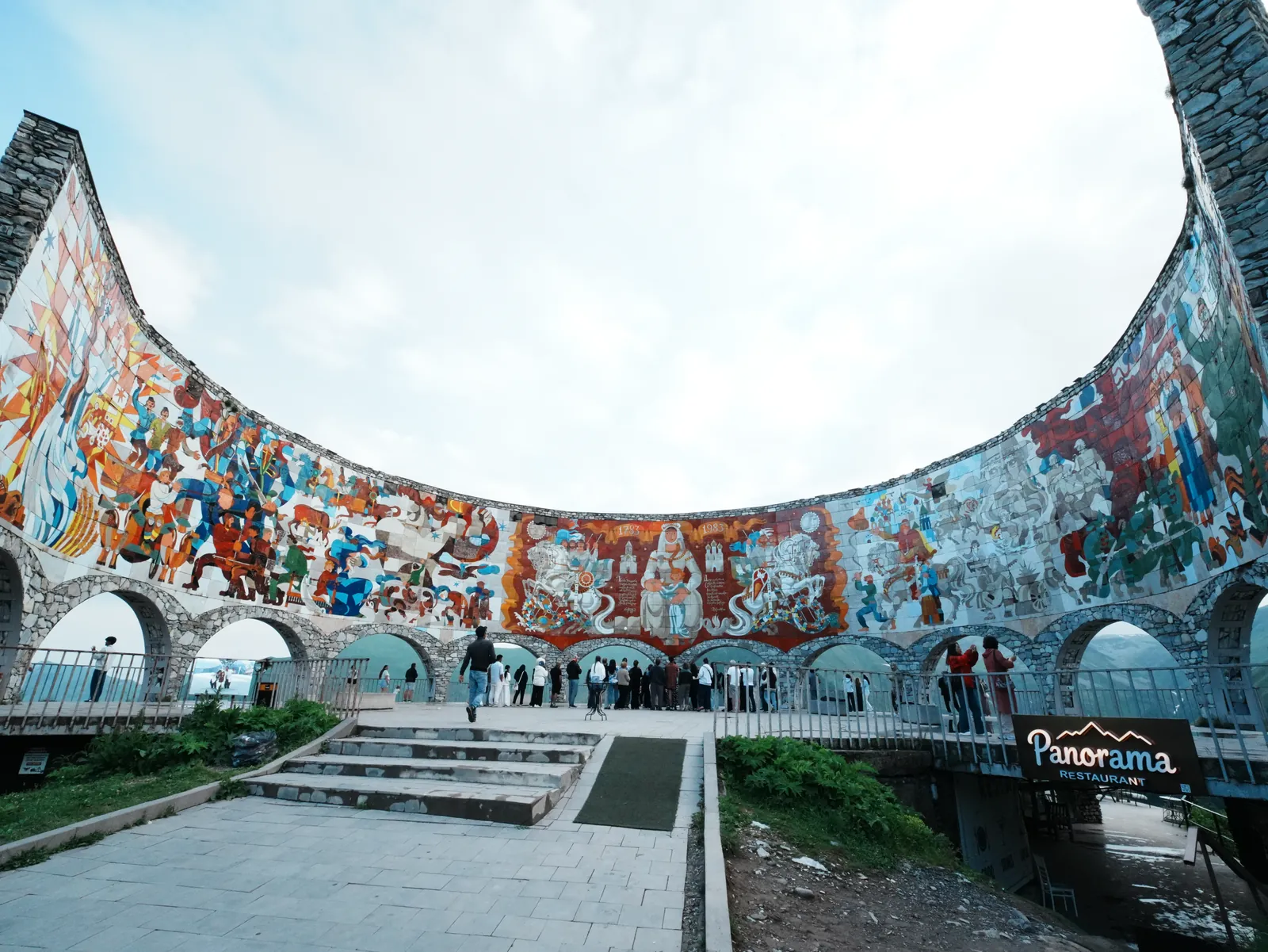
Once in the mountains the temperature plunged. Down below we could wear shorts and T-shirts, but the moment we reached the Russia–Georgia Friendship Monument , stepping out of the car left us shivering, and we had to pull on our shell jackets. Honestly, I worried a little then: if the next day’s hike were this cold, would it be dangerous? The two of us had brought only one down liner and two shell jackets. It later turned out that even in the Caucasus, daytime temperatures were fine in a T-shirt — even a bit hot — the result, I suppose, of the mountains’ wide day-night temperature swings.
The Russia–Georgia Friendship Monument was built in 1983 to mark the bicentennial of the 1783 Treaty of Georgievsk between Russia and the eastern Georgian kingdom. It was that treaty which made Georgia a Russian protectorate and opened the two centuries of entangled history that followed. The semicircular viewing platform hangs at the edge of the gorge, its inner wall covered in colorful tiled murals depicting the two nations’ history and legends — especially striking amid the snowy peaks.
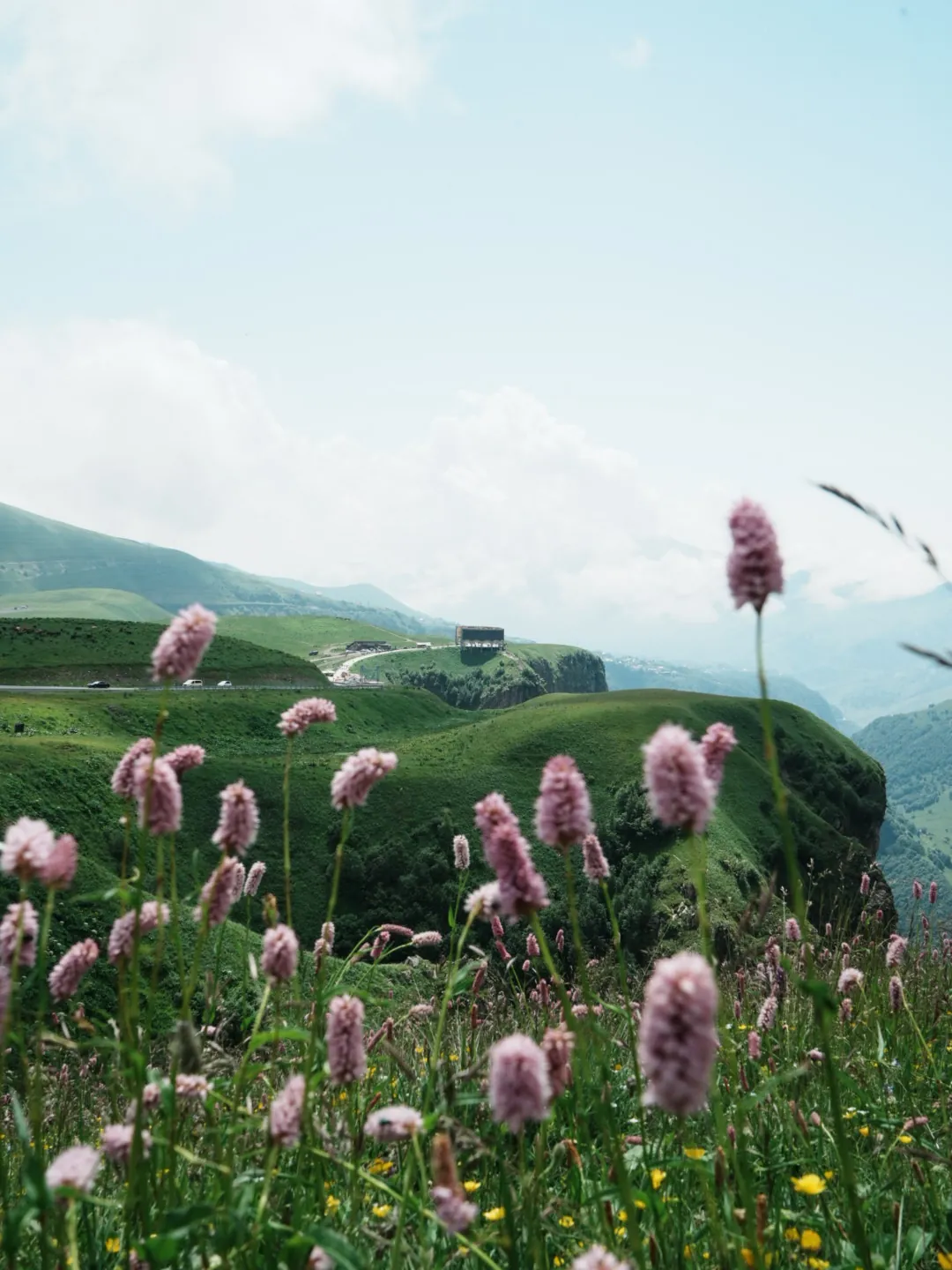
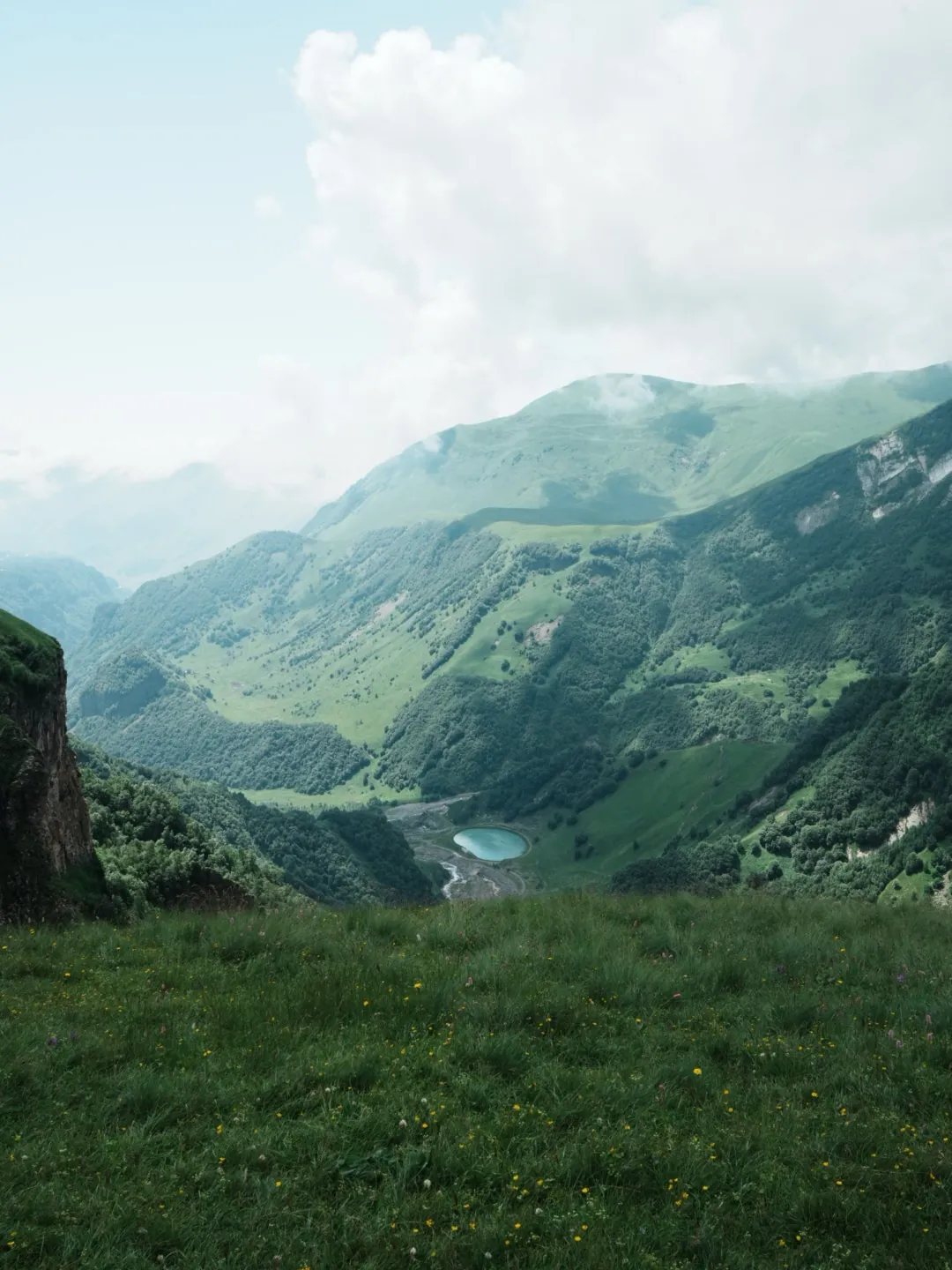
Here, for the first time, I saw a gorge so deep — a drop of at least several hundred meters, with water running along the bottom — and it was the first time since arriving in Georgia that scenery so vast and majestic left me standing there, lost for words. The gorge’s edge was cold and windy, with few tourists around; below the monument, some locals were dancing and playing music. Standing at the edge, I didn’t feel weak-kneed — quite the opposite, I was so excited I could think of nothing but how to photograph the view. But it proved that no matter how beautiful the photos — I tried both wide-angle and telephoto — none could capture that awe.
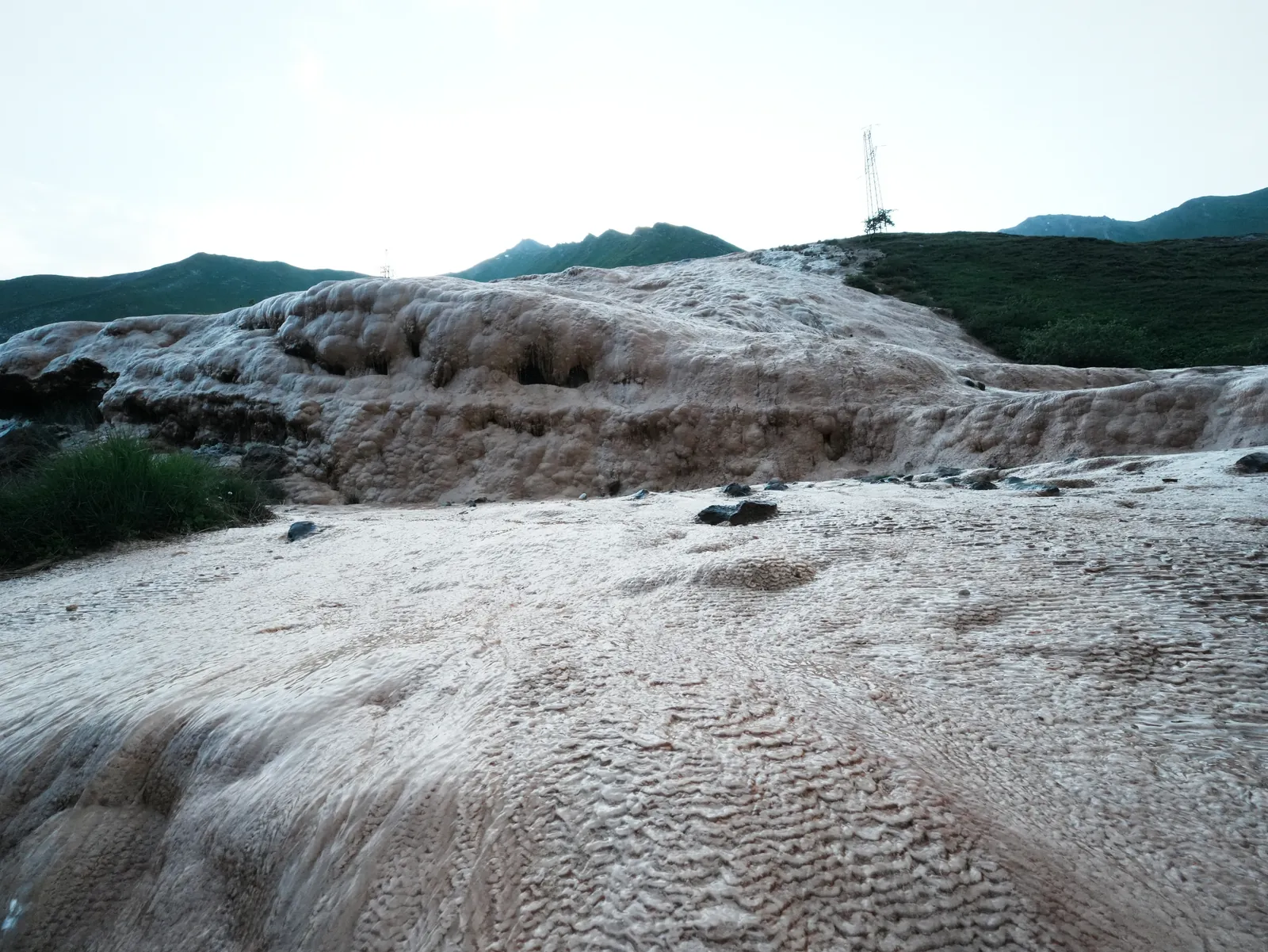
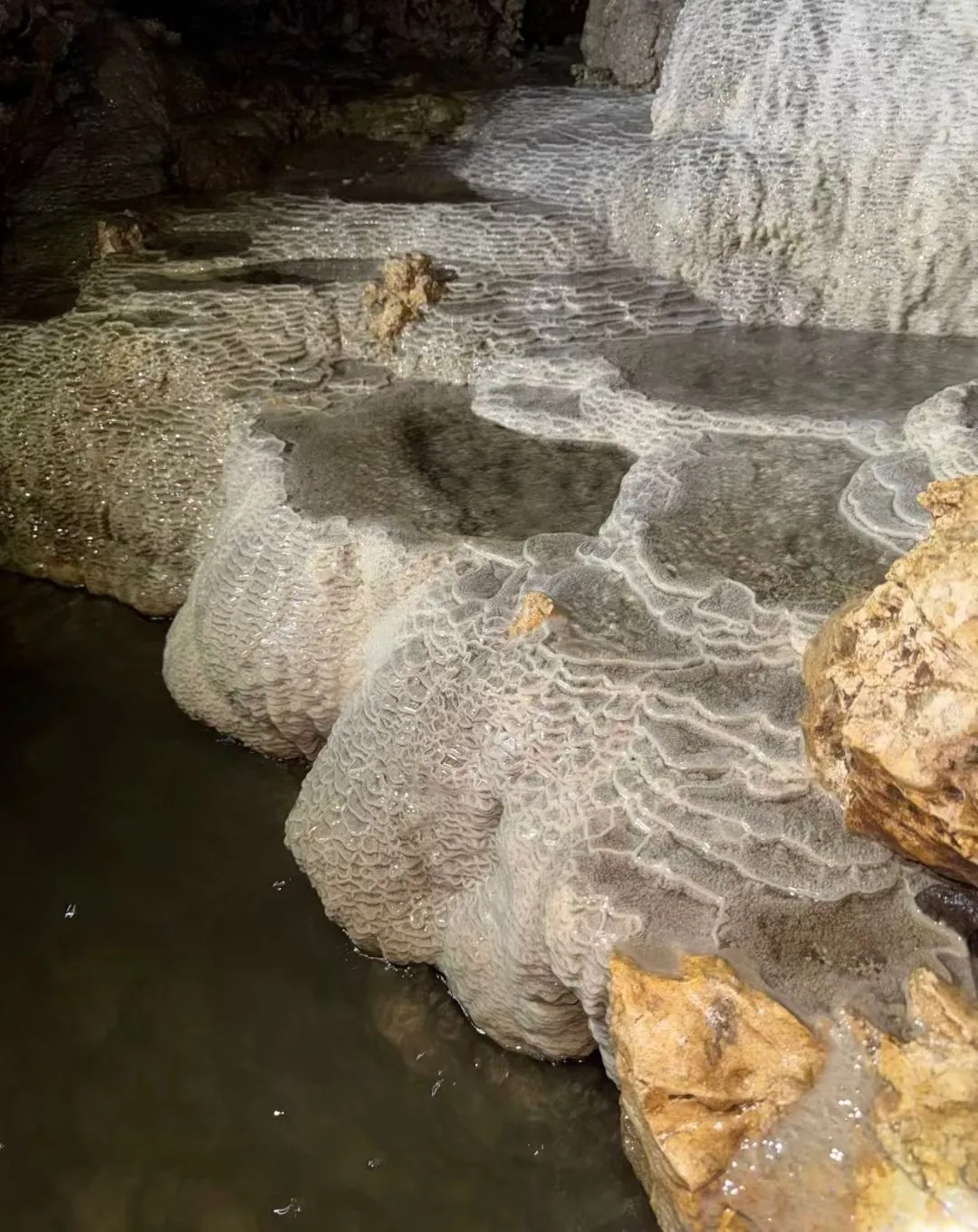
Hidden beside the Military Highway is a natural carbonated mineral spring — Travertine Mineral Springs . The water, rich in iron and other minerals, flows and settles along the rock face year-round, building up a large travertine-like formation of red and yellow on the slope, as if someone had splashed paint across the grey-white mountain. It reminded me of the sedimentary rock in Cantabon Cave in the Philippines, but here the mineral deposits are larger and rougher, and you can even reach out and touch them.
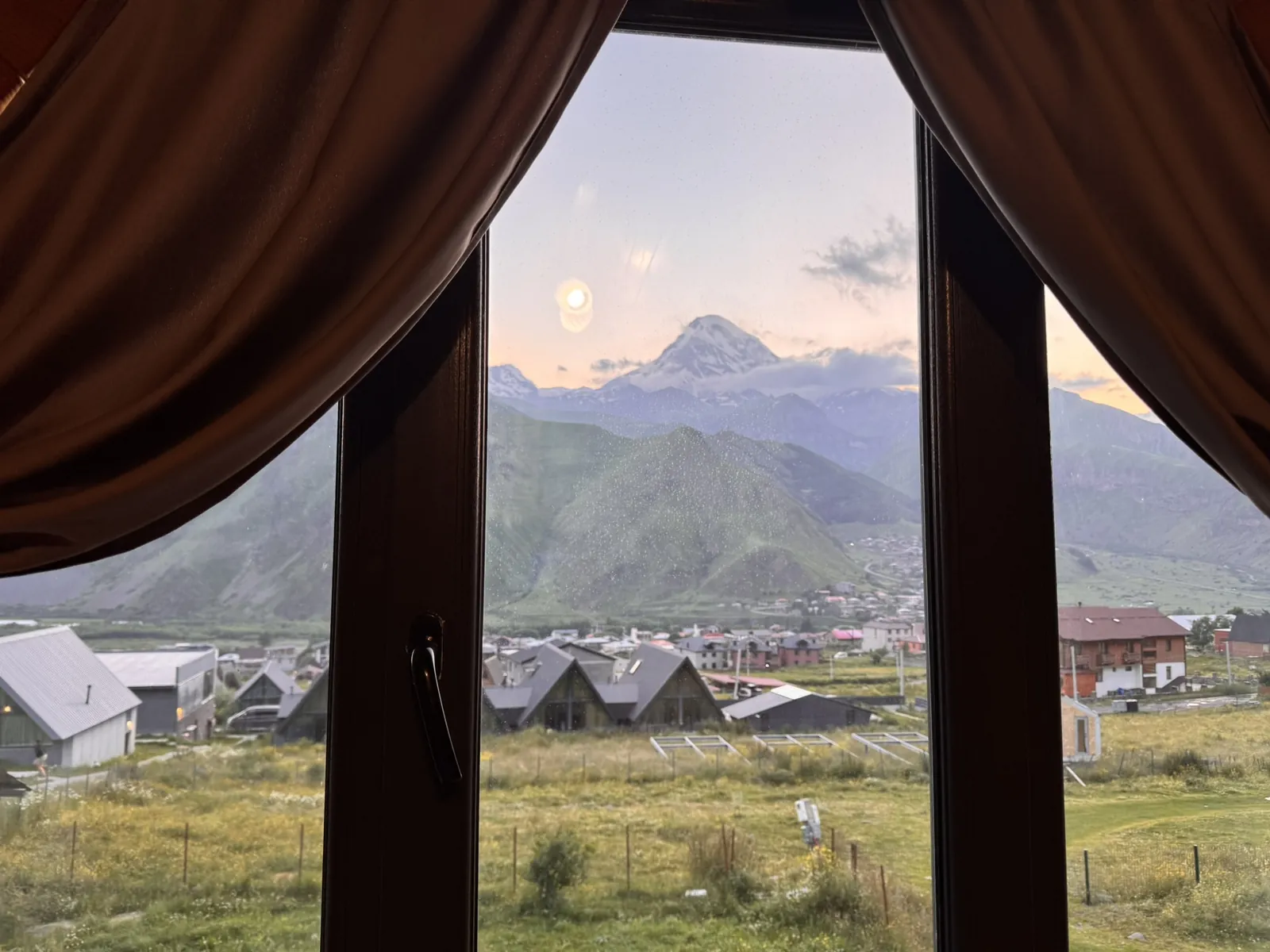
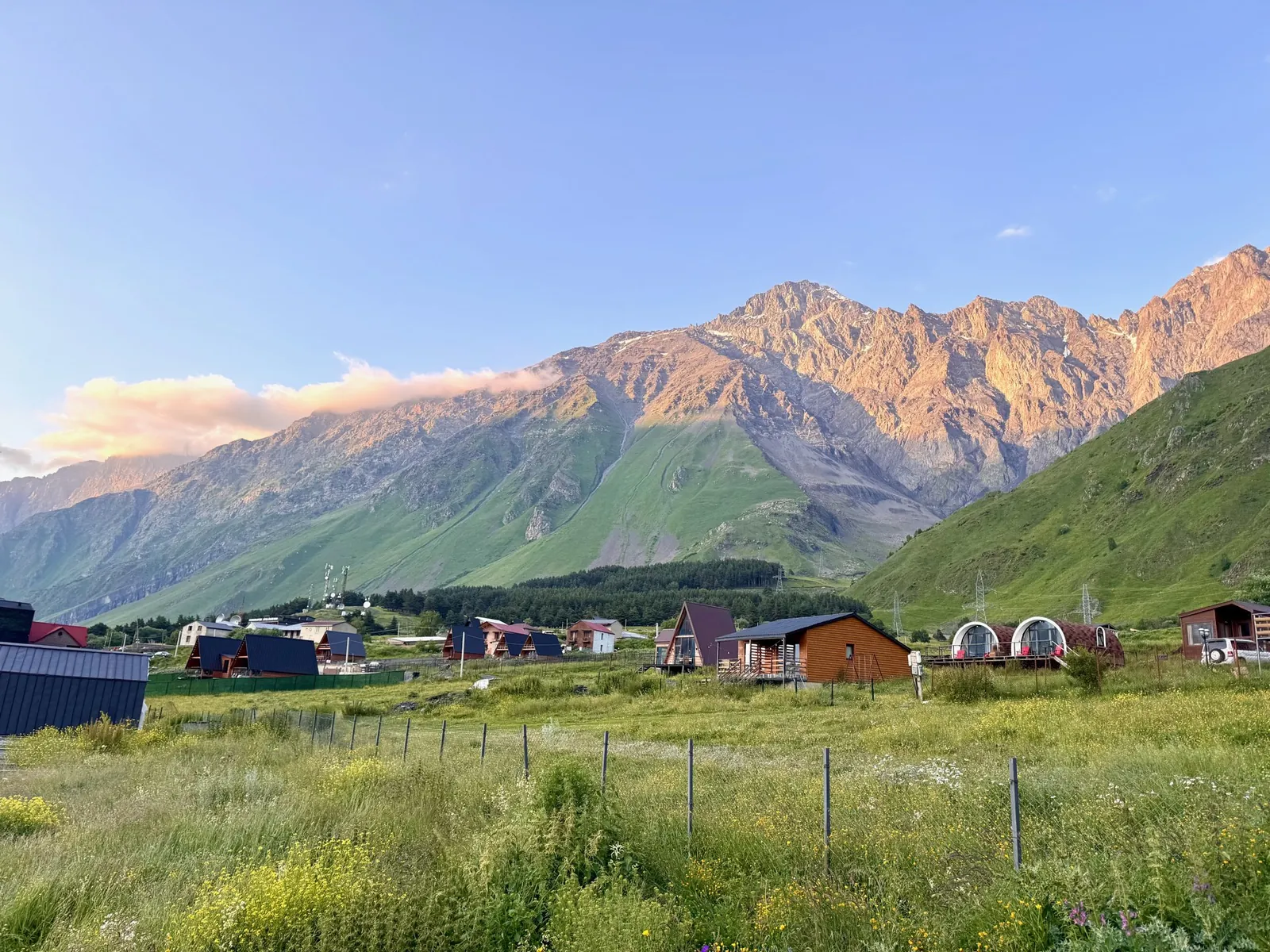
Our first night deep in the Greater Caucasus, we stayed at T&T Cottages . It’s a lovely wooden cabin on a hillside above the town, where you can park right beside the house — handy for luggage. The owner, a warm local villager, told us he lets his German shepherd patrol the yard after nine. The guesthouse has just three rooms: one for himself, two for guests; downstairs the living room and bathroom, upstairs the bedroom, from whose bed you can see Mount Kazbek — in principle, waking early would reward you with the alpenglow, but we’ve never been early risers.
In fact, we slept especially soundly that night: a full day of driving had worn us out, and the clean, cozy cabin made it easy to let our guard down — even though there were no stars that night. Tomorrow would be our first time hiking abroad, and we were both excited and nervous, afraid something might go wrong, so I packed with unusual care: down jackets, shell jackets, sun-protection layers, even a first-aid kit all went into the backpacks. The woman from the neighboring cabin also planned to go to Juta, so we arranged to go together. Before bed we set an alarm, hoping to rise early and set out on the hike we had been looking forward to most — it later turned out to be very safe, with plenty of hikers along the way.
About the road conditions: once out of Kazbegi, there are highways all the way from Tbilisi to Kutaisi — wide and smooth. The highway passes Gori — Stalin’s hometown — where anyone interested can visit the Stalin Museum . The road from Kutaisi to Batumi sometimes runs along two-way single-lane country roads; smooth enough, slower than the highway, but with a charm of its own. On the way to Didgori, there’s a long but smooth mountain road where we ran into sports cars doing hill runs — watch out when passing oncoming traffic.
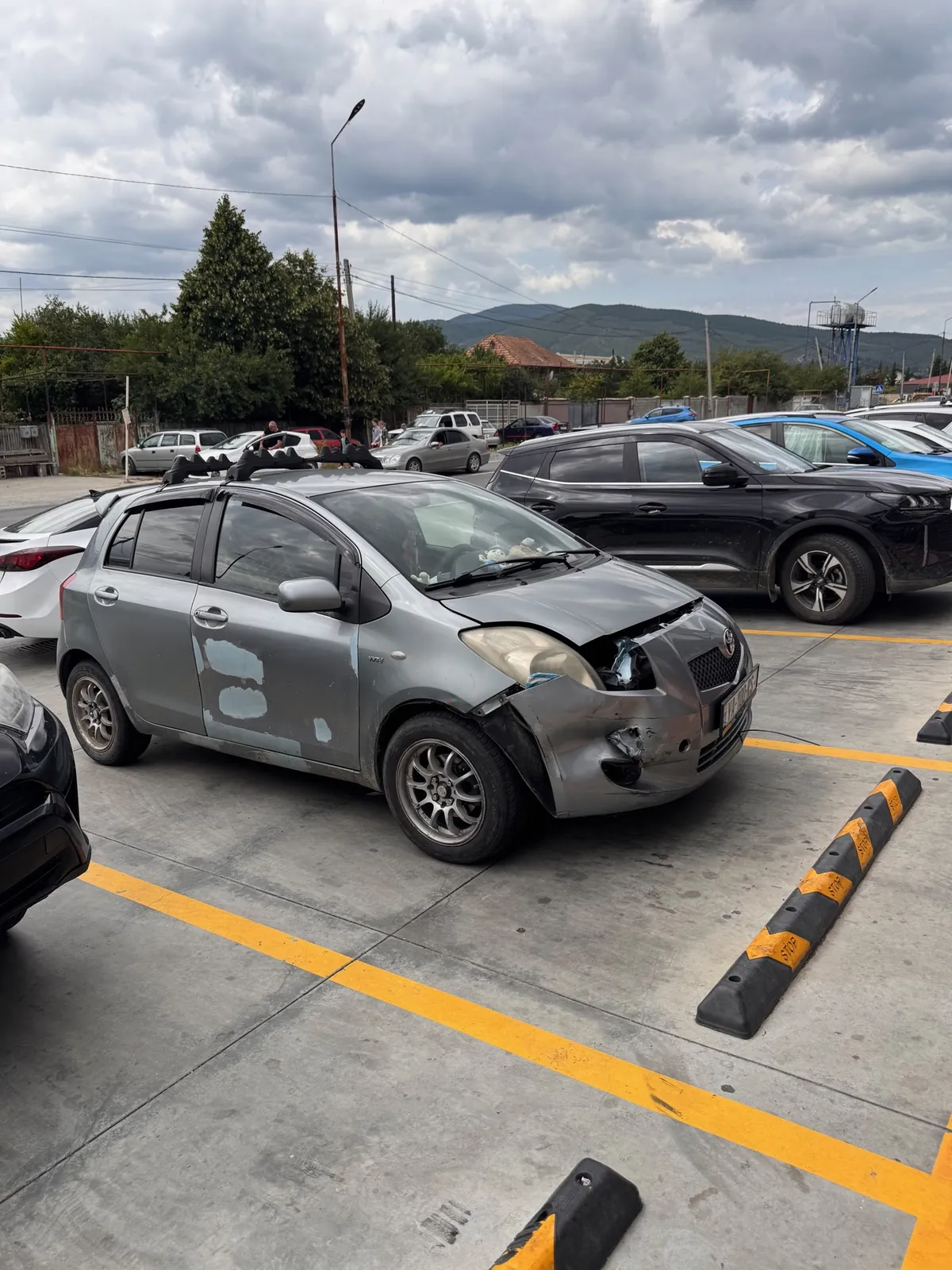
As for the locals’ driving style, I found it quite orderly. On the highway, all vehicles keep to the right lane, leaving the left for faster cars; they signal well before changing lanes; and overtaking is restrained. When an oncoming car borrows the lane to overtake and you slow to yield, the driver nods or waves in thanks. One funny thing happened on the highway: a car pulled in front of us, and as we approached it moved to the other lane; after we passed, it overtook us again and pulled back in front, then yielded once more as we neared — and when we finally passed, we saw the driver and front passenger were a couple, smiling at us, apparently teasing us for fun. So I think that as long as you watch the nearby cars and pedestrians and follow the rules, it’s quite safe. Locals seem to love driving with the windows down, likely due to culture and climate: first, young people here love rolling down the windows and blasting music, often driving BMWs or Mercedes; second, the land is sparsely populated with an excellent natural environment and a cool climate, so the heat-island effect is minimal, and open windows keep things cool enough.
Driving Tips · Road Conditions & Choosing a Car
Inside the city of Tbilisi, I wouldn’t recommend driving to anyone, because the old town is extremely narrow, and driving here means enduring agonizing passing and turning maneuvers. Tbilisi is far better on foot — the old town is interesting enough that every corner offers a new scene. And taxis in the city are cheap, usually under 10 lari.
On the main road from Tbilisi into the town of Kazbegi, it’s a two-way single-lane concrete or asphalt road; if you don’t mind big trucks driving slowly and are content to follow quietly behind at a distance, I don’t think there’s much danger. A regular car is fine for this road.
But on the roads from the main route to the sights around Kazbegi, there’s no more pavement — just dirt track. For roads like these, unless you want to challenge yourself, I wouldn’t recommend a sedan to anyone — not only for the danger, but also because roadside assistance and repair costs can be considerable.
One thing needs special mention: because Georgia’s natural ecology is so good, all kinds of animals may appear on the road — cats, dogs, cows, sheep, and so on. When you see the car ahead brake, brake immediately too and turn on your hazard lights, to avoid rear-ending or being rear-ended. I honestly find it hard to understand why cows would be strolling on a fenced highway — perhaps one of Georgia’s unique sights.
On choosing a car:
For this trip we only went to the mountains around Kazbegi; whether the mountain roads are hard to drive depends on what you’re driving.
On this trip we drove a four-wheel-drive Subaru SUV, with excellent low-speed climbing ability, and I’d recommend every traveler self-driving to Kazbegi rent a 4WD SUV. First, an SUV’s high ground clearance means better passability; on the road from Kazbegi to Juta, the closer you get to Juta the worse it becomes, often with bumpy, uneven sections. Especially when a wheel is left hanging, the 4WD system can help you get unstuck. Second, compared with a sedan, high clearance means less damage to the vehicle itself and greater safety. Finally, on rough roads, an SUV is more comfortable.
With this car, I think even a novice can drive through Kazbegi easily — just stay focused and think calmly.
Honestly, for Kazbegi’s road conditions, if I’d been given a sedan I certainly couldn’t have made it through, because many sections are steep dirt roads — which makes you marvel at the locals’ driving skill; they can tear through the mountains in manual-transmission sedans.
Of course this SUV has its downsides: it vibrates and is noisy at speed, and accelerates slowly on the highway — it feels like a car made for the mountains, not for the motorway.
Chapter 3 | Mountains Make the Church Comprehensible
On the third day, we drove to Juta . It’s one of the most classic hiking trailheads in the Kazbegi area; the trail from here toward Mount Chaukhi is famous for its alpine meadows and glacial lakes. The road from Kazbegi to Juta is terrible — potholes like shell craters the whole way. With my skills, some spots were simply impassable without a 4WD, and it was here that I first truly understood the meaning of a 4WD SUV. Parking the car at the cliff’s edge, we set off on foot. From the parking spot to Juta village is about three kilometers along the gorge, and gazing at the millennia-old glacial meltwater below the cliffs had a charm all its own.
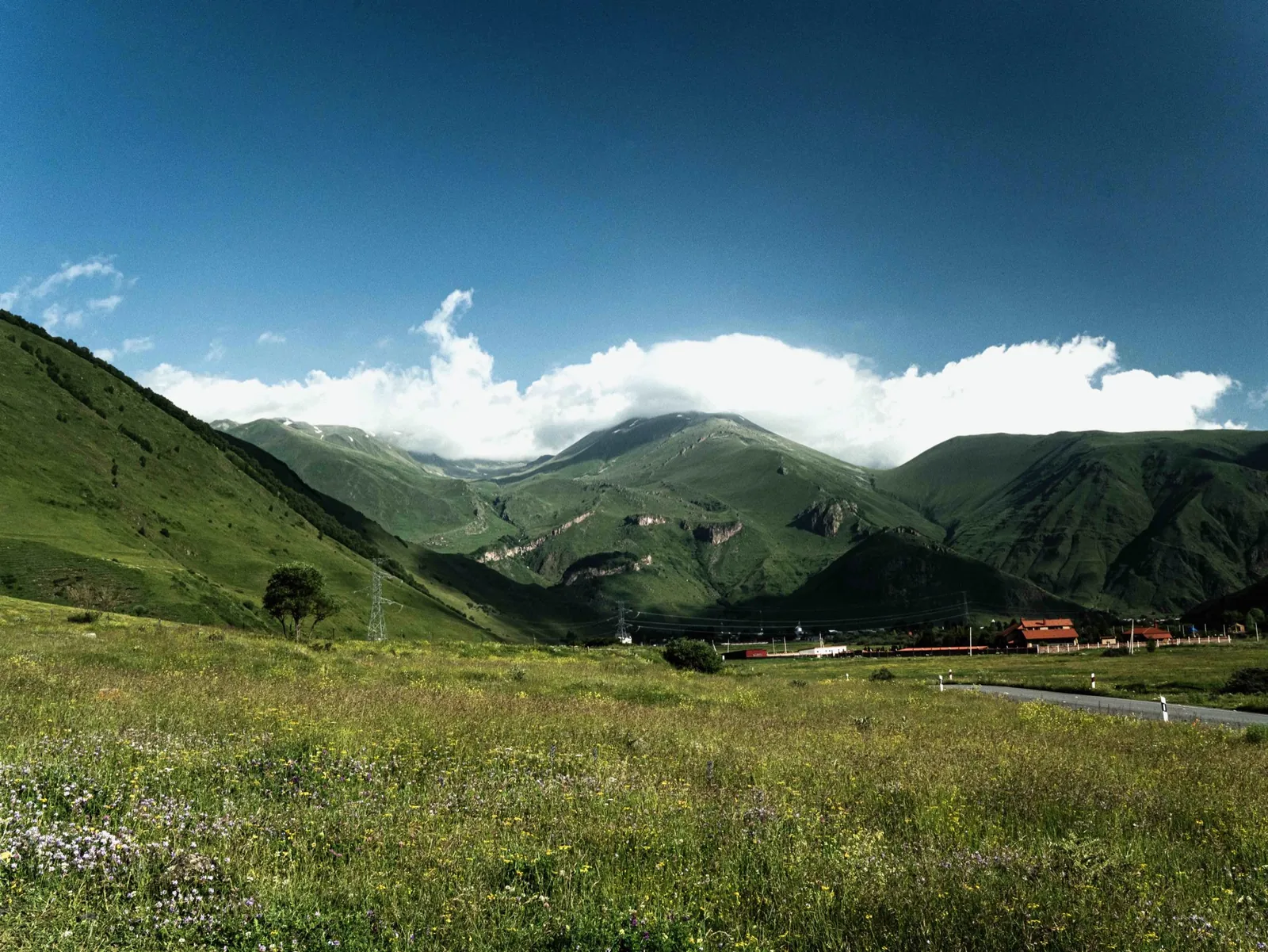
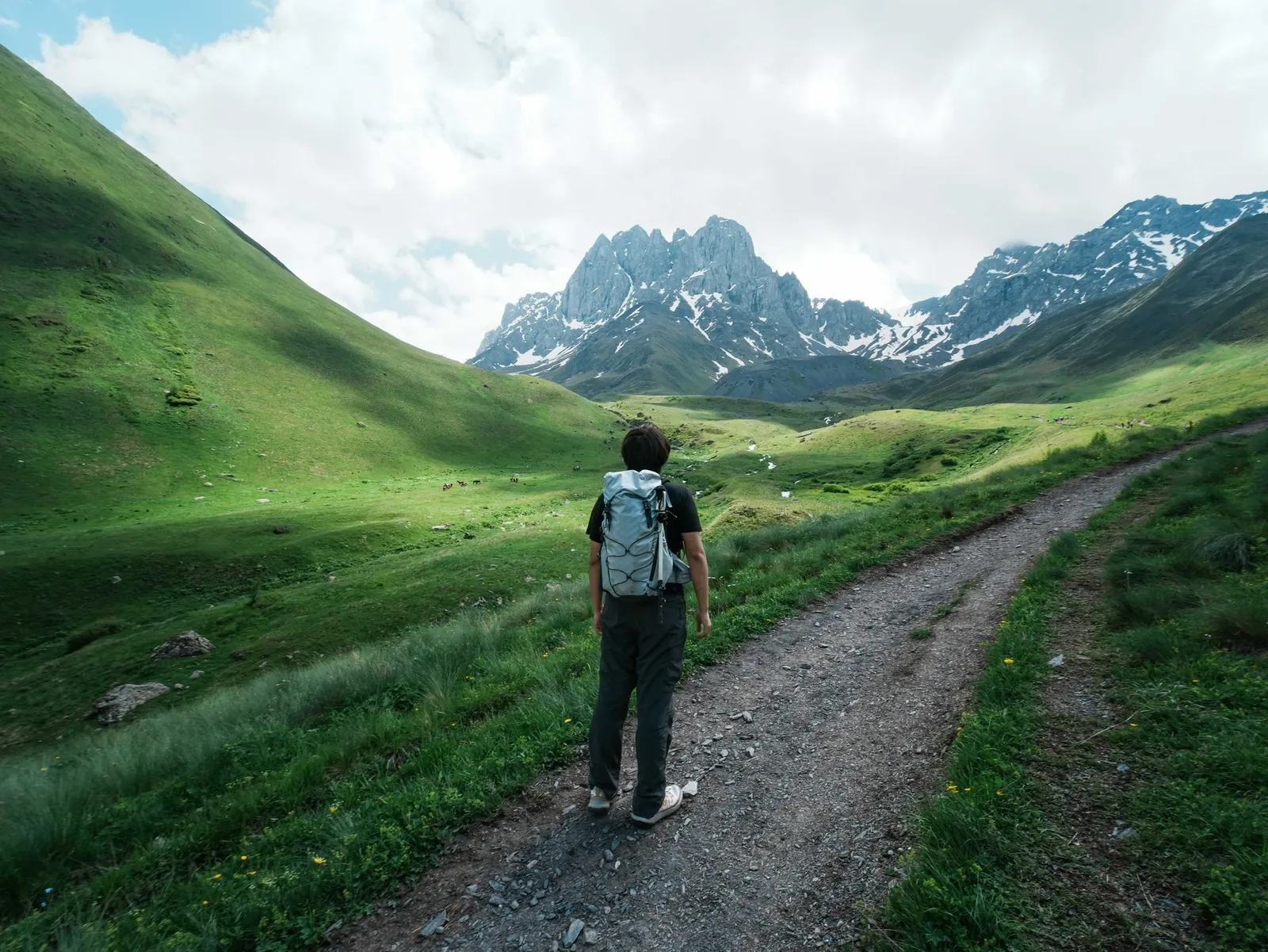
At Juta village, you face a dull uphill stretch. But the moment we finished that climb and reached the alpine meadow, the view opening up before us, our energy came flooding back — green grass and a riot of flowers, snow peaks in the distance beckoning us onward — we’d never seen scenery this beautiful, and for a moment there was only one voice in our hearts: “This trip was truly worth it, all of it worth it.” The distant peaks look a little like Italy’s Dolomites; it’s called Mount Chaukhi, and on Chinese social platforms everyone calls it “Georgia’s Dolomites.”
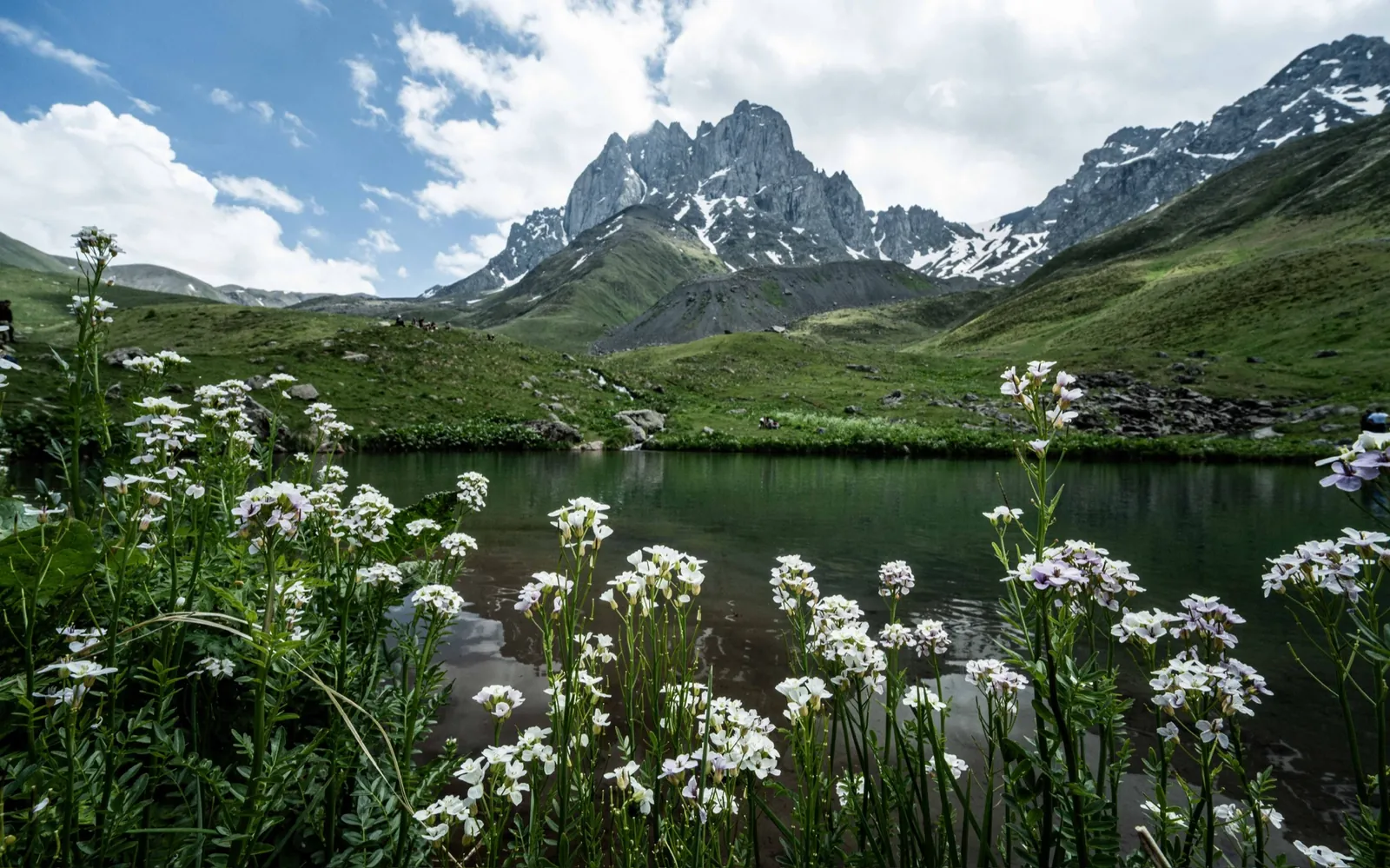
Mount Chaukhi is not a single peak but a row of jagged rock spires of granite and diabase, the highest, Chanchakhistsveri, reaching 3,842 meters. Craggy and sheer, utterly unlike the rounded snow peaks around it, it’s dubbed “Georgia’s Dolomites.” The trailhead, Juta village, sits at about 2,200 meters — one of the highest settlements in Europe; crossing the 3,338-meter Chaukhi Pass takes you from the Khevi region over into Khevsureti on the other side, reaching the famous three-colored Abudelauri Lakes.
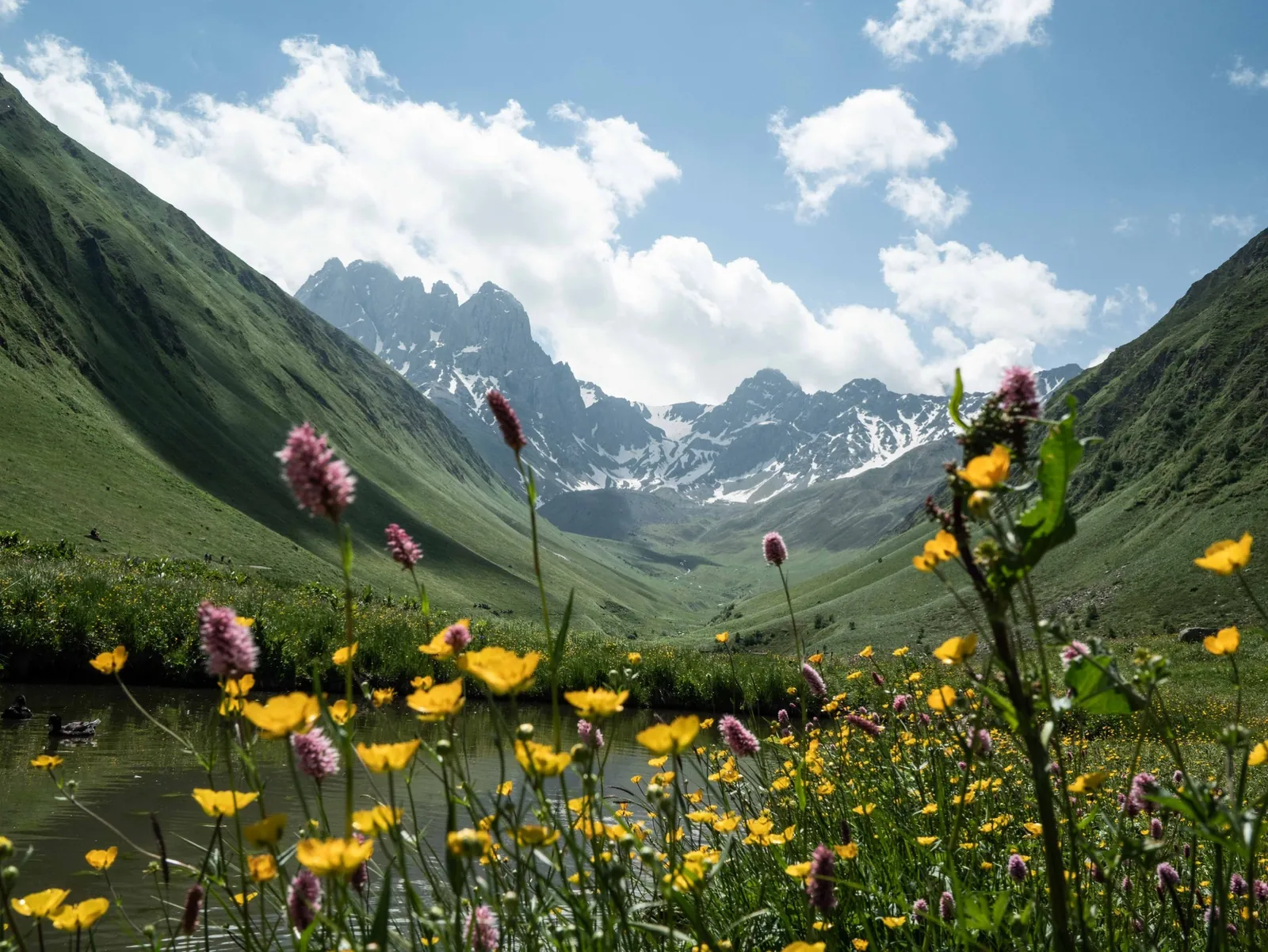
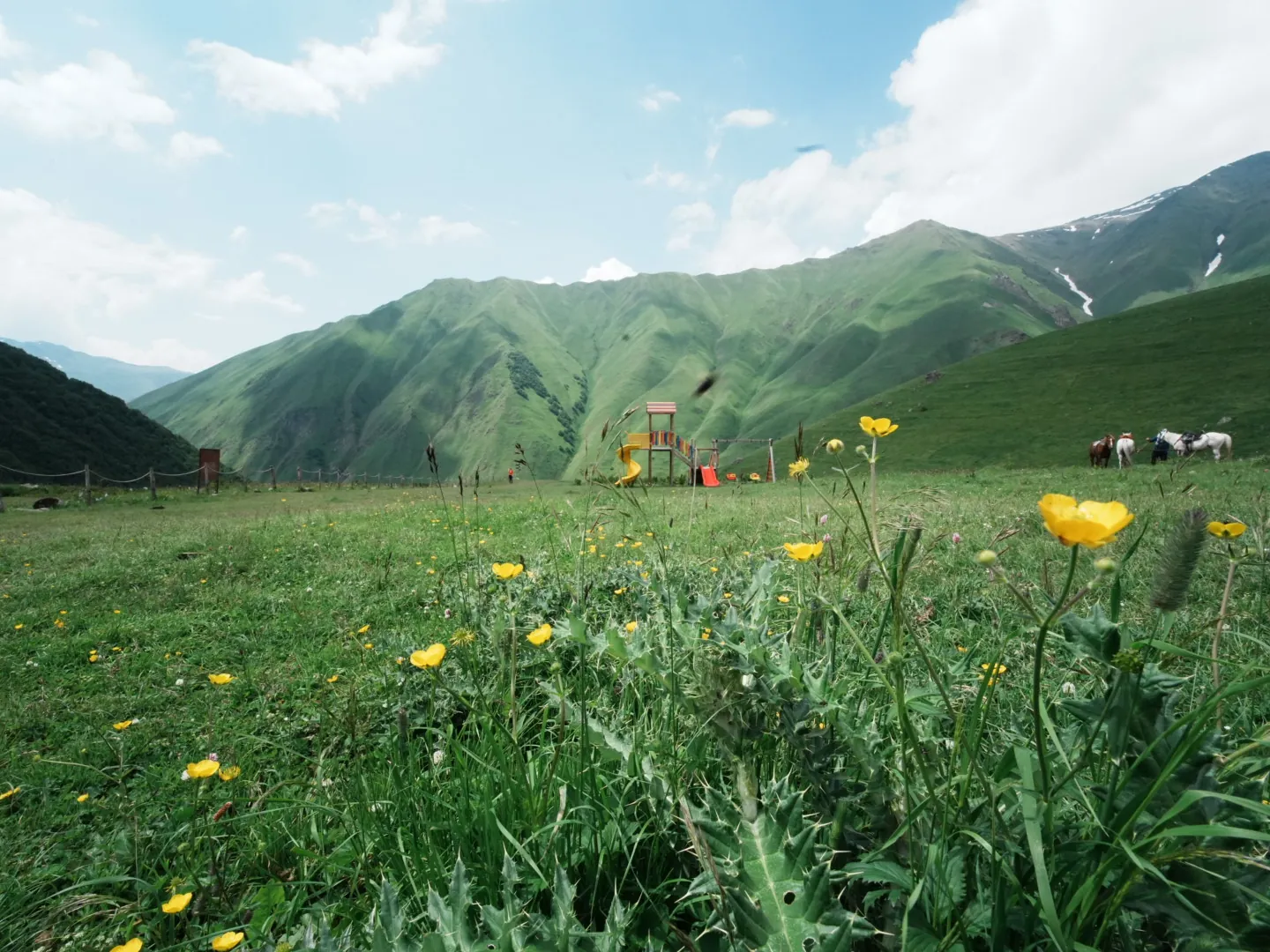
Walking farther into the mountains, we passed the café famous on Chinese social media. In front of it is a pond ringed with flowers and full of swans, where you can photograph flowers, swans, and Chaukhi in one frame. Something funny happened here too: I ordered a fruit tea, and the server first poured me a cup of hot water; just as I was about to lift it, a fly dropped dead in it; frowning, she swapped it for another. I drank a few sips and found it seemed like plain boiled water — I thought the fruit tea was just too weak, and even savored it a few extra times. It wasn’t until the server brought the tea bag to my table that I realized it was just plain water, and I had to steep the tea myself.
Farther on is a broken bridge; we thought we’d have to wade across, but then found we could inch carefully along the bridge to the far bank; many foreigners simply jumped into the water and waded across — by comparison, we East Asians were indeed far more reserved.
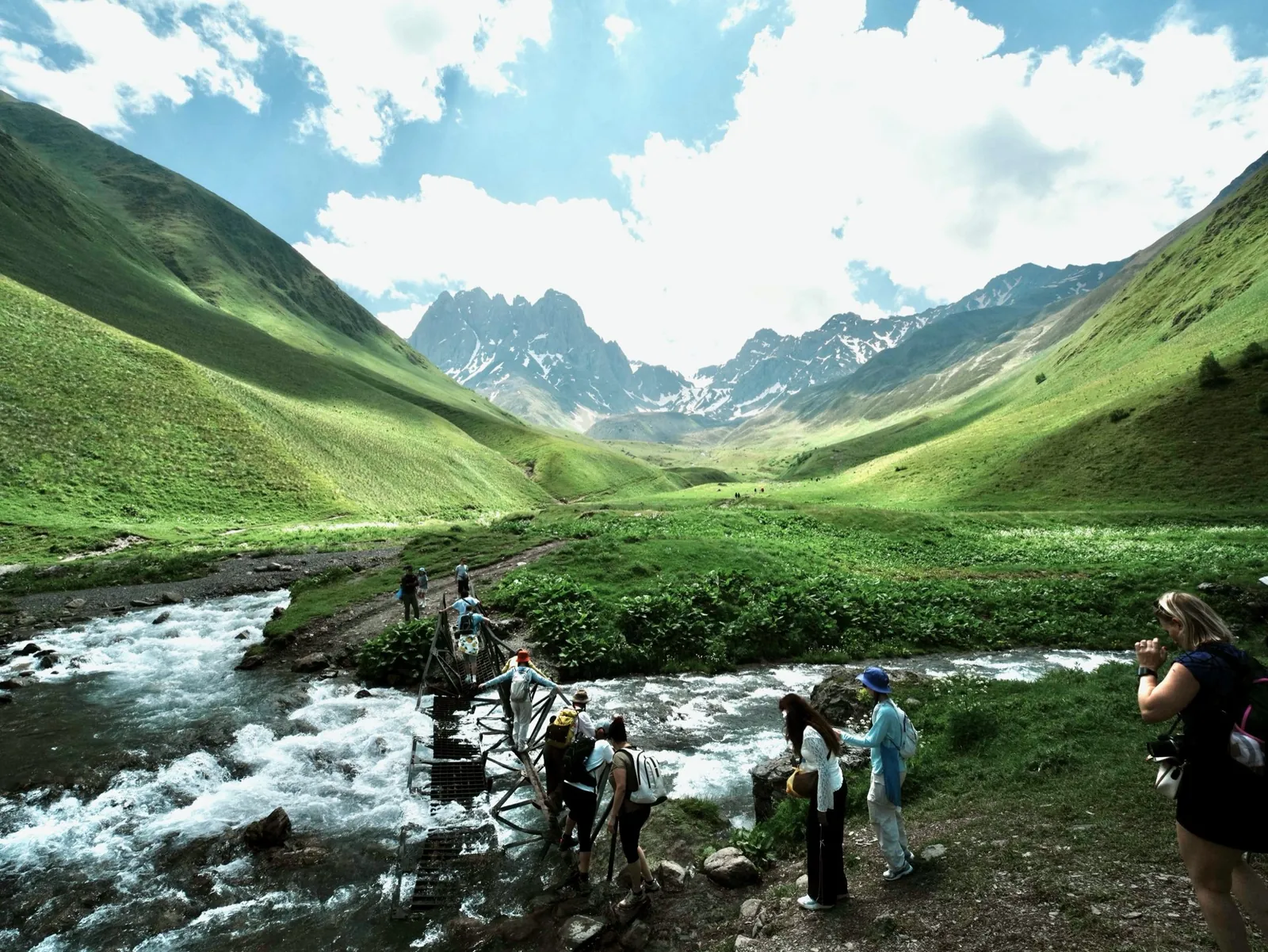
The trail ends at a small pond, its water crystal clear. Having walked seven kilometers one way, we were surprised to find we weren’t tired at all — partly because after the one big climb at the start, the path leveled out almost entirely; partly because, walking through scenery like that, you simply forget what fatigue is. By the lake stands a wooden hut left by earlier travelers, a perfect spot to sit and eat something. This pond is something of a celebrity on Chinese social media: countless photos frame it together with Mount Chaukhi — snow peaks mirrored by the water, an impeccable composition — and naturally I pressed the shutter here many times myself. The Juta trail actually has an extended version that continues all the way to the foot of the mountain, but we weren’t inclined to change plans on a whim, so we decided to return the way we came.
A few children were swimming in the lake; back in China, parents would usually warn kids against swimming in the wild.
Just as I was gazing at Chaukhi and daydreaming by the pond, a burst of cheering suddenly rose beside me. I turned to look — someone had just succeeded in a marriage proposal, and everyone was applauding them. Foreigners really are romantic; they seem to prefer proposing in a place of beautiful scenery or special meaning, rather than the “engagement banquet” popular back home.
Watching the crowd celebrate around me, I realized too that the world’s peoples share the same pursuit of love and joy — something that transcends cultural barriers.
After descending, we ate pizza and roast chicken at the Mountain Time restaurant in town — the best and most agreeable meal I’d had since arriving in Georgia.
After the meal, we went to Kazbegi’s Trinity Church — the very snow-peak church from that original Lonely Planet cover photo.
We drove up ourselves. Heading north out of the town of Kazbegi, we turned west at a T-junction and began to climb — first past scattered restaurants, guesthouses, and hamlets, and then up a tight succession of Z-shaped switchbacks. It was a wonderful stretch to drive: a two-way single lane with the occasional oncoming car, yet you could feel a real, responsive connection between the car and the road — something of a spirited hill run, and never frightening. Just be warned that a car can appear around any bend, so never cross the solid line, or an accident comes all too easily.
Gergeti Trinity Church dates to the 14th century, standing atop a 2,170-meter summit at the foot of the Kazbek snow peak; historically the only cross-dome church in the Khevi region, it’s hailed as “the church closest to heaven” for its solitary perch among the peaks. Precisely because it was remote and easy to defend and conceal, in times of war many relics from Mtskheta — including the cross of Saint Nino — were once sent here for safekeeping.
The Greater Caucasus has been tied to myth since ancient times. The ancient Greeks believed that Prometheus, who stole fire from heaven for humankind and angered Zeus, was chained to a Caucasus cliff, his liver devoured daily by an eagle — and this “mountain of the Caucasus,” in many legends, refers to none other than Mount Kazbek (Mkinvartsveri in Georgian, meaning “Ice Peak,” 5,047 meters). Georgia has its own nearly cognate hero — Amirani: he brought humankind fire and the art of metalworking, but for arrogantly challenging the divine he was chained inside Mount Kazbek, an eagle eating his liver by day, which healed by night, day after day. Many scholars believe the Amirani legend is older than the Greek myth, and that the story of Prometheus likely originated in the Caucasus. The Betlemi cave, at about 4,000 meters on the peak, is said to be both Amirani’s prison and, later, a high-altitude hermitage for Orthodox monks and a place to hide relics — echoing the story of the Trinity Church guarding its relics.
We first parked in the lot up the mountain — this is the best vantage for that classic shot of the church framed against the snow peaks. A word of advice, though: you need a long focal length (I used 180mm), or the result falls far short of how grand the cover photo looks. Seeing it in person was, in the end, quite different from scrolling past the photo on Xiaohongshu: it was somewhat overcast that day, which only sharpened the line between light and shadow — the church bathed in light while the meadow before it lay in shadow, a vivid divide drawn between them, and visually striking.
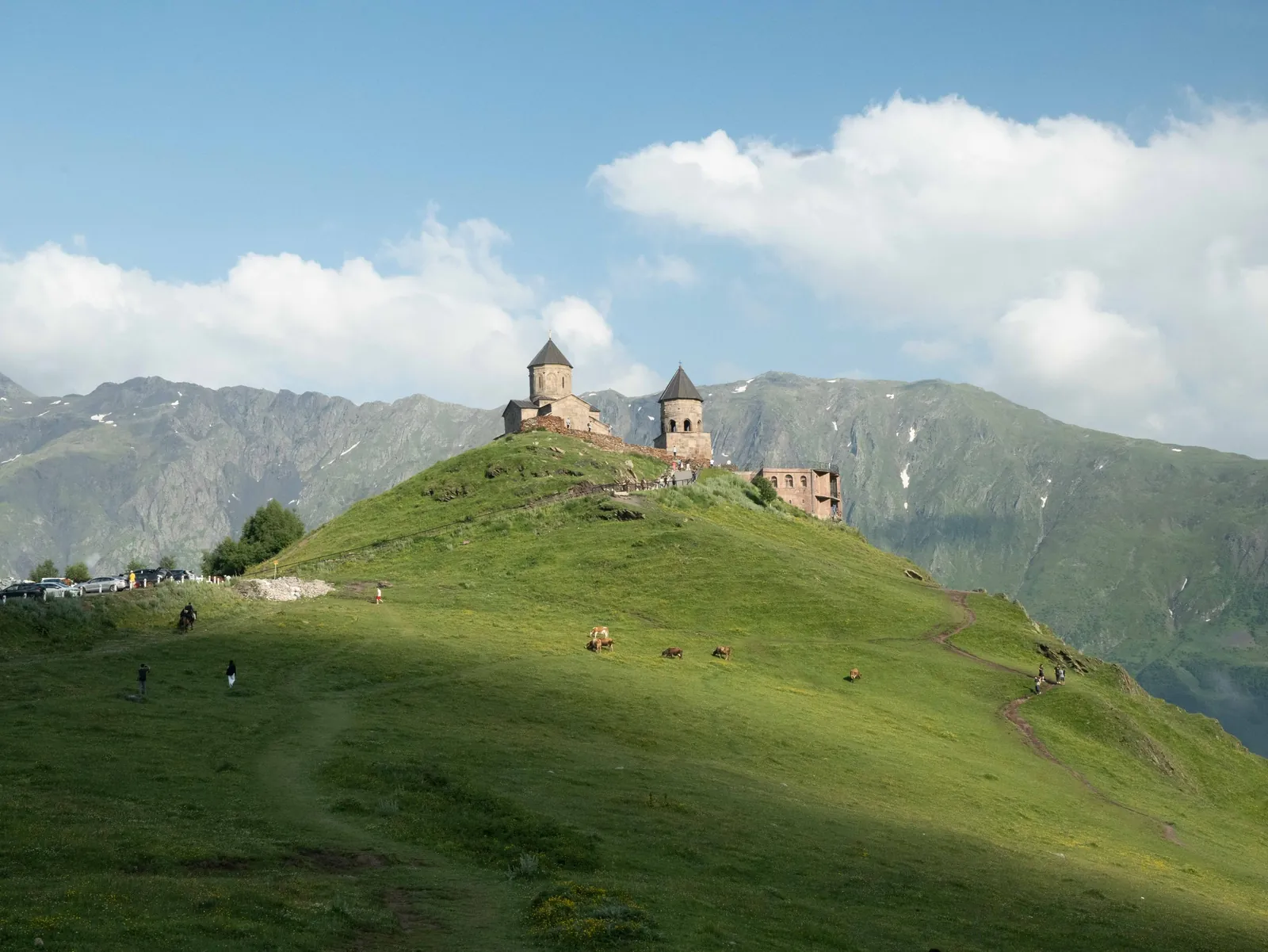
From the parking lot, a walk across a stretch of alpine meadow brings you right up to the church, the scenery lovely the whole way. Inside the grounds were quite a few dogs, each with a red tag clipped to its ear — a little disconcerting at first, but they turned out to be gentle and friendly to a one; one in particular took to my companion, and we captured many lively photos there — great documentary portraiture, I think.
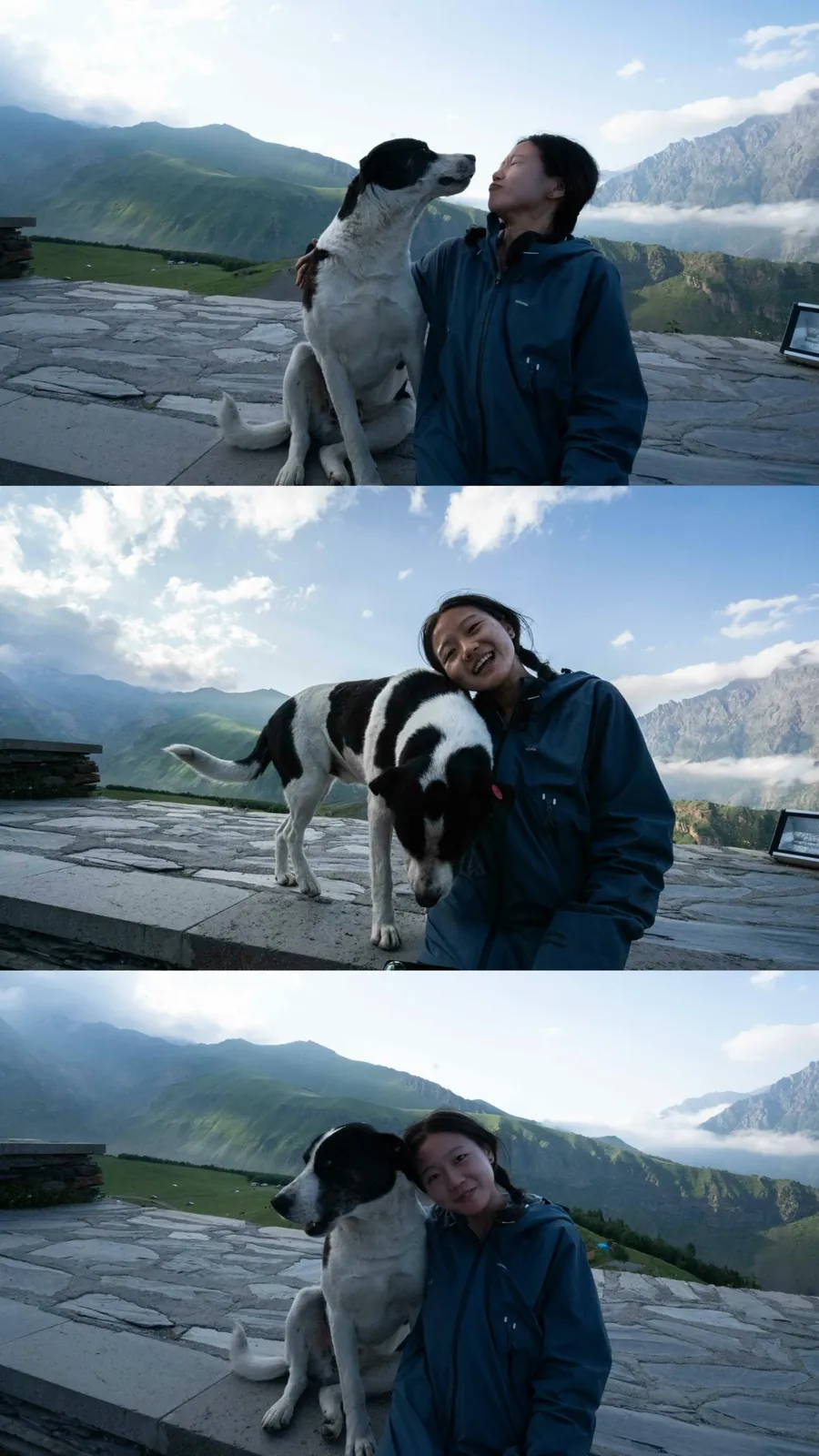
In the evening, we returned to the cabin, imported the day’s photos into the computer, and color-graded them in Lightroom — a full and free day thus came to an end.
Chapter 4 | Waterfalls, Springs, and a Forgotten Village
On the morning of the fourth day, we first said goodbye to the little cabin — at checkout we even took a photo with the owner’s dog, as warm as ever.
We had originally planned to hike Truso Valley that day — the route we’d set before departure — but in the end we gave it up. There were a few reasons: first, I looked into it, and the road to the gorge runs along cliff edges, beyond my driving ability; second, the gorge is near the border, with some safety concerns; third, we were a bit worn out at the time, and this was meant to be a leisure trip after a long stretch of work. We didn’t feel it was much of a loss, though — there are plenty of interesting sights near Kazbegi, and giving up one just means seeing something better.
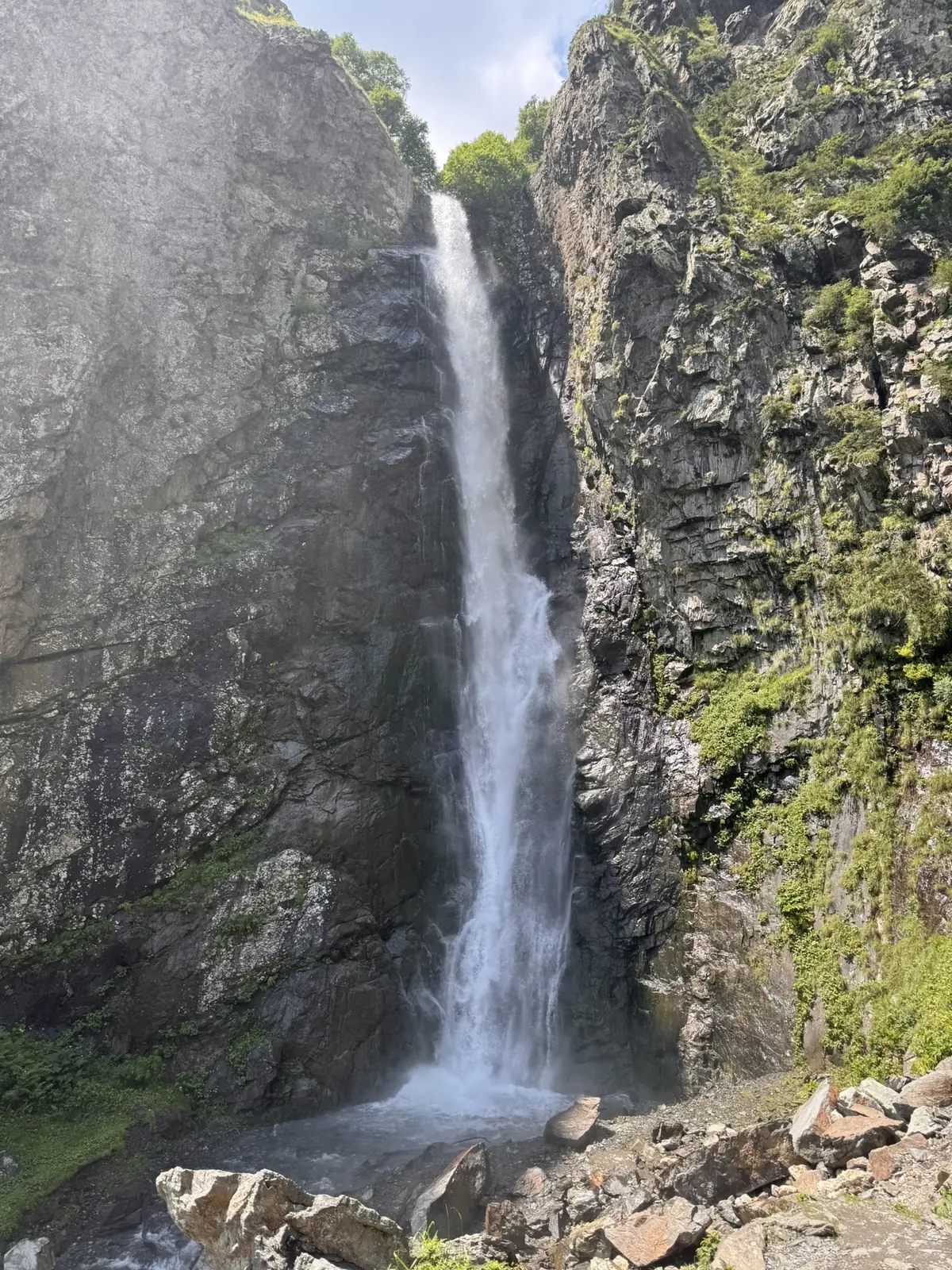
So we detoured to see Gveleti Waterfall . Hidden in a valley near Stepantsminda, it’s the most famous waterfall around Kazbegi, in two parts, large and small, reachable by a one-to-two-kilometer hike with some climbing — a light trek.
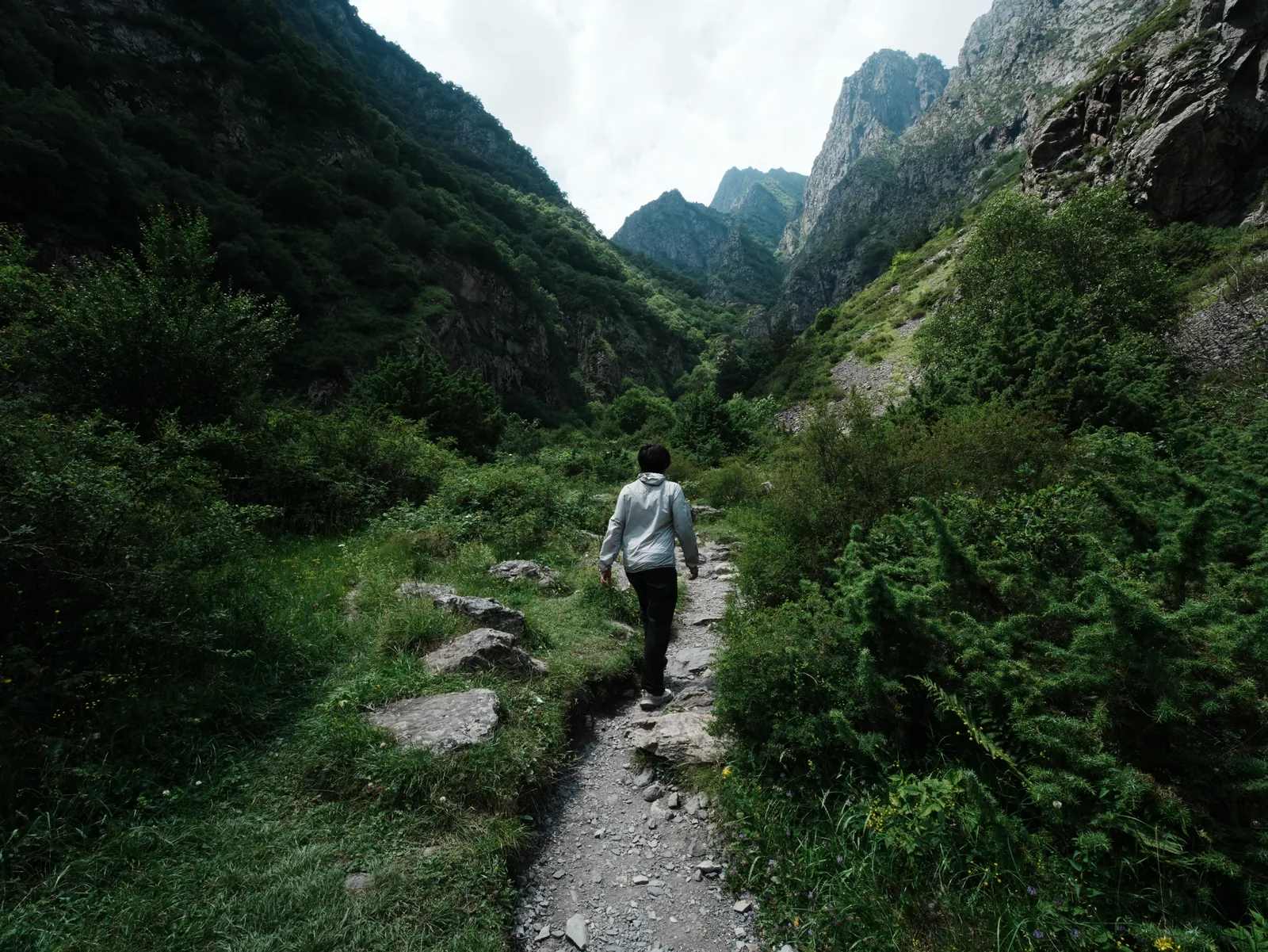
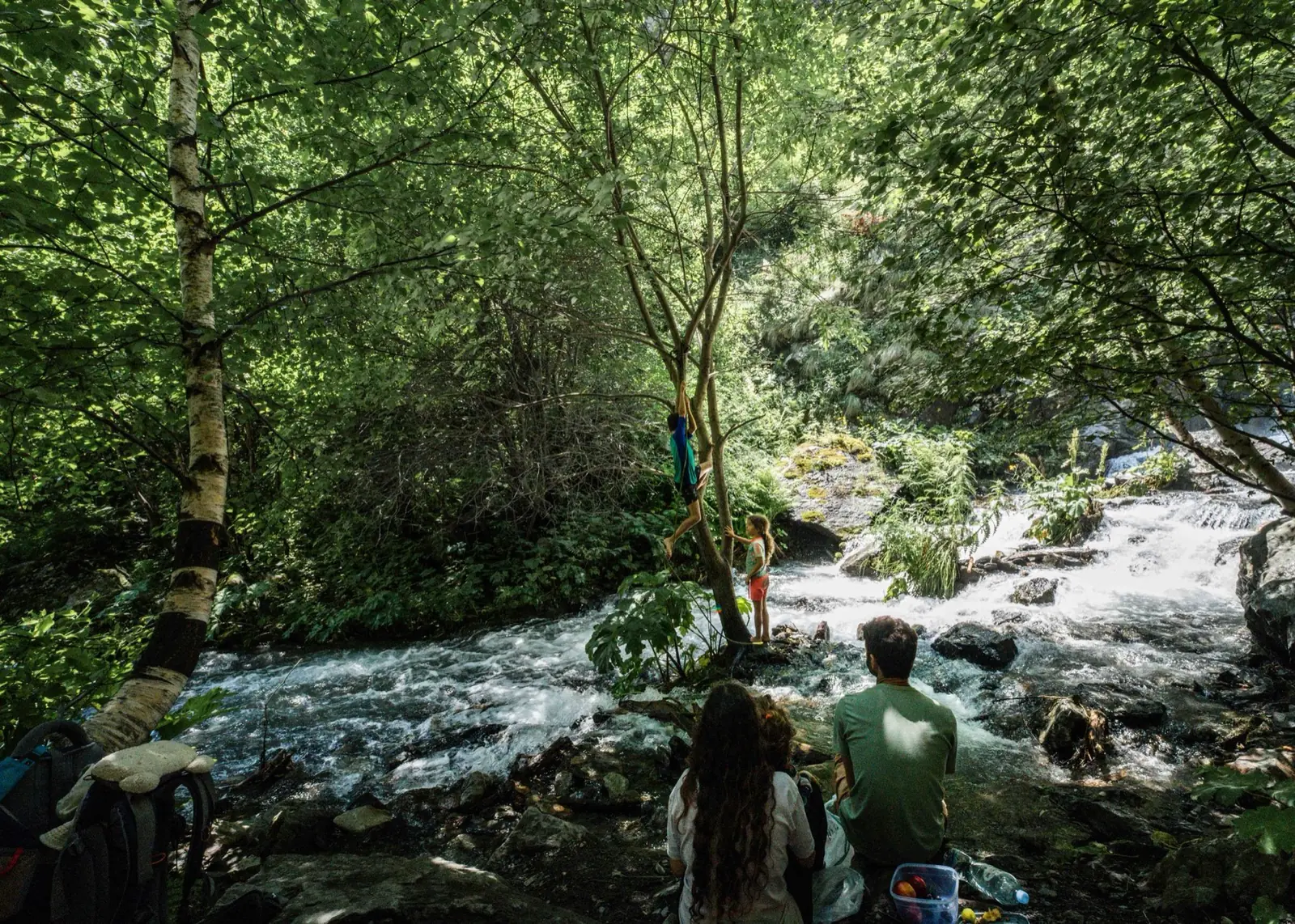
After the waterfall, at a gentler spot downstream there was a small stream where I saw a foreign child climbing a tree, swinging on a rope tied to it, while his parents sat beside him — not only not stopping him, but encouraging him and teaching him how to climb. In China, this would probably earn a scolding from the parents. Honestly, my first feeling was worry, afraid the child would fall and get hurt. Later I thought this might just be the caution and anxiety of Chinese people, who don’t want their children to take any risk, while foreigners seem free of that concern. It made me think that at that age I was probably still preparing for the high-school entrance exam — I believe every child who’s been through China’s exam-oriented education would think that before eighteen you should study every day, weekends included. Back then I couldn’t have imagined this scene: my parents taking me to climb trees in a stream.
Standing by that little stream, it struck me how differently people — and nations — can choose to live; perhaps we ought, now and then, to step outside the small world we know, and go see how those on its far side spend their days.
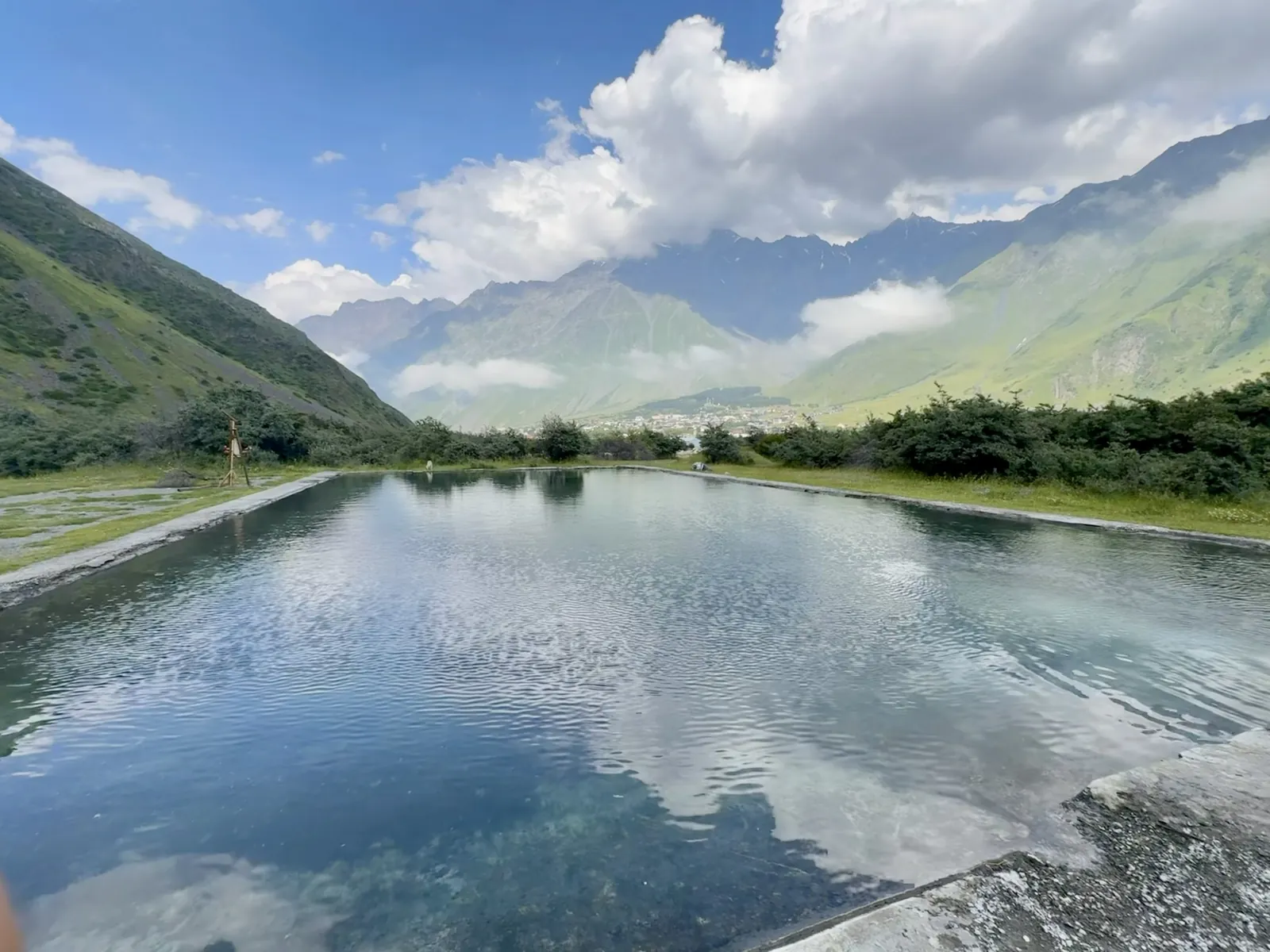
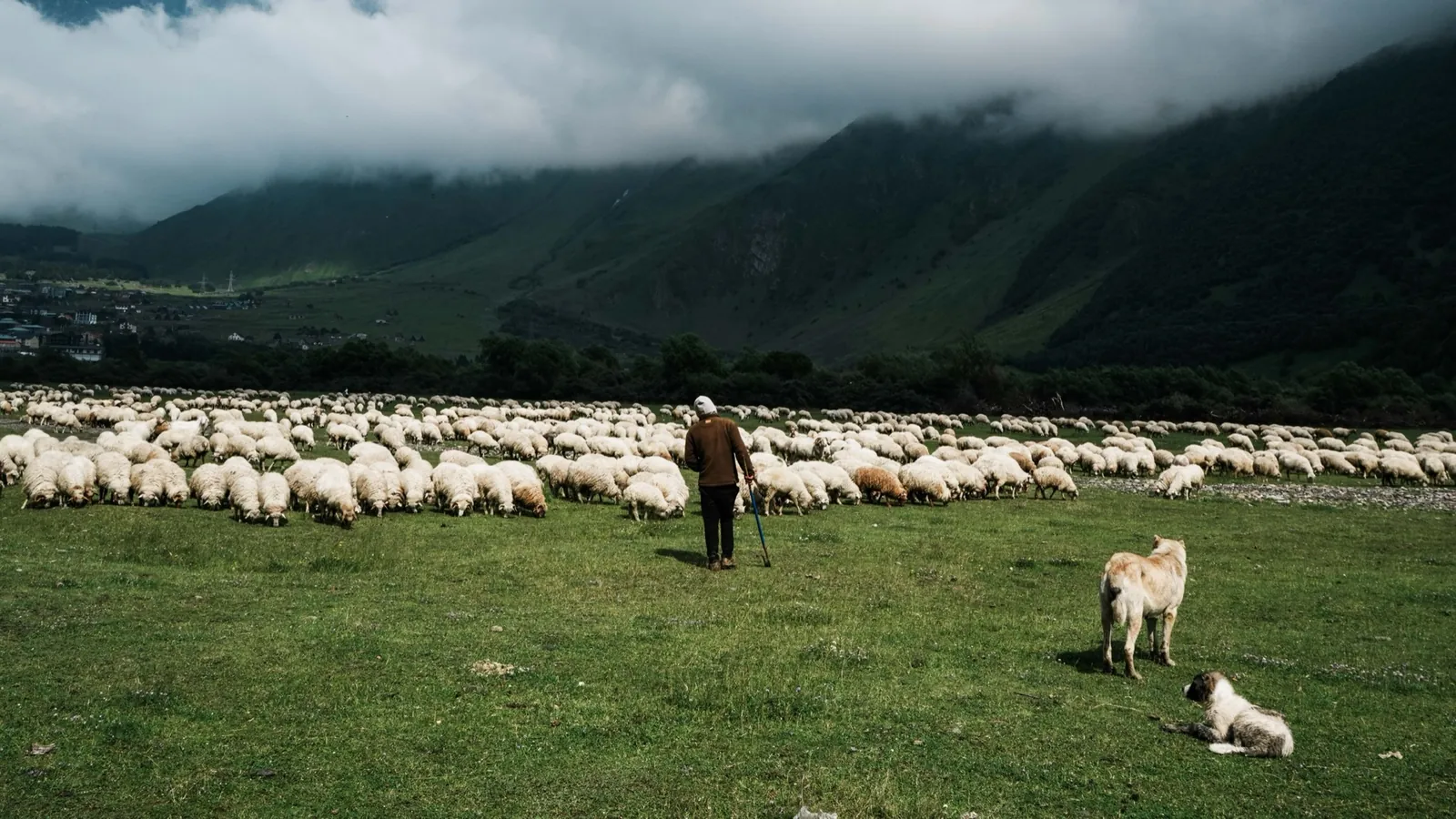
Pansheti Mineral Water Spring lies in the village of Pansheti, south of Stepantsminda. Carbonated groundwater has been channeled into a squared-off stone pit hewn from the rock, forming a wild swimming pool; the water keeps releasing tiny bubbles, and the iron-rich deposits turn red as they oxidize. When we arrived, a carful of foreigners was just leaving, apparently having finished swimming. We only took photos and didn’t go in — I felt the water wasn’t very clean; I worried about the water quality and about drowning, while also marveling at their boldness. Beside the pool is a great expanse of grassland, with the town of Kazbegi as the backdrop. As we parked on the grass to take photos, a shepherd passed by driving a large flock of sheep, with several dogs running around them while the sheep lined up and grazed slowly. A pool deep in the mountains, the distant town, and the flock before us all in one frame — both harmonious and wonderful.
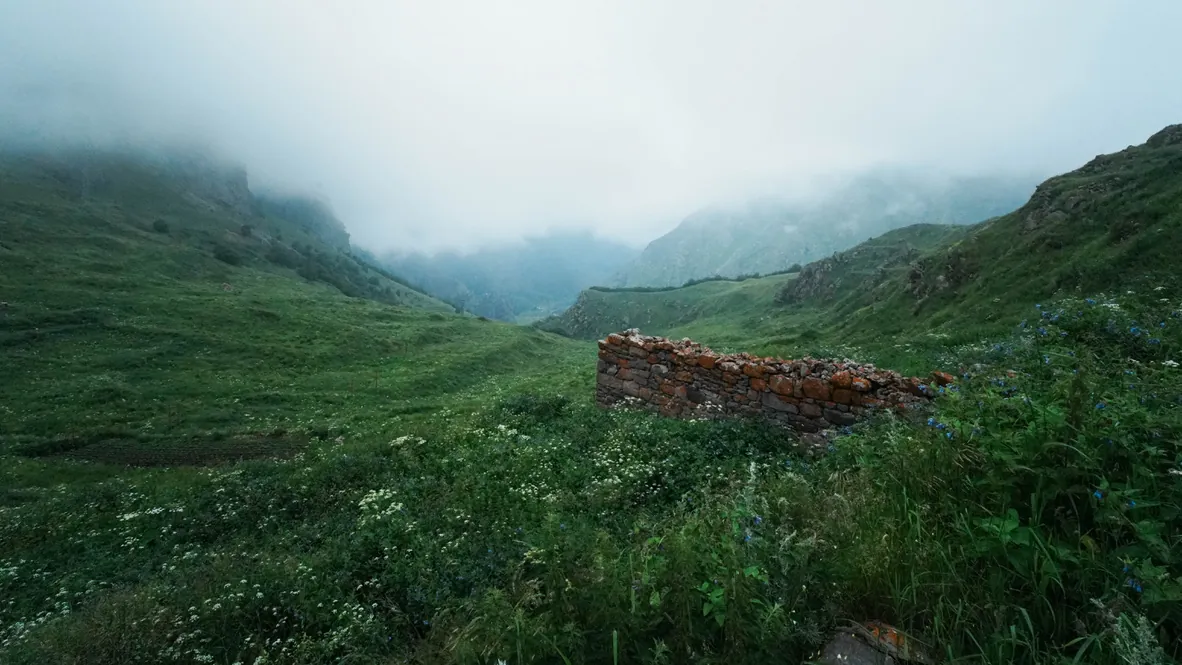
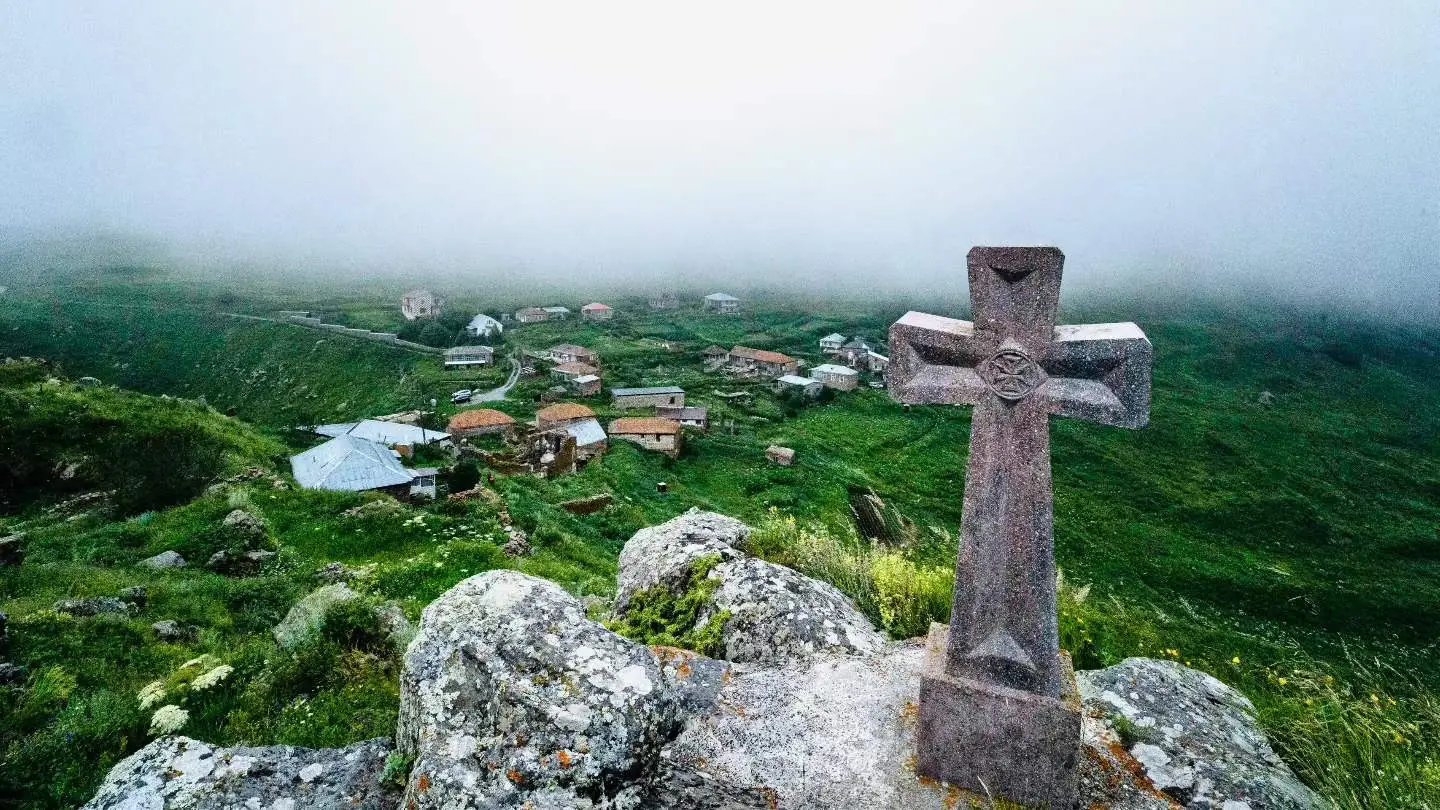
Today’s last stop was Tsdo Village , a place known as “the forgotten village on the cliff.” Driving about ten-odd minutes from Stepantsminda along the Military Highway toward the Russian border, you can spot this miniature village perched high above the gorge. It’s very close to the Russian border; most residents have long since moved away, leaving only primitive stone-house ruins and a small shrine at the village’s hilltop, with the deep, rushing Terek River below. It’s very off the beaten path, almost devoid of people — I saw no other tourists — yet the scenery is superb, and I’d recommend everyone come see it.
We walked up the village path to the heights, where many crosses overlapped with the village, alpine meadows, ruins, and dilapidated medieval-style stone walls interwoven. That day everything above the summit was fog, which instead gave the whole village the feel of The Witcher 3 or The Hobbit — like a scene from a medieval film where fog rises and demons and evil spirits are about to appear. Looking at the crosses on the hilltop, it was as if they were still keeping watch over the village through the night; amid the wind and the fog, I half-understood why this land has held to its faith for generations.
Leaving Tsdo, we circled a long while at the foot of Mount Kazbek before finding our second Kazbegi guesthouse, My Space Kazbegi . The owner, Mary, came out to greet us from afar; she probably guessed from my driving — and the fact that one other guest hadn’t arrived — that we were the ones she was waiting for. Her English wasn’t good, and she couldn’t understand much of what I said, but she always patiently used translation software to communicate. My first impression of her was of great kindness; from that smile and goodwill you could feel she genuinely welcomed us. As she was about to show us the room, I accidentally locked my girlfriend in the car, and only realized when she knocked on the window and I hurried to unlock it; Mary looked back and chuckled, seeming especially gentle.
The guesthouse has four rooms on two levels, with a room on the ground floor set aside just for coffee and tea. Everything was spotless — you could tell Mary ran it with care. The house is like a simple prefab of plywood; the scenery isn’t top-tier and the amenities aren’t as good as the cabin the night before; yet its rating on the booking platform was as high as 9.5, a rare score. Mary’s top-notch service and immaculate rooms make it absolutely deserving of that 9.5. That evening, we ordered her 50-lari breakfast via WhatsApp.
On the morning of the fifth day, we’d planned to watch the alpenglow from Space’s terrace, but found the hotel was itself on Mount Kazbek, so of course we couldn’t see it; add the thick morning fog, and we had to give up. We didn’t feel too much regret, though: for the alpenglow, there’s always another snow mountain; I’ll most likely go to Tibet in the future, and should be able to make it up then.
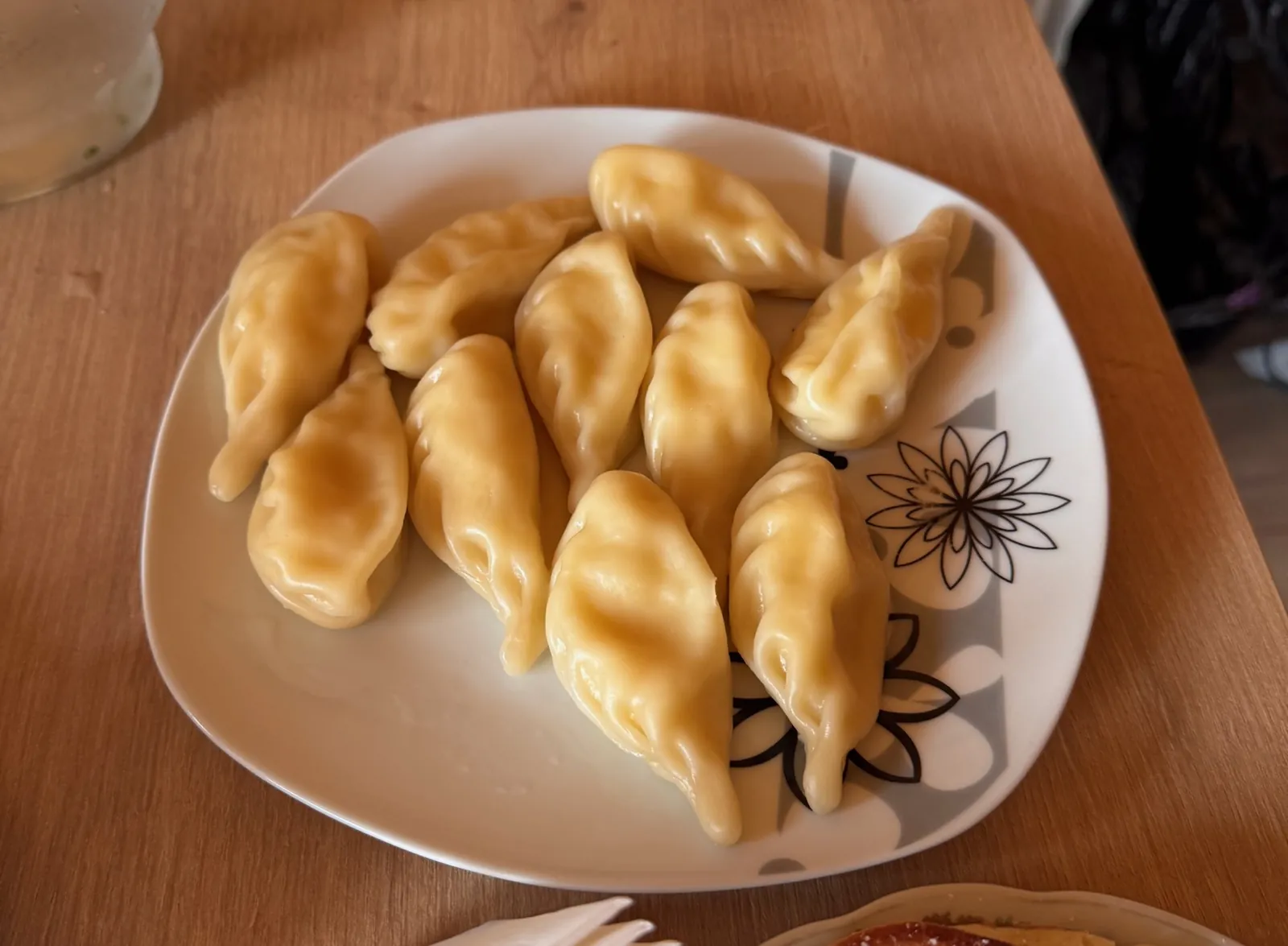
The breakfast was huge. The mashed-potato dumplings were startling — I’d never imagined mashed potato could be wrapped into a dumpling; the little sweet cakes were like dorayaki dusted with sugar, nice with coffee; the best was still the egg pancake — a food very common in China, yet here it felt especially familiar and comforting. As we left, Mary bade us a warm farewell. I tried to slip her a tip, but she stepped back half a pace and, with regret and apology, said, “I can’t accept it.” I thought she was truly genuine and unaffected.
Afterward, we drove on toward Gori and Kutaisi.
Chapter 5 | Where Language Cannot Reach
About language: most Georgians aren’t good at English, so aside from restaurants and hotels catering to foreign tourists, communicating with locals can be a bit difficult.
This can lead to a problem: when travelers who speak neither English nor the local language reach some restaurants or shops, the staff can seem unenthusiastic, while being warm to locals. We reflected on this later — it may be that they couldn’t understand our language and we couldn’t understand theirs, so they felt helpless too, and it couldn’t be helped.
This contrast became especially clear after we went from Kazbegi to Kutaisi: Kazbegi is a tourist destination with a large number of foreign visitors, where the service staff are professional, fluent in English, and extremely warm, and we spent a precious, happy time there; Kutaisi, by contrast, is relatively off the beaten path — most travelers treat it merely as a transit hub linking eastern and western Georgia, so tourists are far scarcer than in Tbilisi, Kazbegi, or Batumi, and locals own the streets. So when we wandered near Kutaisi’s White Bridge at ten at night, we met a scene utterly different from those tourist cities: young people gathered in groups outside bars, talking and laughing loudly, the bars bustling; fashionably dressed young men and women brushed past us, and youths raced by in BMWs and Mercedes, windows down, blasting music — the night is when this city truly wakes up.
Yet we two travelers from East Asia felt utterly out of place amid all this liveliness. We didn’t understand their language, nor were we used to bar culture: walking into a bar rated 4.8 on Google, we found a dozen people crowded around a single table, shouting and laughing so loudly we could barely hear each other; several servers watched us come in, but no one came to show us to a seat, and a few minutes after we sat down, someone came to tell us every table was reserved, so we had to slink back out. The whole street was lined with bars, and the others were surely the same — trying another would likely just mean reliving the same embarrassment. In that moment, frustration and intimidation washed over us together, and for the first time we truly realized how hard it was to fit into local life.
Later we went to another restaurant, where the service was warmer. Amusingly, this restaurant had many big, food-loving dogs at its door; they’d nestle at your feet, hoping to be fed, and once you fed one, more dogs would gather around, circling the table, heads raised, staring at the food — a unique experience. In China, for food-safety reasons, animals are barred from restaurants; but here, you can feed the cats and dogs while enjoying your meal.
This experience was much like the one at a barbecue place in the town of Kazbegi, a restaurant called Relax, widely praised on Xiaohongshu. The place had three people — a cheerful kid, a grill-master uncle, and an aloof owner; that aloof owner looked exactly like Léon, the lead of Léon: The Professional, right down to that silent, detached air. The menu was in the local language, quite cryptic to us; just as we were staring at it, baffled, the owner seemed to sense our plight and said, “OK, I recommend…,” and on his recommendation we had roast pork and the local specialty Chacha. Chacha is a strong liquor, but as you drink it you don’t taste the alcohol — only sweetness; by the time you notice you’re a bit dizzy, you’re already drunk. The owner had two cats, one black and one black-and-white.
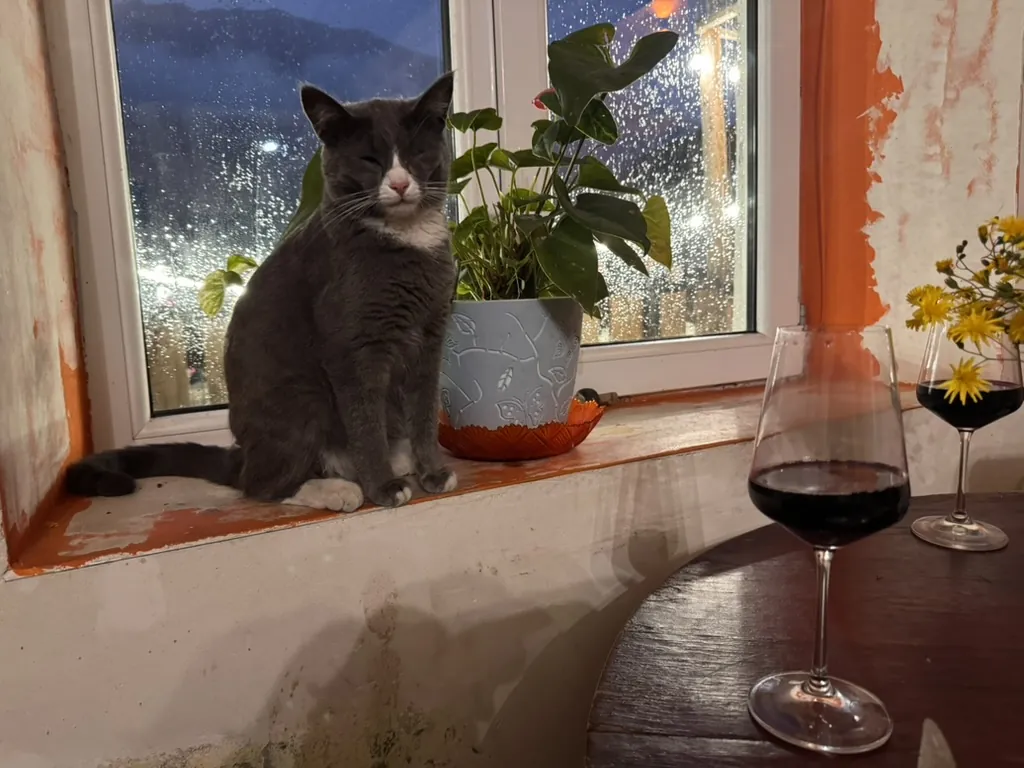
The black-and-white one, named Susanna, was quite the extrovert; before the food even arrived, she jumped onto my lap for a nap, which built a good rapport between us; when the roast meat came, Susanna hopped onto the window beside the table — at first I didn’t get her meaning, but when she saw me digging in, she’d stretch her right front paw to the edge of the table (very well-behaved, never jumping onto the table), and then I knew she wanted some too. So I’d cut off a small piece of meat and feed her, and she’d take it without ceremony, gobble it in a couple of bites, then keep watching from the window. At that point, the black cat would sidle up to your feet too, shyer, watching quietly from under the table, hoping to be fed. Seeing the two kittens getting on so well with us, the aloof owner smiled and began introducing them to us. At checkout, seeing us digging through our backpacks for change, he said “that’s okay” and undercharged us. So, connected through animal friends, the owner warmed up too, which made me realize even more that sometimes locals’ aloofness or standoffishness may be caused by the language barrier — after all, you can’t expect a Georgian elder deep in the mountains to speak fluent foreign languages.
Back to the itinerary. That day we set out from Kazbegi for Gori. On the way out of the mountains we caught the sunrise, the scenery another flavor entirely from the sunset on the way in. At midday we pulled into a roadside KFC and treated ourselves properly — in my view, KFC is the best food in both Beijing and Tbilisi, bar none. After filling up at a Gulf station, we took the highway and reached Gori at four in the afternoon, planning to see the rock city first, then the Stalin Museum.
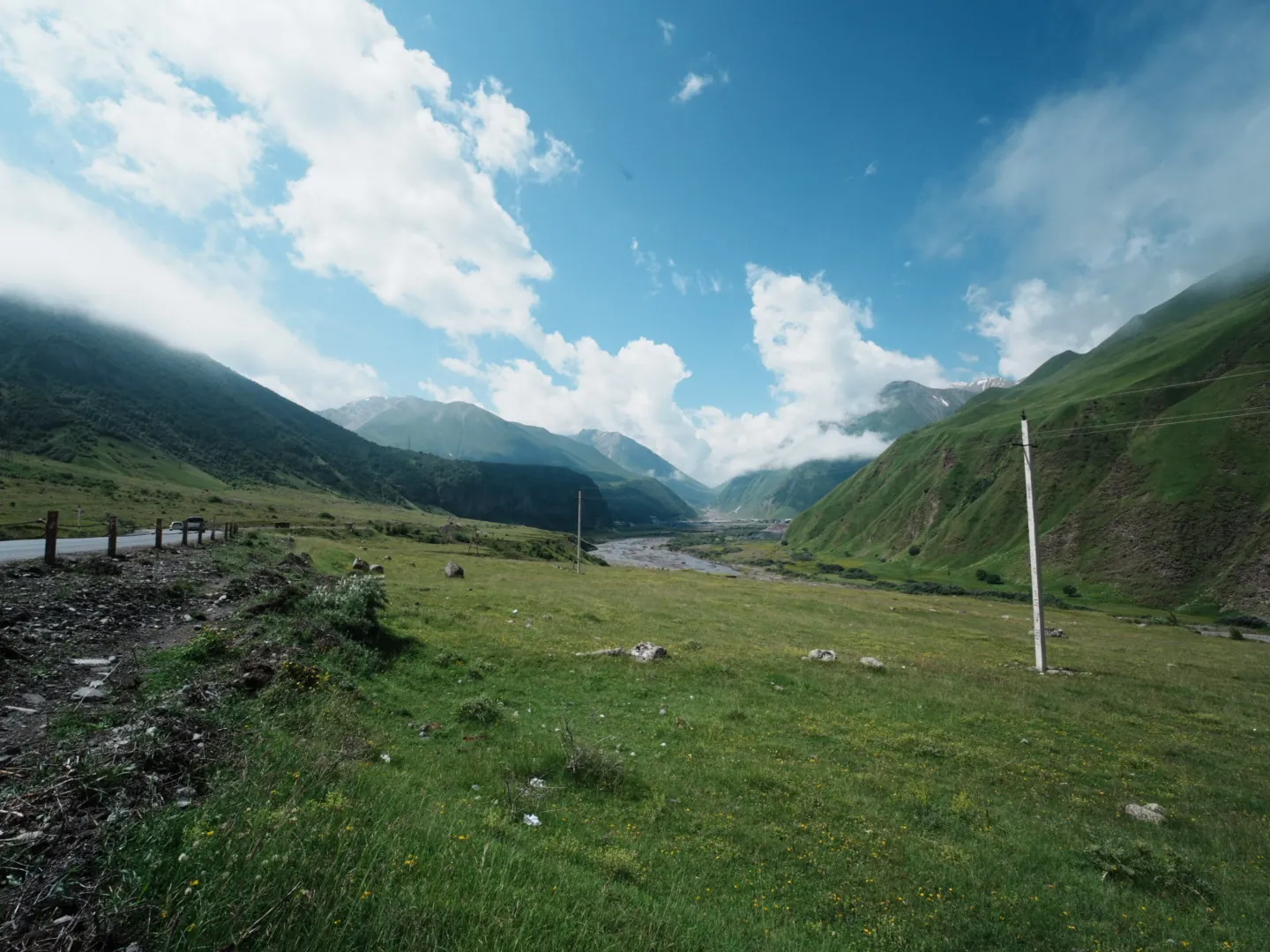
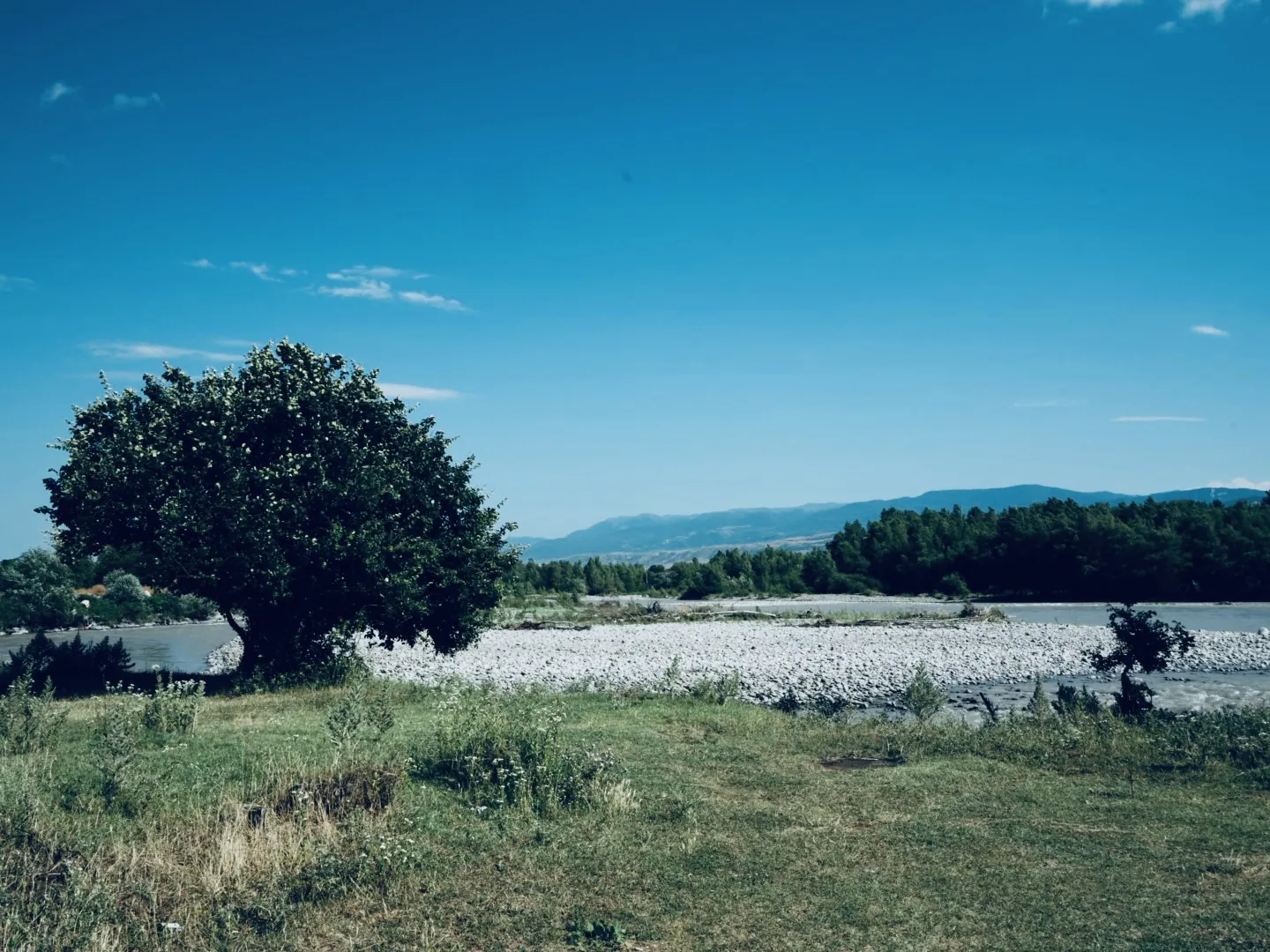
Uplistsikhe lies on the left bank of the Kura River about ten kilometers east of Gori; its name means “the Lord’s (God’s) fortress.” One of Georgia’s oldest urban settlements, people were carving dwellings from the solid rock here as early as the second millennium BC; as the political and religious center of the ancient kingdom of Iberia (Kartli), at its height it housed nearly twenty thousand people. It declined after Christianity arrived in the 4th century, flourished again from the 8th to 10th centuries when Tbilisi fell into Muslim hands, and was finally abandoned after the Mongol invasion in the 13th century.
Admission was just 15 lari per person. We used Doubao AI as our guide the whole time, having it explain each cave, what each chamber was for, and the history behind it, and we wandered for a long while — the place is huge and easy to get lost in. This meant we had no time left for the Stalin Museum — our car’s headlights were very dim, and we still had to hurry to Kutaisi, since driving after dark would be dangerous — so we hurriedly took a few photos and left, postponing the Stalin Museum to the return trip from Batumi.
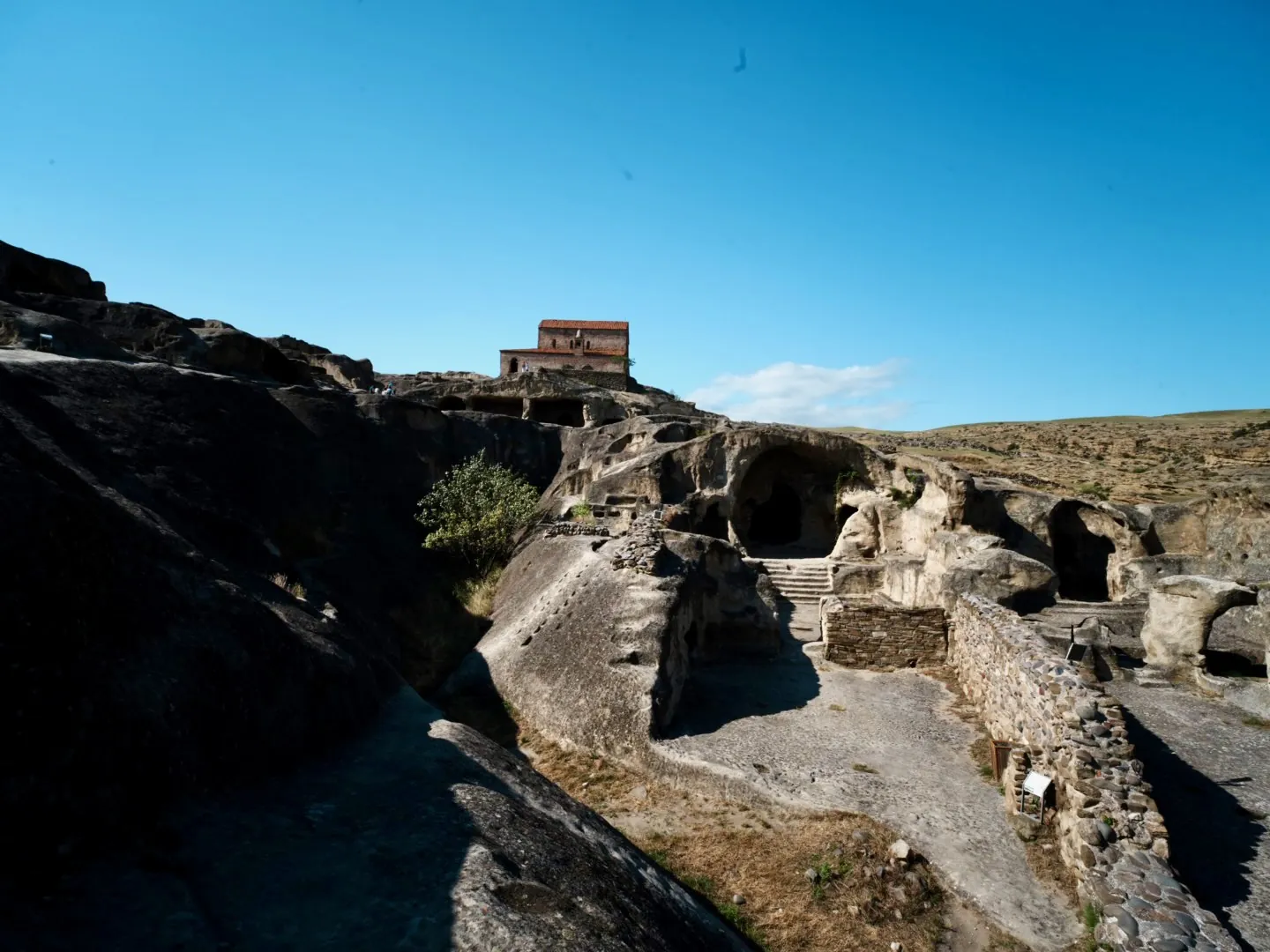
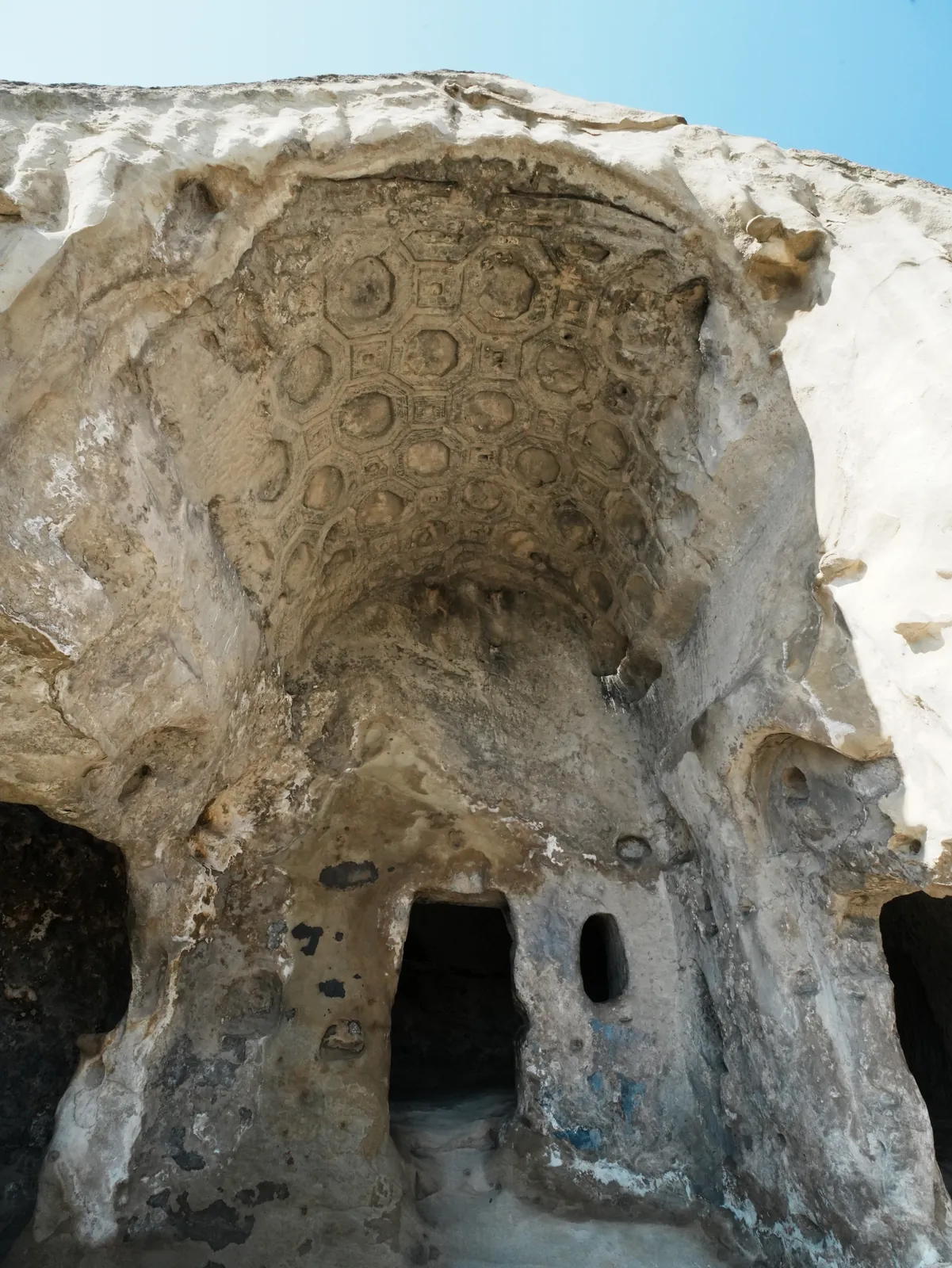
The rock city left an impression that lingered. To fend off invaders — the Mongols among them — the ancients carved an entire city out of the mountain itself and lived in it for generations. It’s oddly like the dwarves of The Hobbit, tunnelling deep into the rock to raise a realm of their own — a real-world version standing right before me. What struck me even more was that, cramped and harsh as it was, they never gave up winemaking: wine cellars hewn from the stone survive in the rock face to this day. It’s a place I’d wholeheartedly urge everyone to see.
Gori’s streets blend Soviet and medieval flavors, as if time had been paused; local students were playing basketball, children’s laughter drifting nearby. It reminded me of Fushun, near Shenyang — both move at a slow pace of time — with the leisurely air of a small town. Then we took a long stretch of highway to Kutaisi, mostly at 110–120 km/h. The Crosstrek has good torque but slow acceleration, so overtaking was painful.
Kutaisi was hillier than expected, but after the training of Kazbegi these mountain roads were no trouble. We checked into Hotel Orange Kutaisi . The owner is a man of fifty or sixty, usually unsmiling; but hearing us praise his house and little courtyard, he’d break into a proud smile. I wanted to park in the courtyard but couldn’t maneuver it around with my poor skills; he took over and parked it neatly in one go, very carefully. As for Kutaisi’s lively White Bridge night that belongs to the young, and the two out-of-place East Asian tourists we were, I’ve written about that above.
Kutaisi is one of the world’s oldest continuously inhabited cities, with over 3,500 years of history. It was once Aia, the capital of the ancient kingdom of Colchis — in Greek mythology, the very place Jason and the Argonauts sailed to in search of the Golden Fleece, and the homeland of the sorceress Medea. In the Middle Ages it was for a time the capital of the unified Kingdom of Georgia; the Bagrati Cathedral on the hill, completed in 1003, is seen as a symbol of Georgian architecture. Between 2012 and 2018, Georgia’s parliament even relocated here.
Chapter 6 | Relics, the Casino City, and the Sea
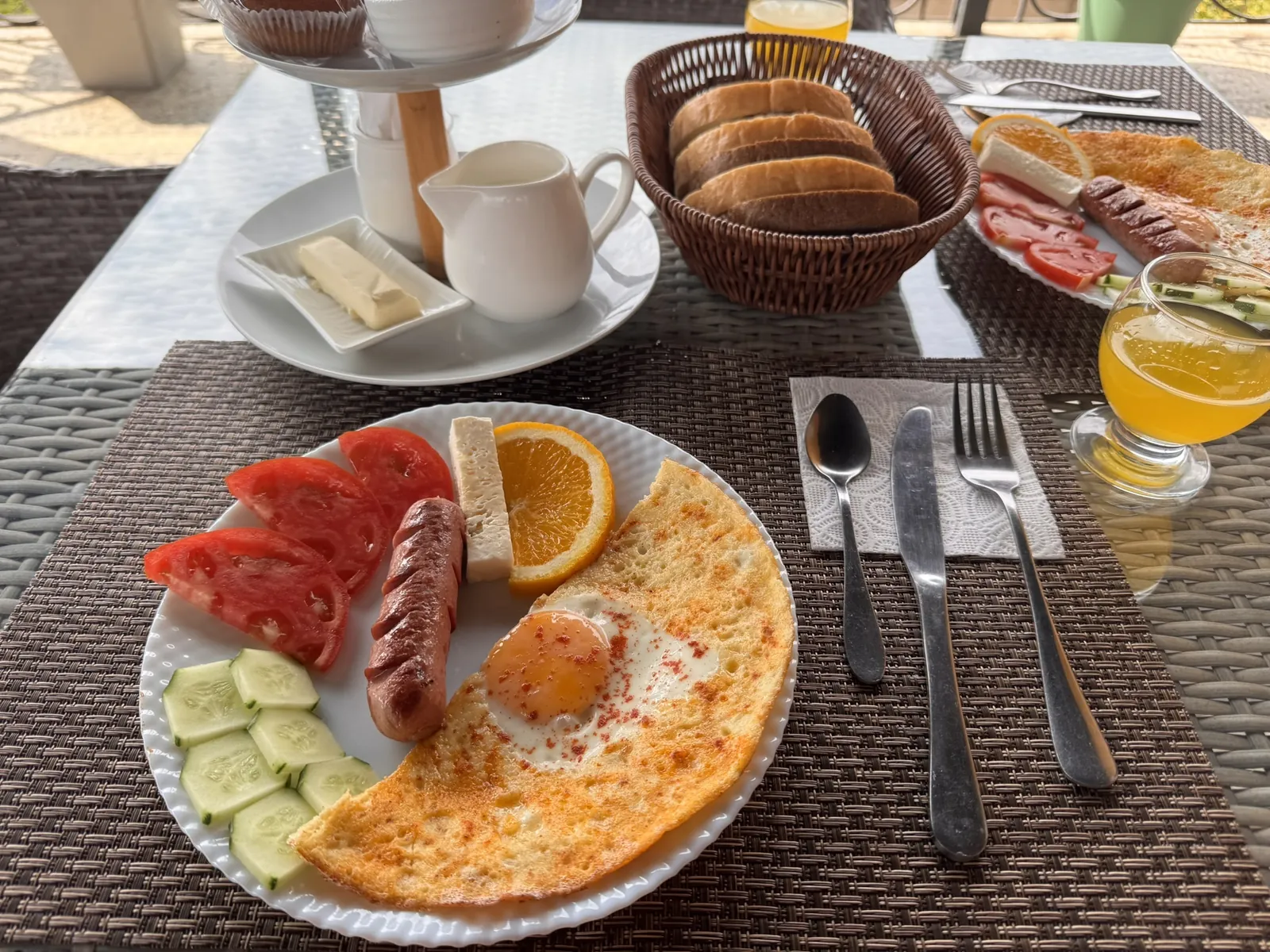
On the morning of the sixth day, the host prepared a hearty breakfast — orange slices, egg pancake, bread, coffee, and jam. After breakfast, we went to Motsameta Monastery , perched on a cliff above a bend in the Tskaltsitela River northeast of Kutaisi. There’s a thousand-year-old story about its origins:
Motsameta means “place of the martyrs” in Georgian, its name tied to two 8th-century noble brothers of Argveti — David and Constantine Mkheidze. When the Arabs invaded, the brothers led an uprising in resistance, but were defeated and captured. The enemy promised pardon if they converted to Islam, but the two refused unto death, and after torture were killed, their bodies thrown into the river below the cliff. Legend says the water turned blood-red, and the river was thereafter named “Tskaltsitela,” meaning “red water”; another legend says lions carried the martyrs’ remains up the hill and laid them where the monastery stands today. The Georgian Orthodox Church later canonized the brothers, and in the 11th century King Bagrat built a church here to guard their relics.
Walking into the monastery, headscarves are provided free at the door for women, and inside, a golden reliquary holds the remains of the two saints. Following the local tradition, we crouched and passed beneath the stone platform enshrining the relics — three times in all — for it’s said this can make a wish come true. On our way out, we each donated 5 lari. The monastery was rebuilt in the Soviet era and is a rather obscure sight; Asian faces are almost nowhere to be seen, and everyone present was very devout. To us East Asians, all of this was truly like a myth: the bones of saints preserved in a monastery for later generations to venerate — it left us in awe; along the way we saw nuns and locals, every face solemn, as if a deity truly kept watch at their side. That quiet certainty in their eyes was something we outsiders could never quite reach; we couldn’t say what it was, yet in that moment a deep respect rose in us unbidden.
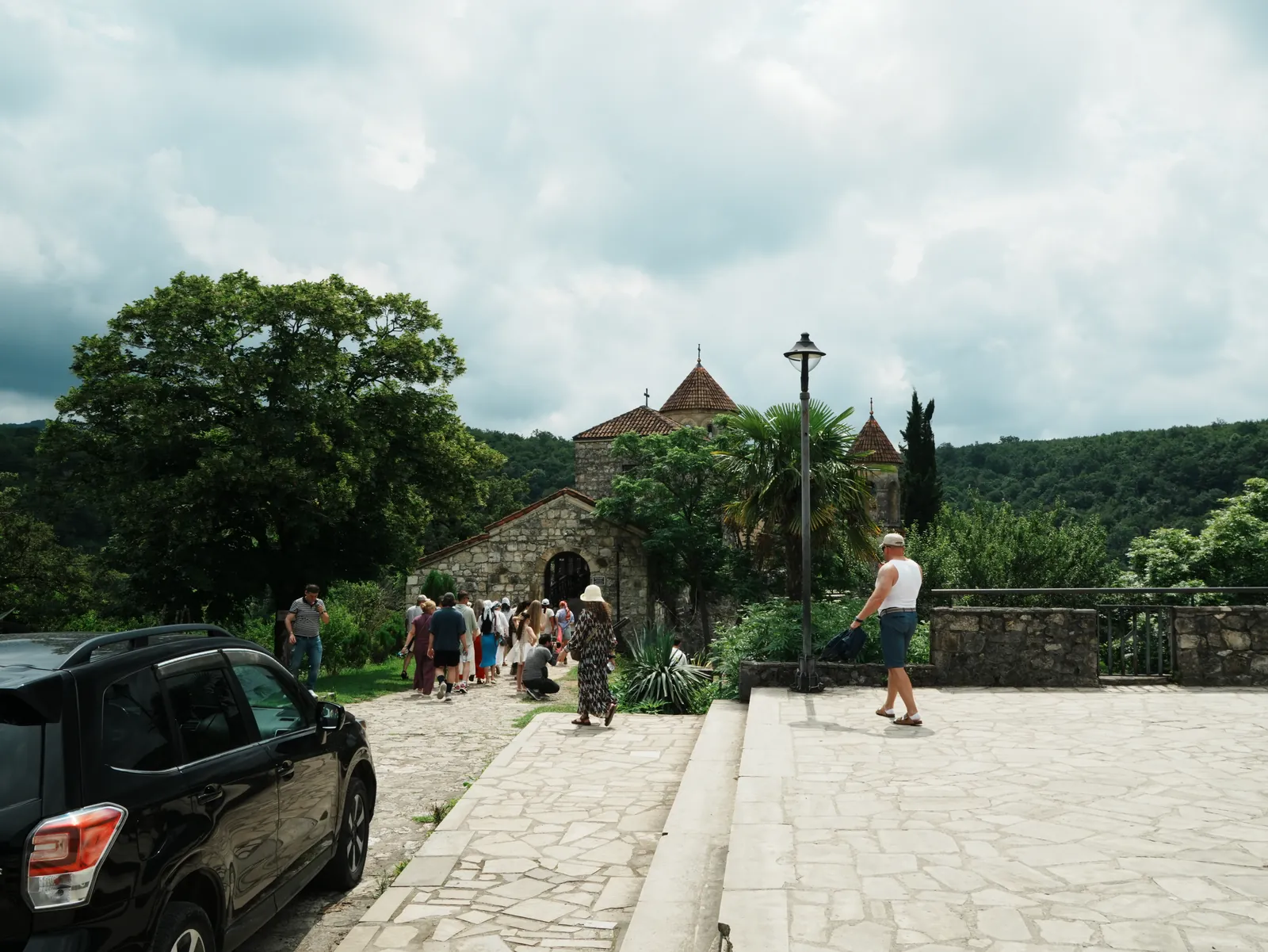
Near Kutaisi are scattered many sanatoriums left from the Soviet era. Most cluster in the spa town of Tskaltubo, famed for its hot springs — once a Soviet health resort, now with many sanatoriums abandoned, Sanatorium Medea among them. We wandered slowly among these empty buildings: mottled main gates, faded walls, shattered glass, and, in the surrounding park, other old buildings likewise forgotten by time.
Tskaltubo is famed for its rare radon-carbonate hot springs, whose water stays at 33–35°C year-round and can be bathed in without heating. In the Soviet era it was one of the most renowned health resorts, with nearly twenty sanatoriums built here, and it was officially made a city in 1953; “Spring No. 6” is said to have been built in 1950 specially for Stalin. After the USSR’s collapse in 1991, the state-run sanatorium system vanished overnight and these grand buildings fell into ruin; when the Abkhazia war broke out in 1992, over ten thousand displaced Georgians were housed in these empty sanatoriums, many living there for decades.
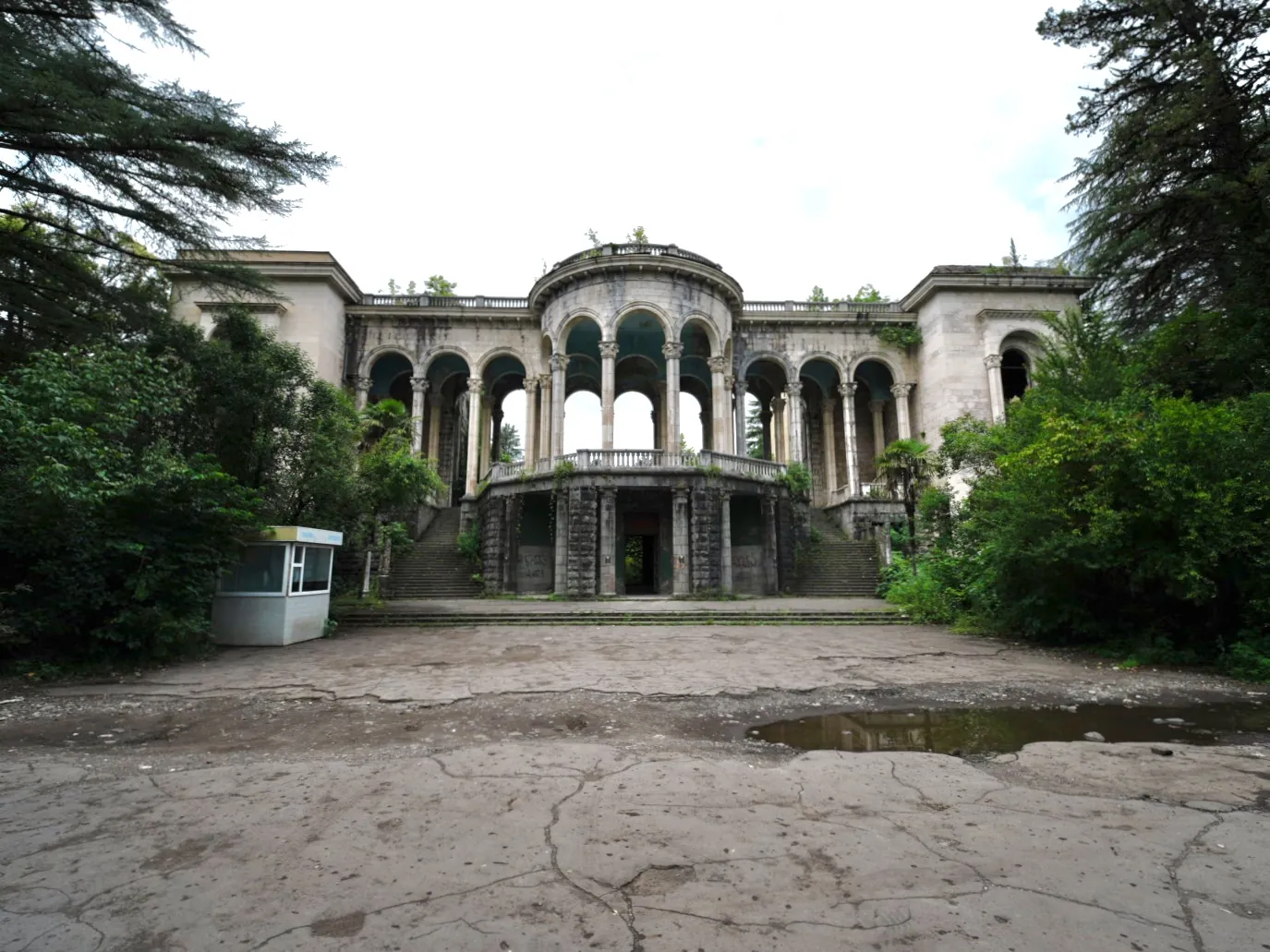
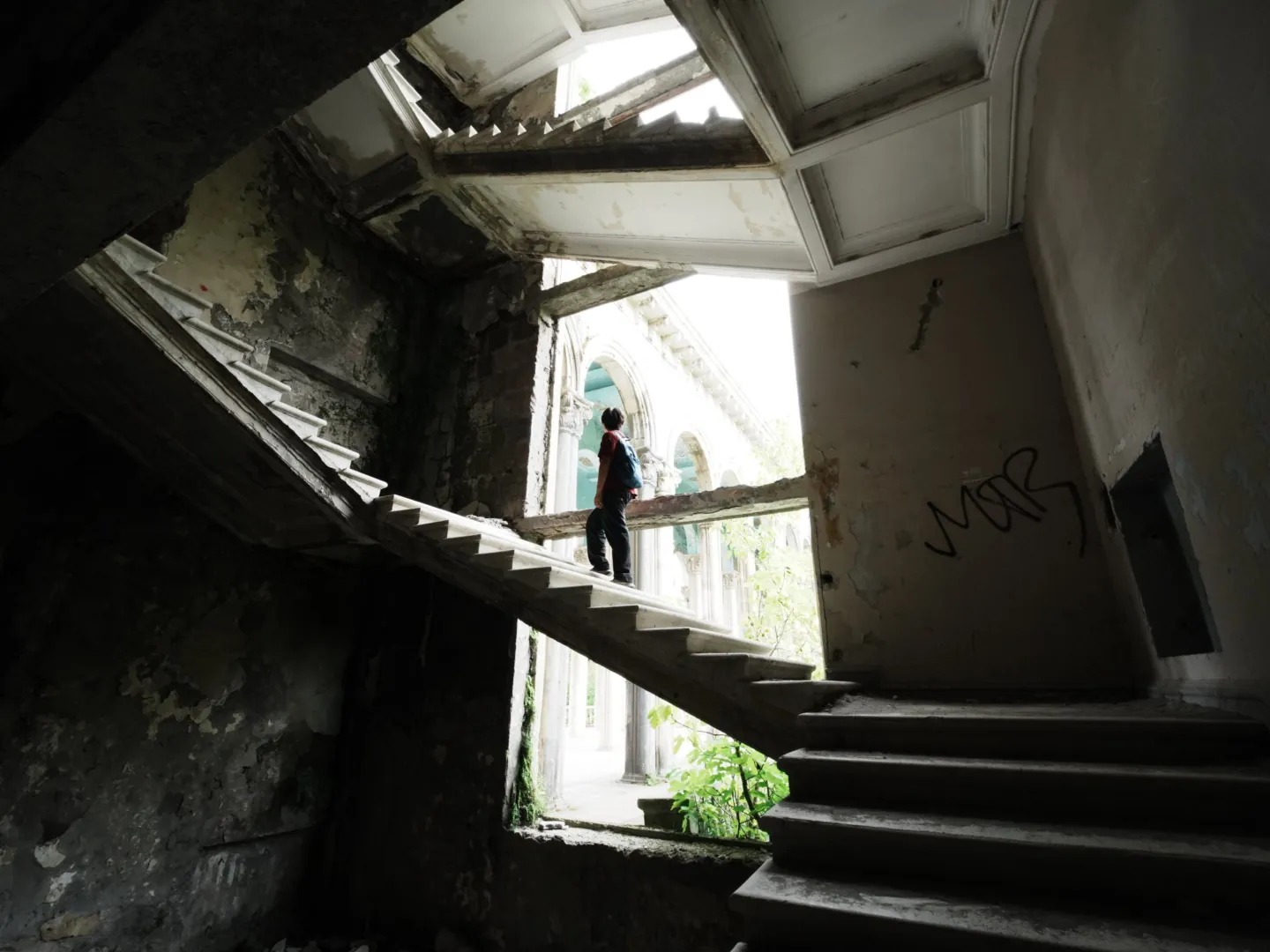
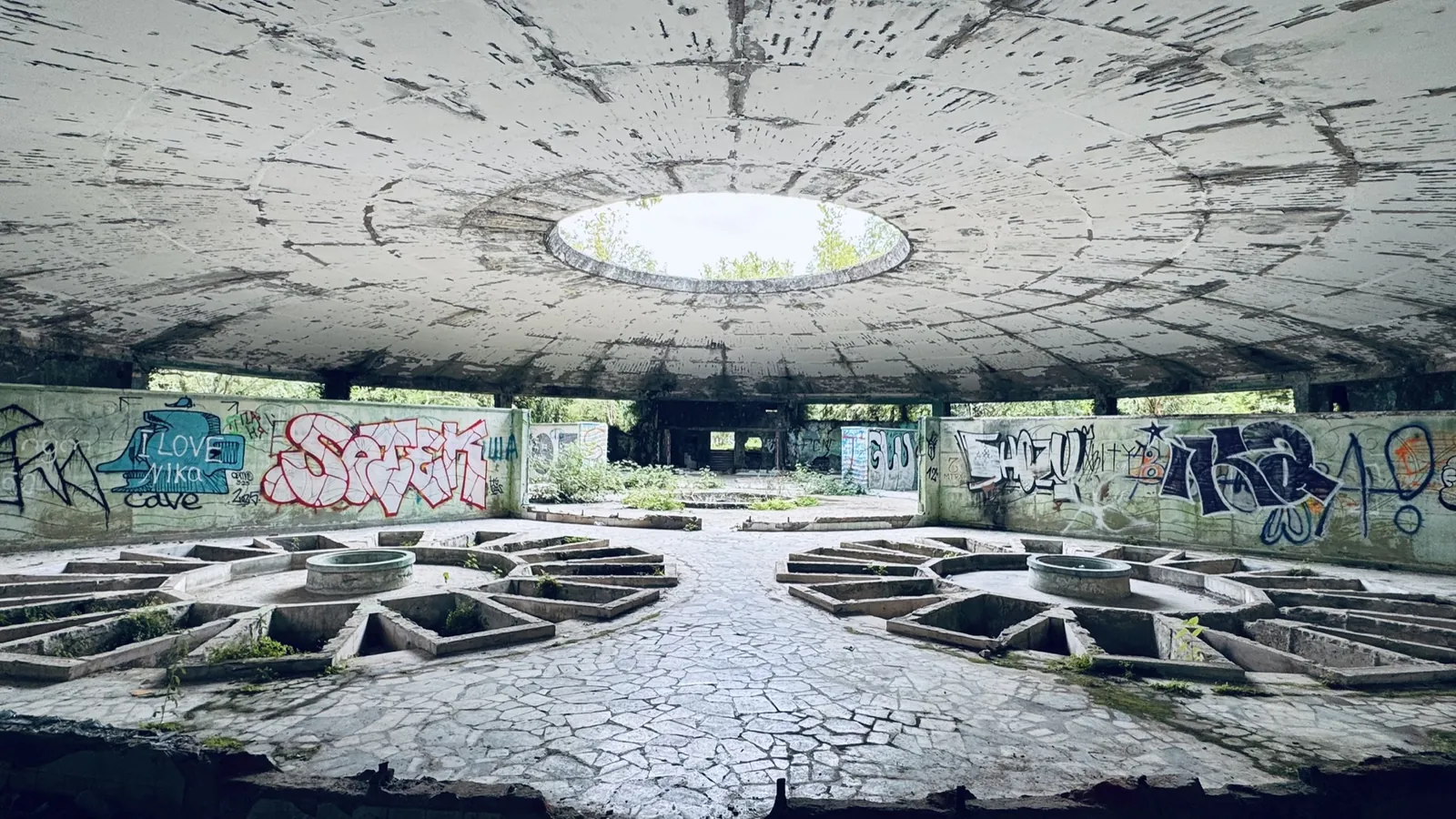
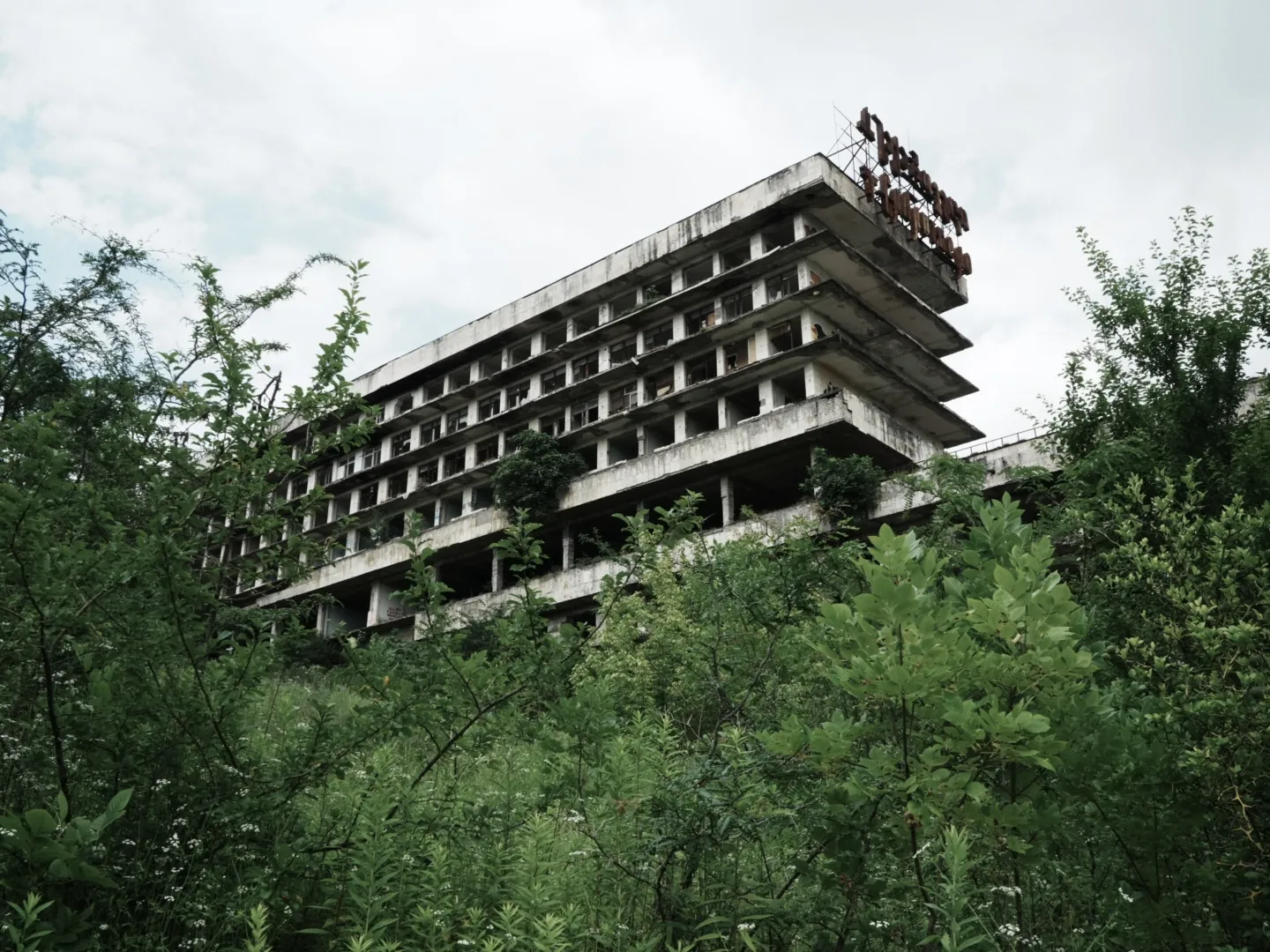
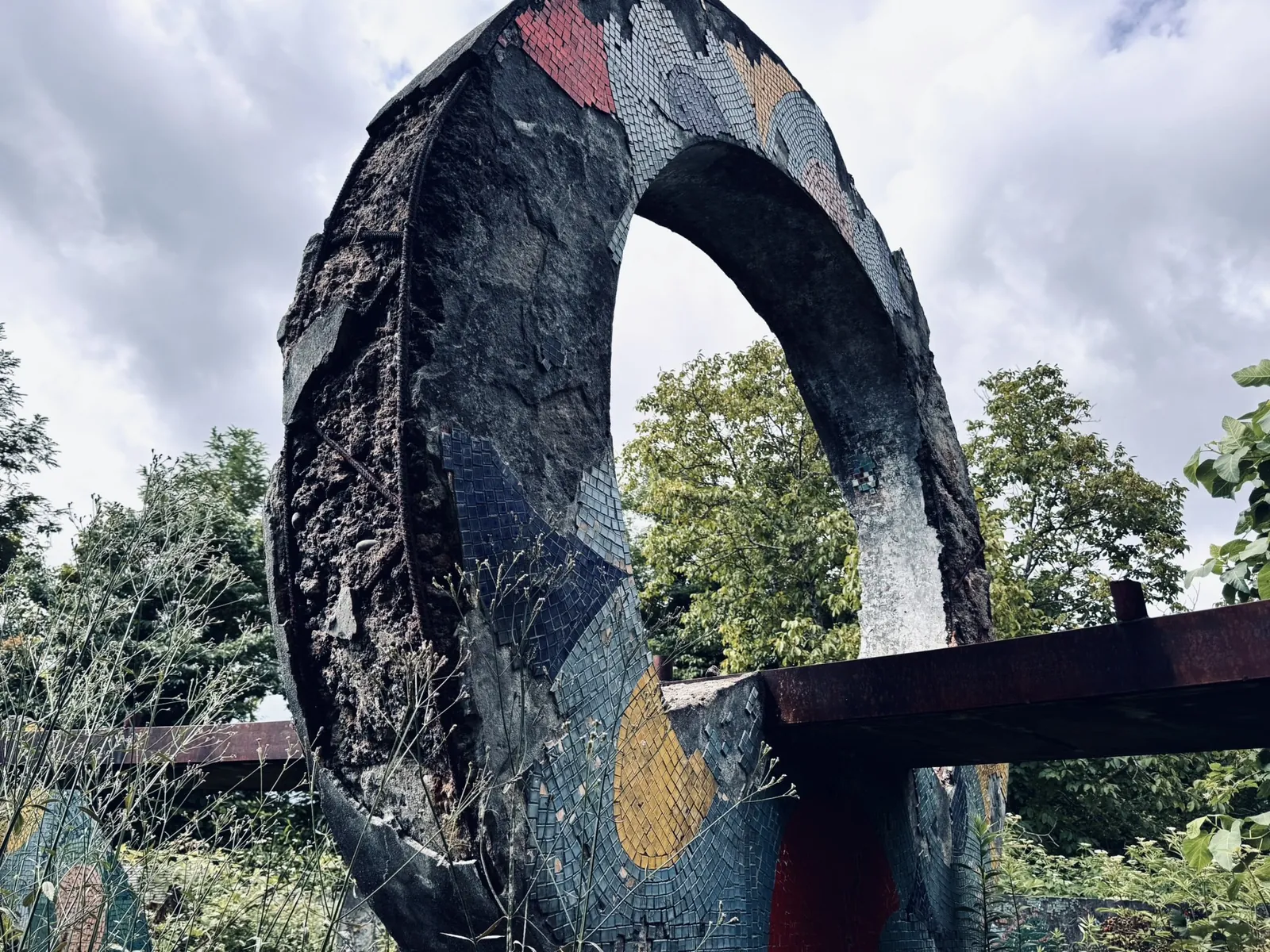
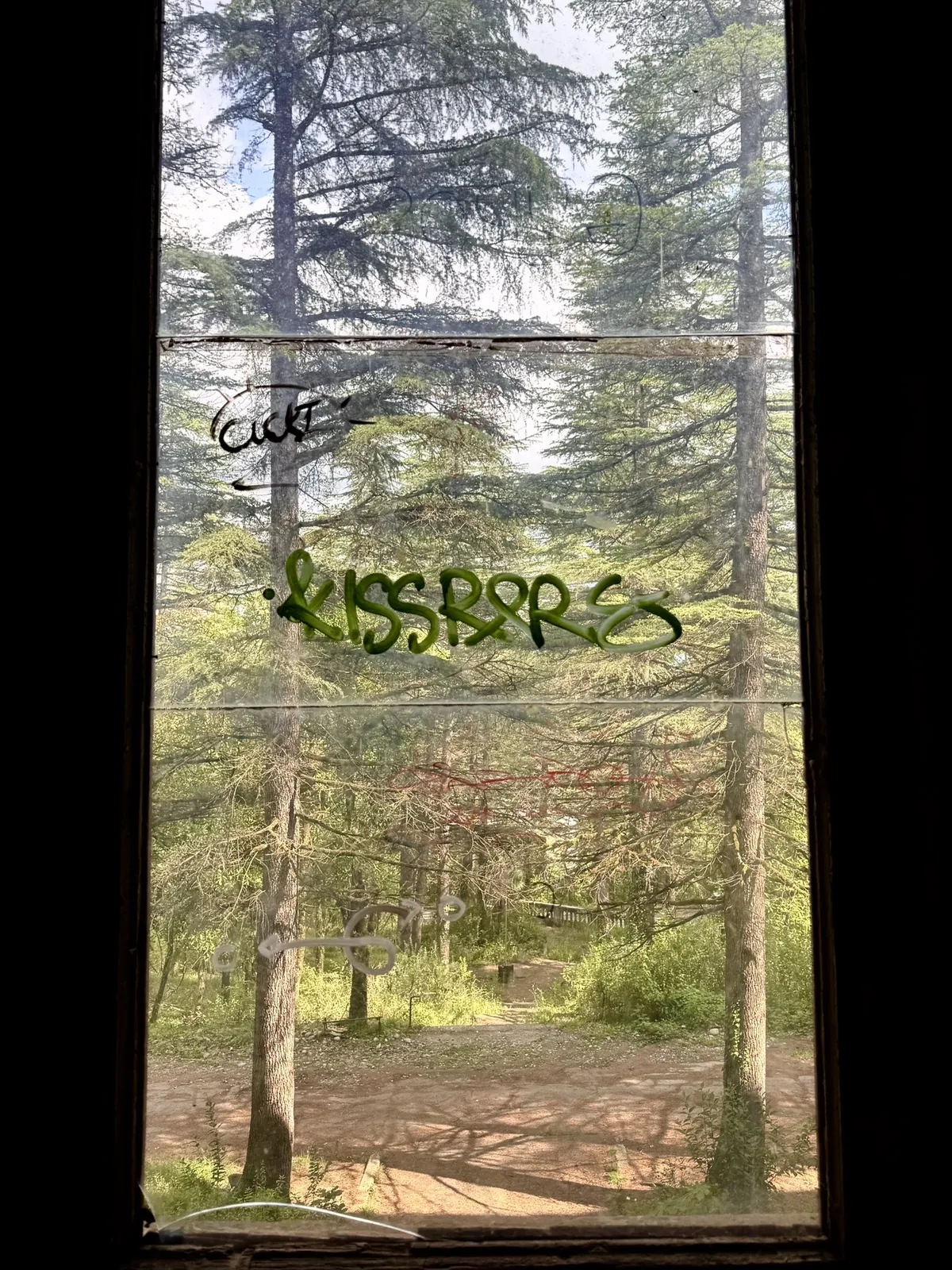
Walking through these sanatoriums, all that hit us was desolation and eeriness, even a little chilling: the air was full of dust, mixed with a damp, moldy smell. What surprised me even more was that, in a derelict building nearby, someone was actually shooting wedding photos.
On the morning of the seventh day, we set out early and hurried to Batumi. The road from Kutaisi to Batumi has many tunnels, and emerging from them often brought a bright, pleasant view, though clearly not as broad as the Kutaisi-to-Tbilisi stretch. Honestly, my first impression of Batumi was of luxury and modernity: we came to Georgia mainly for the natural scenery, but Batumi is like a giant casino city, with huge casino billboards from the outskirts on, and casinos everywhere once you enter. It’s a bustling, lively modern metropolis — it’s just that this kind of urban character didn’t particularly appeal to us, who came for the natural scenery.
Batumi is the capital of the Autonomous Republic of Adjara, on the eastern shore of the Black Sea, in a humid subtropical climate. Built on the site of the ancient Greek colony of Bathys, it was long under Ottoman rule and ceded to Russia after the 1878 Treaty of Berlin, when it was made a free port. The oil boom of the late 19th century transformed it: the Nobel and Rothschild families, among others, invested here, building the Baku–Batumi railway and pipeline (one of the world’s earliest overland sea-to-sea oil pipelines), turning Batumi into the most important oil port on the Black Sea. The young Stalin also worked here at the Rothschild refinery and helped organize the 1902 strike.
The Hotel Dadu we booked couldn’t be navigated to by Google Maps, because some surrounding roads simply weren’t marked, and we circled a long while before finding this owner-run four-story building. The stay was a poor one: plywood furniture, plastic stools, and a broken toilet that wouldn’t flush, which we could only manage with the shower head. The fourth-floor balcony was the only saving grace — yet the view from it was just a parking lot, a construction site, and other buildings. The surrounding high-rises were shabby and Soviet-style, their brightly painted walls peeling off in great patches. But considering it cost only about US$25 a night, I figured I couldn’t ask too much of it.
After dropping our luggage, we drove out to explore, but it was so hot that day that, to escape the heat, we first went to a mall, where we saw Google’s Pixel phone — nice build, feels a lot like an iPhone, with Google’s full suite built in, and reasonably priced — a pity it’s unusable back home, or I’d surely have grabbed one. As for the rest, it felt like malls anywhere else in the world, unremarkable, so we looked around and left.
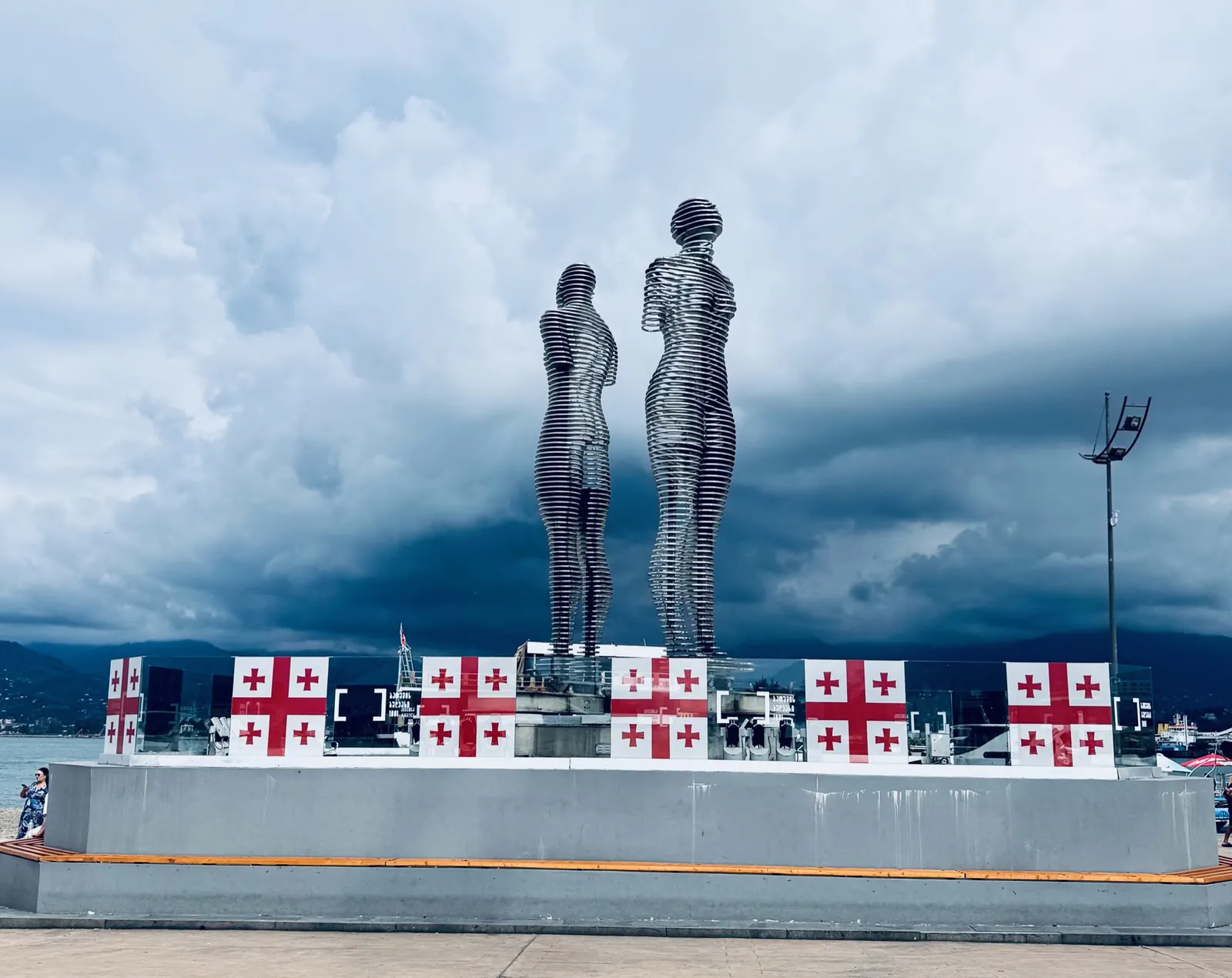
The weather that day was blazing and hot, with a hint of heatstroke; in such conditions, neither the seaside nor the city was enjoyable, so we sampled delicious ice cream at Luca Polare. Only when the sun grew less harsh did we set out for the Ali & Nino steel sculpture.
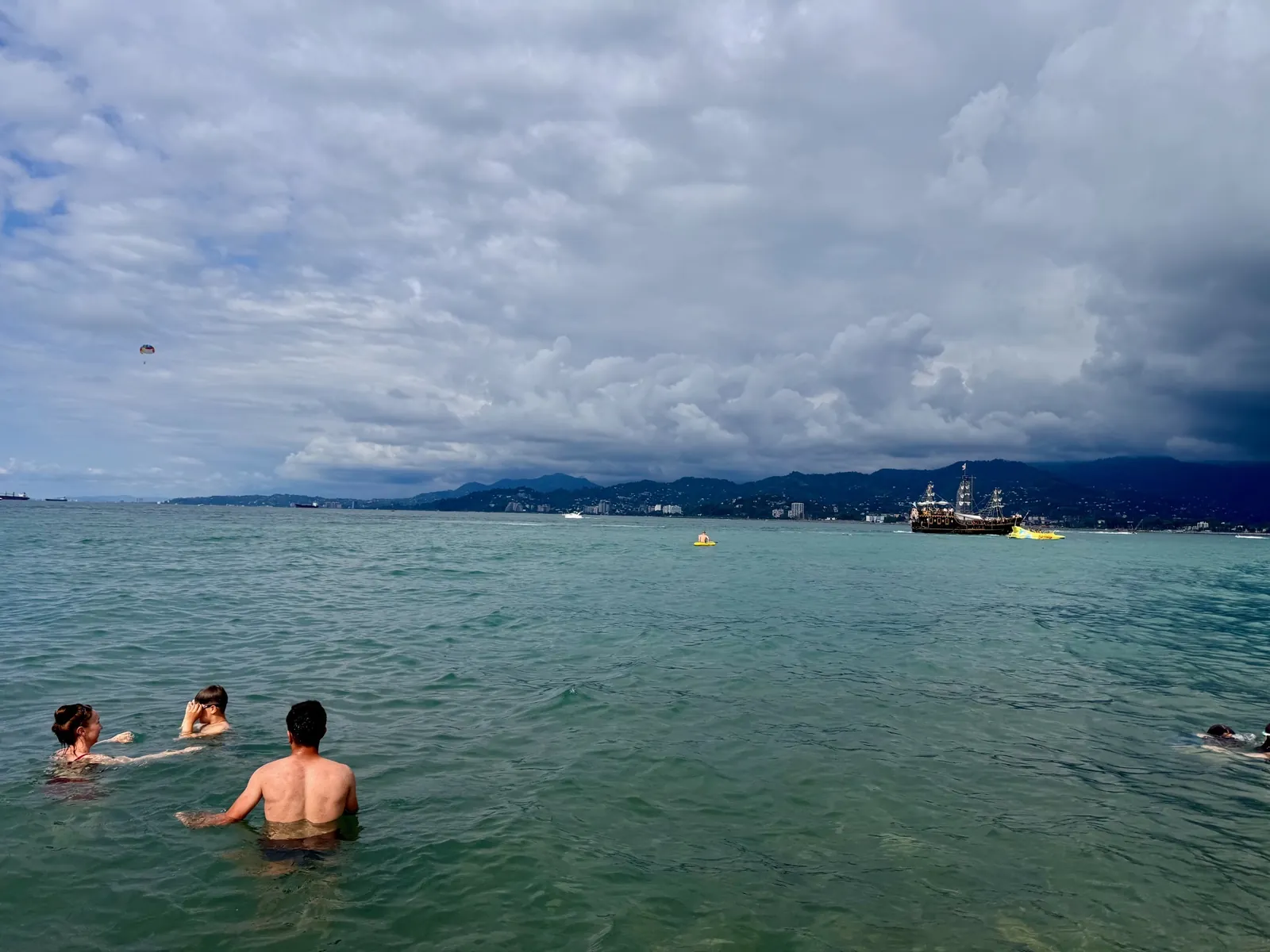
The sculpture stands right by the sea. We didn’t linger long at the water, to be honest — to my eye, one coast is much like another. The sea here isn’t as clear as Southeast Asia’s, no “glass water,” but it looks clean enough, and the shore is lined with all manner of amusements. One thing did surprise me: I later read that Batumi has a subtropical climate. By latitude it really shouldn’t — I suppose the terrain rewrote the weather, the Greater Caucasus and its spurs standing behind the city like a wall, sealing the warmth in along the Black Sea coast. In autumn or winter this place must be wonderfully pleasant; come in high summer, and you’ll have to wrestle with the heat.
These two eight-meter steel figures were created by the Georgian artist Tamara Kvesitadze and completed in 2010. Every evening at seven, they slowly approach and embrace, then pass through each other and gradually separate, the whole process taking about ten minutes. The work draws inspiration from the 1937 novel of the same name: an Azerbaijani Muslim youth and a Georgian Christian girl fall in love during the WWI years, ending in tragedy — the sculpture uses this motion of “forever meeting, yet never able to stay together” as a metaphor for love across religion and ethnicity.
I’d assumed they’d be colossal, tens of meters tall; though the real thing was far less grand than I’d imagined, when we’d traveled thousands of miles to get here and saw the Ali & Nino we’d seen countless times on screens standing right before us, that fact alone was romantic enough.
Batumi’s traffic also left an impression on me: the jams felt like Beijing’s morning rush, the difference being that in Beijing several lanes jam together, while here only the one-way lane jams. My advice is: don’t drive into central Batumi — park at the hotel and take taxis everywhere.
That evening we went to a halal restaurant, and after eating strolled about for a while.
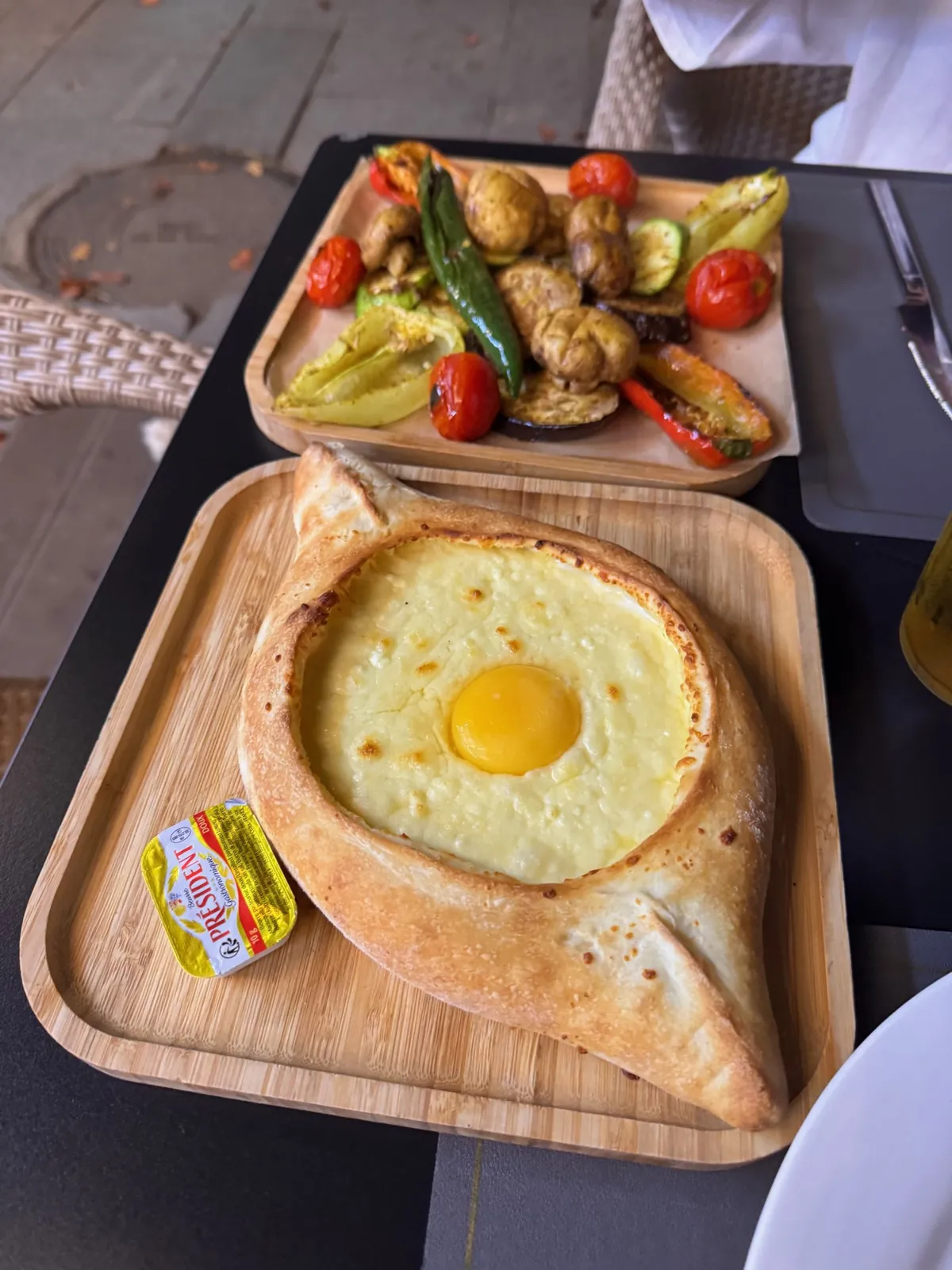
It’s worth mentioning that the Adjara region where Batumi sits is the birthplace of Georgia’s national dish — Adjaruli Khachapuri: a boat-shaped bread cradling melted cheese and an egg yolk, rich and fragrant, especially delicious dipped and eaten.
We took a taxi back to the hotel, and as I closed the car door getting out, my right thumb was caught in it, hurting so much I nearly lost feeling. I’d driven all day and was tired and sleepy, and kept fretting: could it be broken? Could I still drive back to Tbilisi the next day? That night I could only soak my hand in ice water, then hold it above my head, alternating like that all night — my companion looked after me the whole time, bought me an ice cup, and even carried the luggage for me. Thankfully, a checkup at the hospital after returning to Beijing showed no broken bone, just a soft-tissue injury.
Chapter 7 | The Return
On the eighth day, we’d planned to leave at six but forgot to set an alarm, and only crawled out at 7:30. My right thumb still hurt badly; driving, I basically kept a thumbs-up posture, as if praising every driver who passed us, though thankfully the road was safe enough. The only trouble was that this car had a mechanical handbrake, which required pressing a button with the thumb to release, forcing me to operate the handbrake with both hands — how I missed an electronic handbrake in that moment. The road back from Batumi was narrow at first, then widened; on the highway we also met some very slow cars — it seems every country has its slowpokes on the motorway — and we could only join the locals in overtaking them one by one.
We returned once more to Gori — last time we only saw the rock city; this time, you could say we came specially for Stalin.
Stalin was born in 1878 into a cobbler’s family in Gori. His birth cabin was turned into a memorial as early as 1937, during his lifetime; the two-story main exhibition hall was begun in 1951 and formally opened in 1957, one of the few Stalin-themed museums in the world. The complex consists of the birth cabin, the exhibition hall, and an armored private railway carriage — that 80-plus-ton green carriage was used by Stalin from 1941, and he rode it to the Tehran, Yalta, and Potsdam conferences. With over sixty thousand items in its collection — childhood photos, personal effects, and gifts from leaders around the world — it’s worth a careful visit.
Many people don’t know that Stalin was in fact Georgian, born Ioseb Jughashvili, with Georgian as his mother tongue — it’s said he spoke Russian with a heavy Georgian accent all his life. As a boy his mother sent him to the Orthodox seminary in Tbilisi, meant to become a priest, but there he encountered Marxism and took the revolutionary road; his early alias “Koba” comes from the outlaw hero in a novel by the Georgian writer Alexander Kazbegi — and the Kazbegi family were a prominent house of the very Kazbegi region we visited on this trip. Yet this “son of Gori” had a complicated relationship with his homeland: many Georgians also perished in the Great Purge during his rule. To this day, Georgia’s attitude toward him remains ambivalent — Gori keeps his museum and statue, while many others hold differing views of this history. (His mother, Keke, was finally buried in the Mtatsminda Pantheon in Tbilisi — the Holy Mountain mentioned earlier.)
We paid 15 lari to enter and saw several famous paintings, though sadly none were originals — the originals are kept in Moscow. Stalin himself never returned to Gori in the end — he died in Moscow in 1953, was first buried with Lenin, and was later reburied beneath the Kremlin wall. The museum also displays the “Boundless Longevity” scroll Mao Zedong gave Stalin, along with the famous painting of Stalin holding a little girl. The moment we saw “Boundless Longevity,” we felt both a pang of familiarity and emotion — to come upon something from our homeland in an exhibition hall in a foreign land — and we made a point of taking photos with them.
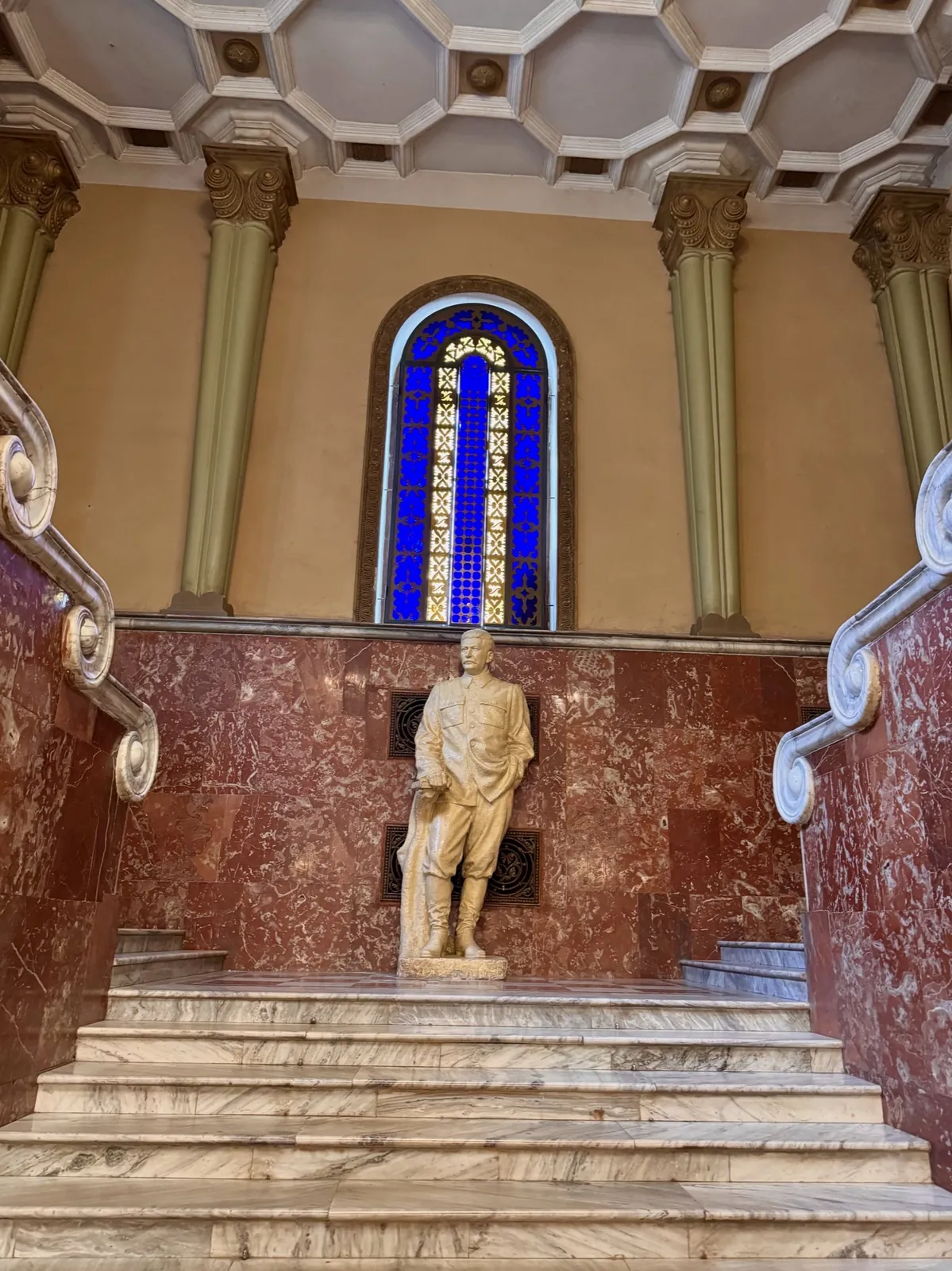
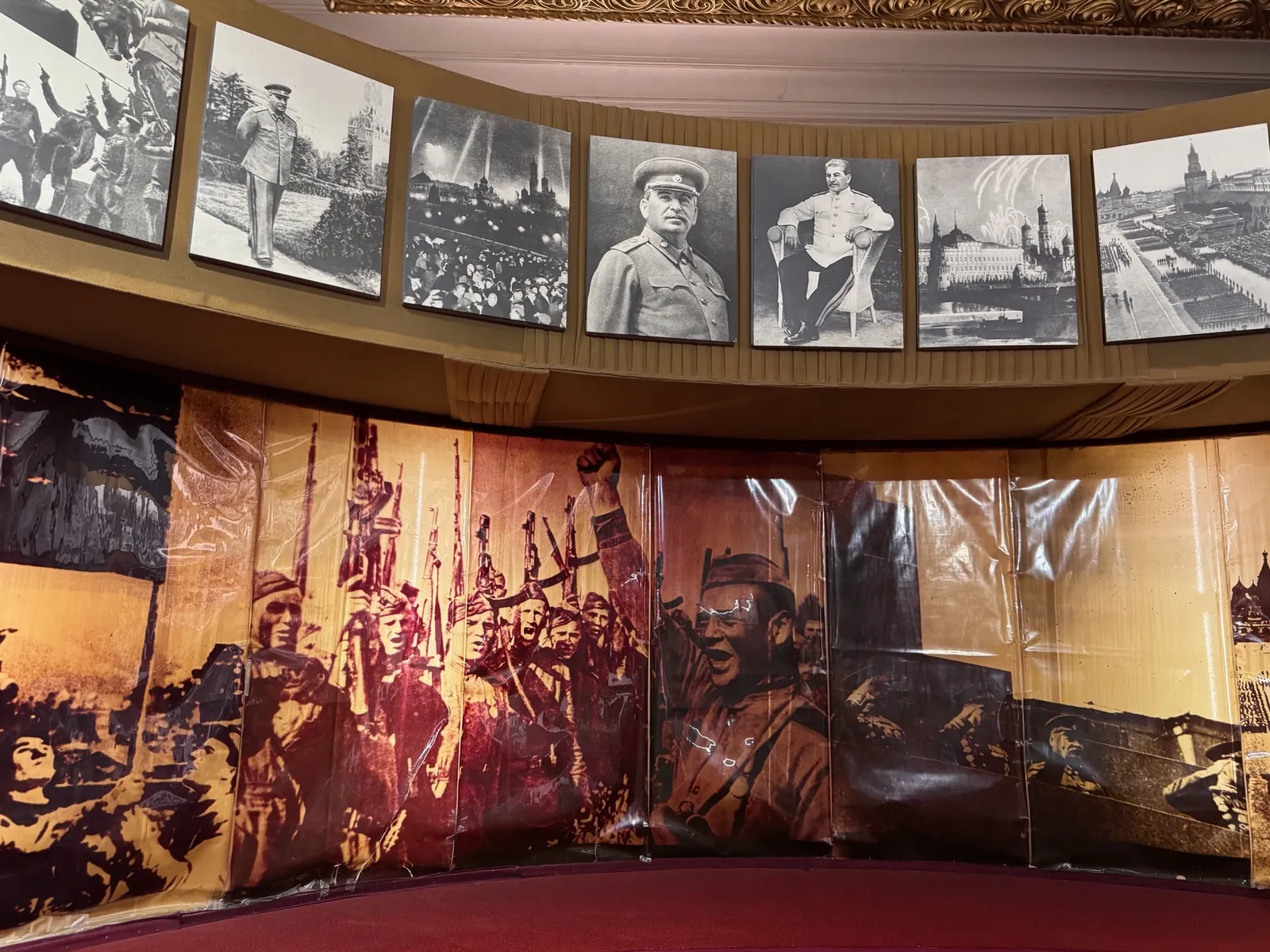
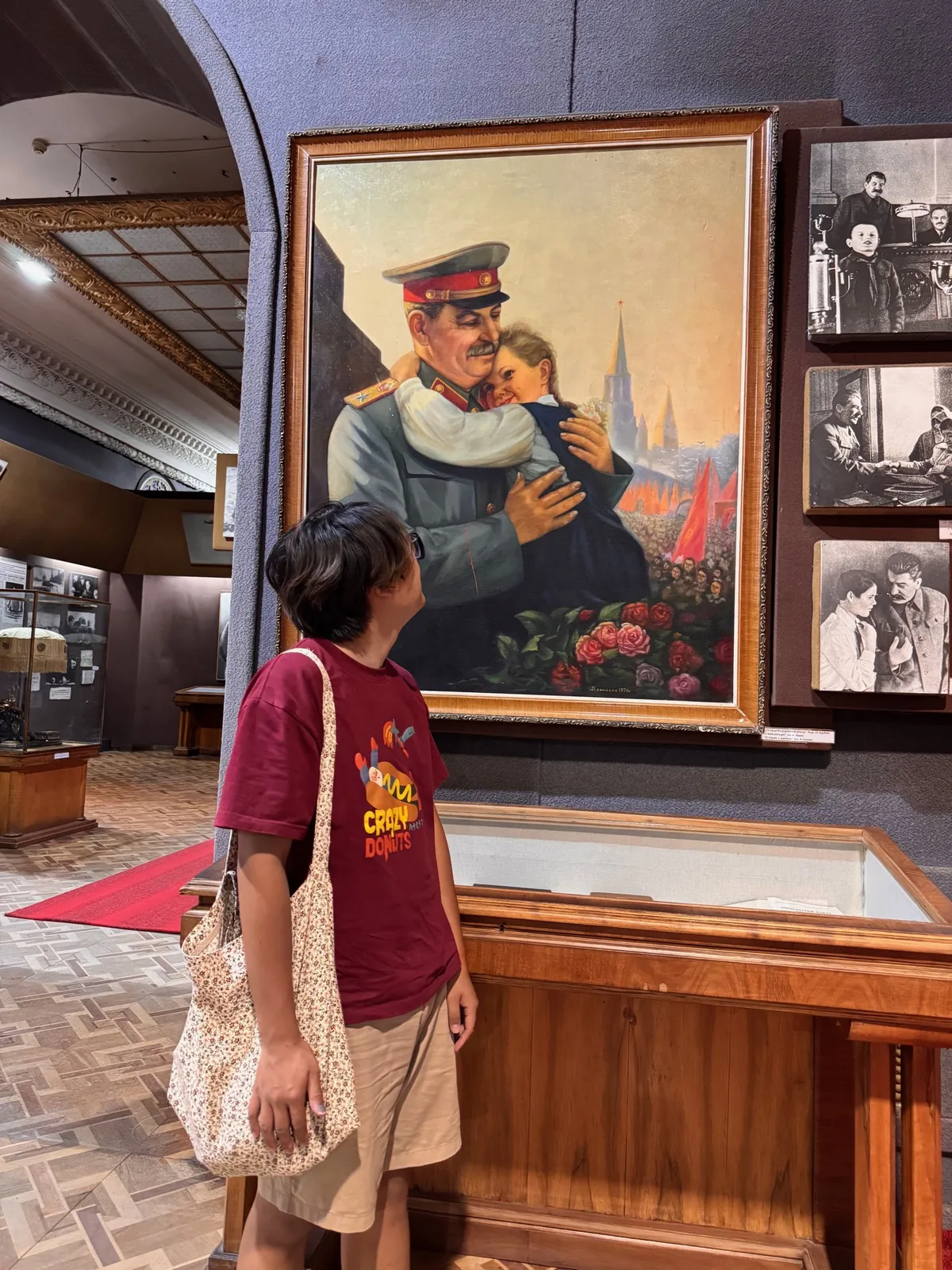
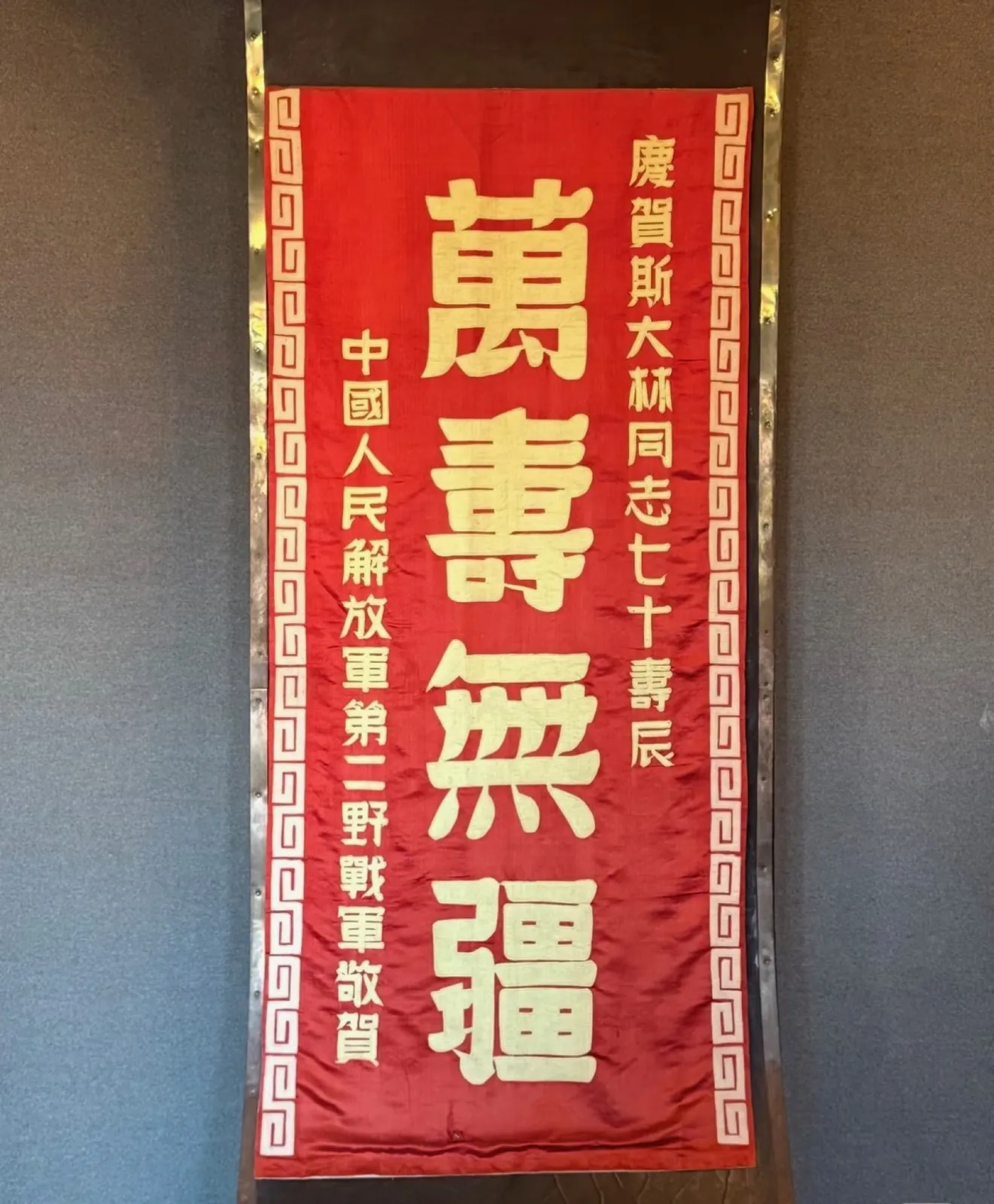
Leaving Gori, we drove to Didgori, whose formal name is the Didgori Battle Memorial .
On August 12, 1121, David IV (“the Builder”) led the Georgian army to a victory against the odds at Didgori, defeating the powerful Seljuk coalition — a “miraculous victory” that set Georgia on the path to its Golden Age. The memorial was built in the 1990s; on the hilltop, dozens of giant steel swords are driven into the earth, at once like crosses planted in the ground and a commemoration of the battle and its fallen.
On the road to Didgori there was also a stone tower — Saskhori Tower — with a ladder propped against it, which you had to climb to enter, but the ladder was so unsteady that after a few rungs I lost my nerve and didn’t dare go higher. Afterward I could only glimpse the view inside through photos others had shared on Google Maps.
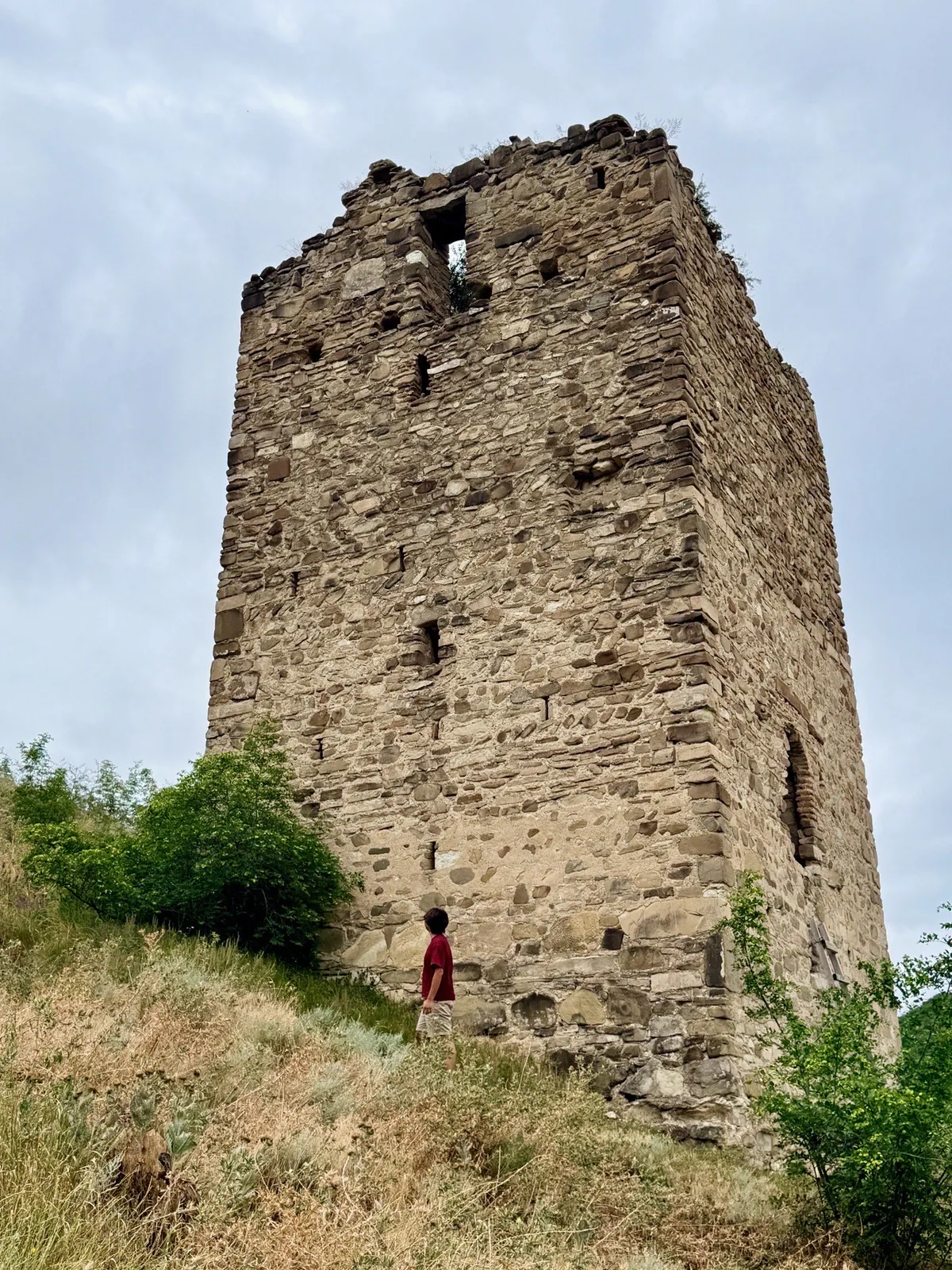
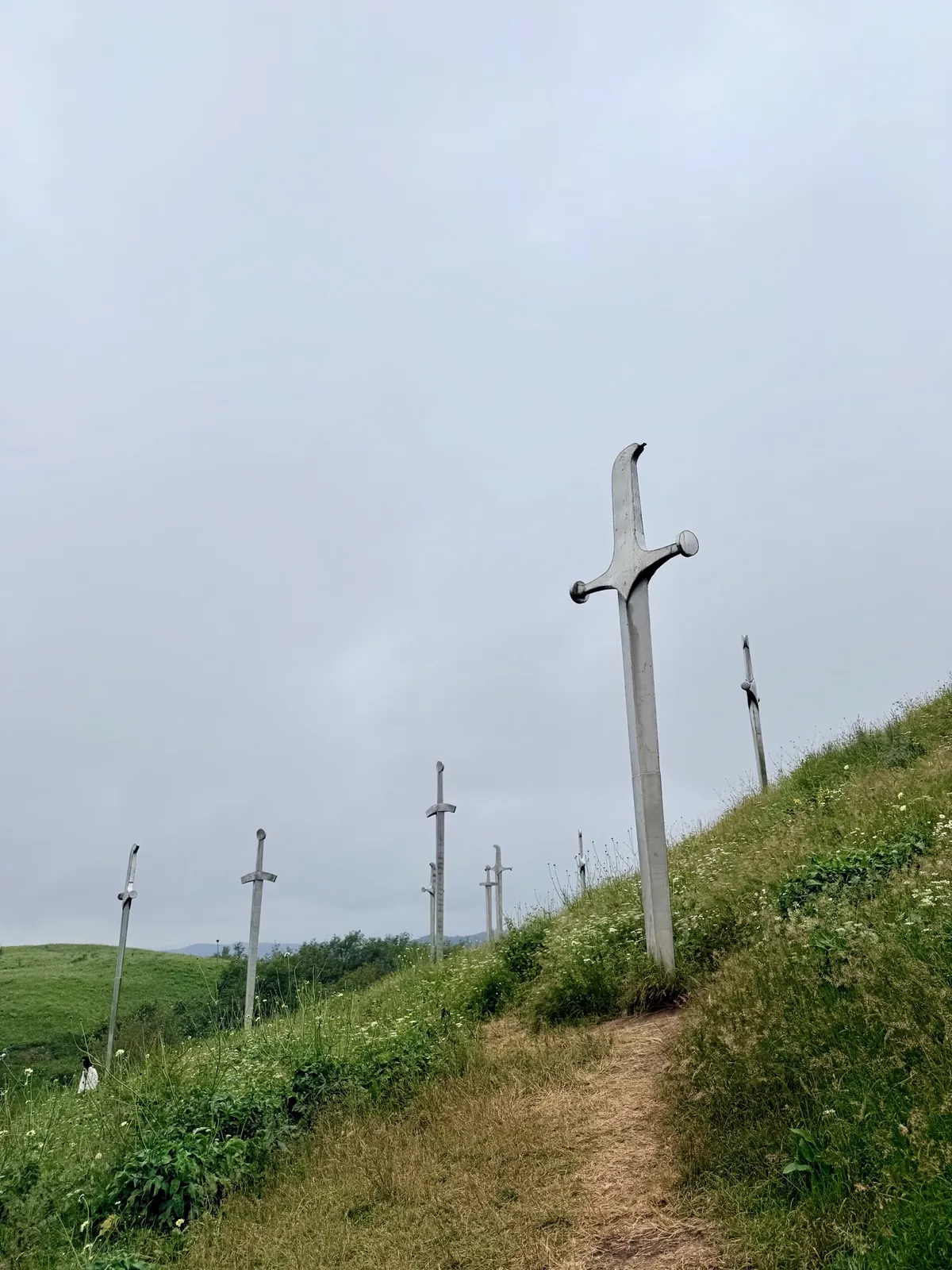
Then we checked into the seventh and last hotel of the trip, Old Gold Anteon . The hotel itself was fine; it’s just that the road at its entrance was narrow and hard to park on.
When returning the car, the staff found scratches on the back, and told us: although we’d bought full insurance, we hadn’t reported it to the police and contacted the rental company right when the incident happened, so that police, insurer, and rental company could handle it on-site, and therefore, per the contract, we still had to pay compensation; we couldn’t even say when or where the scratches had happened, only noticing them at return. The scratch cost 210 lari to compensate, plus 50 lari for a car wash; in the end they asked for 100 USD, and we found a friend working at a bank to change money, plus a 10-USD handling fee, for a total of 110 USD.
This made me appreciate the service of China’s CAR Inc. back home: as long as you buy the worry-free insurance, the staff won’t check for scratches at return, and you don’t have to pay a cent.
Throughout, the staff were professional, pointing us to the contract clause by clause. As a traveler, one should respect local laws and rules; at handover they’d made it clear too — it was I who didn’t understand and didn’t read the contract carefully, blithely assuming full insurance meant I needn’t worry about anything. Call it a lesson learned.
After handling all that, we went to an Indian restaurant, full of Indians and looking quite authentic.
Before we’d even finished eating, the rental company messaged us again via WhatsApp about another scratch, demanding further compensation. This baffled me — what kind of operation is this? I’d already left; how could you prove I caused it (before handover, I’d checked the car carefully and was sure it wasn’t us)? I told him plainly that this scratch wasn’t caused by us. If it really had been, you could charge me when you inspected the car, but you can’t chase after me for compensation afterward. Respect for rules and contracts should be mutual: the money was paid, the deal was done, and if it wasn’t caught then, that’s on them. The back-and-forth dragged on and wore me out, until I said I’d report the situation to the rental platform, at which point they finally admitted it was their own oversight and settled: they ended with a “Good luck,” and only then did I feel the matter was finally behind us.
After the storm, we went to 8000 Vintages and bought two bottles of white wine. After all, Georgia is the birthplace of wine — it would feel incomplete to end this trip without bringing a few bottles home. We wanted a few smaller bottles too, so we went to STIN WINE . Only one woman was there introducing the wines; we opened Doubao AI and asked it, over a video call, to help us pick a few. This woman was very patient and even let us taste each one. In the end we bought eight small bottles and one large, and she was very kind, taking a photo with us before we left. Carrying these Georgian wines, we drew our whole journey to a close.
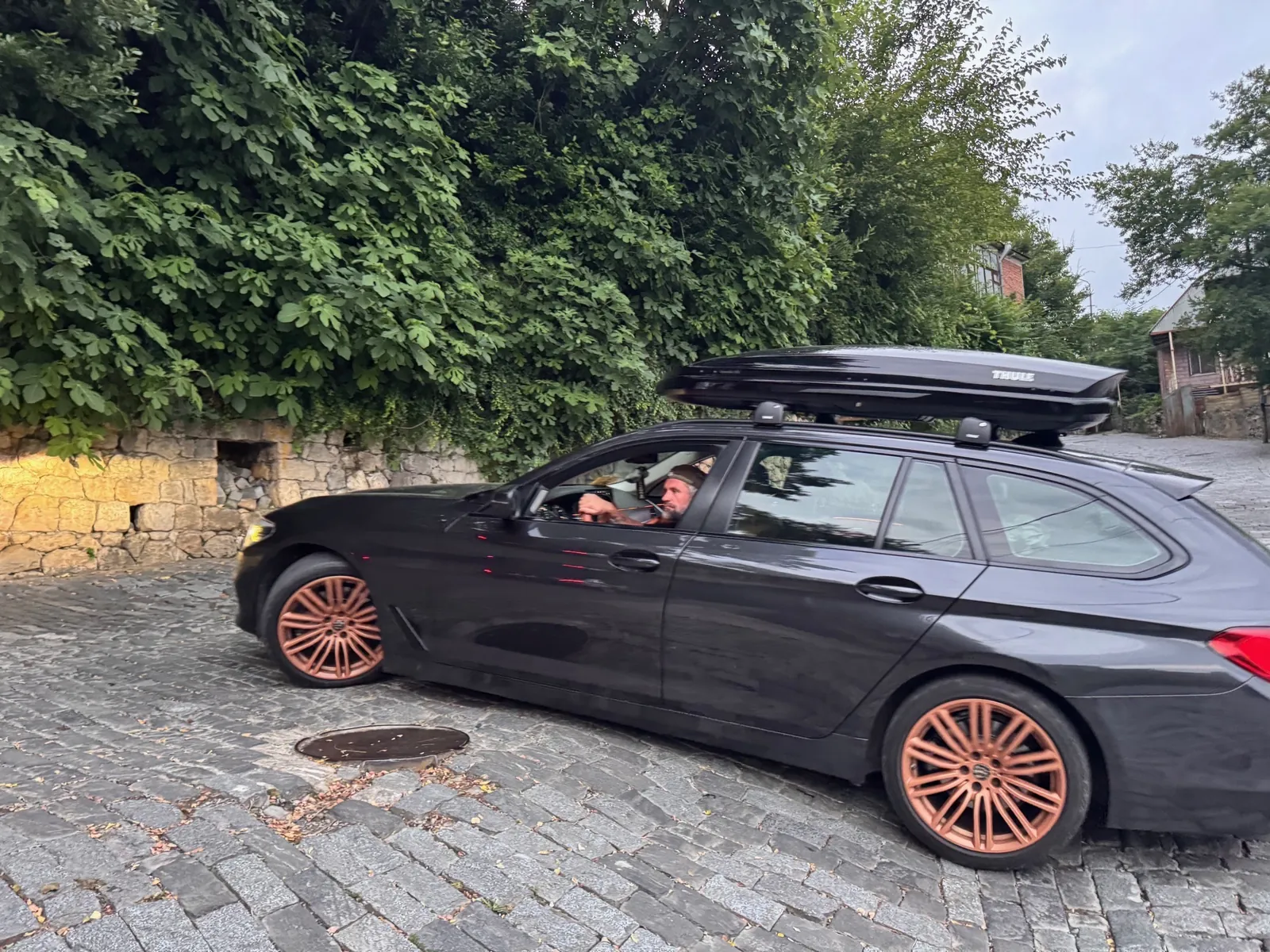
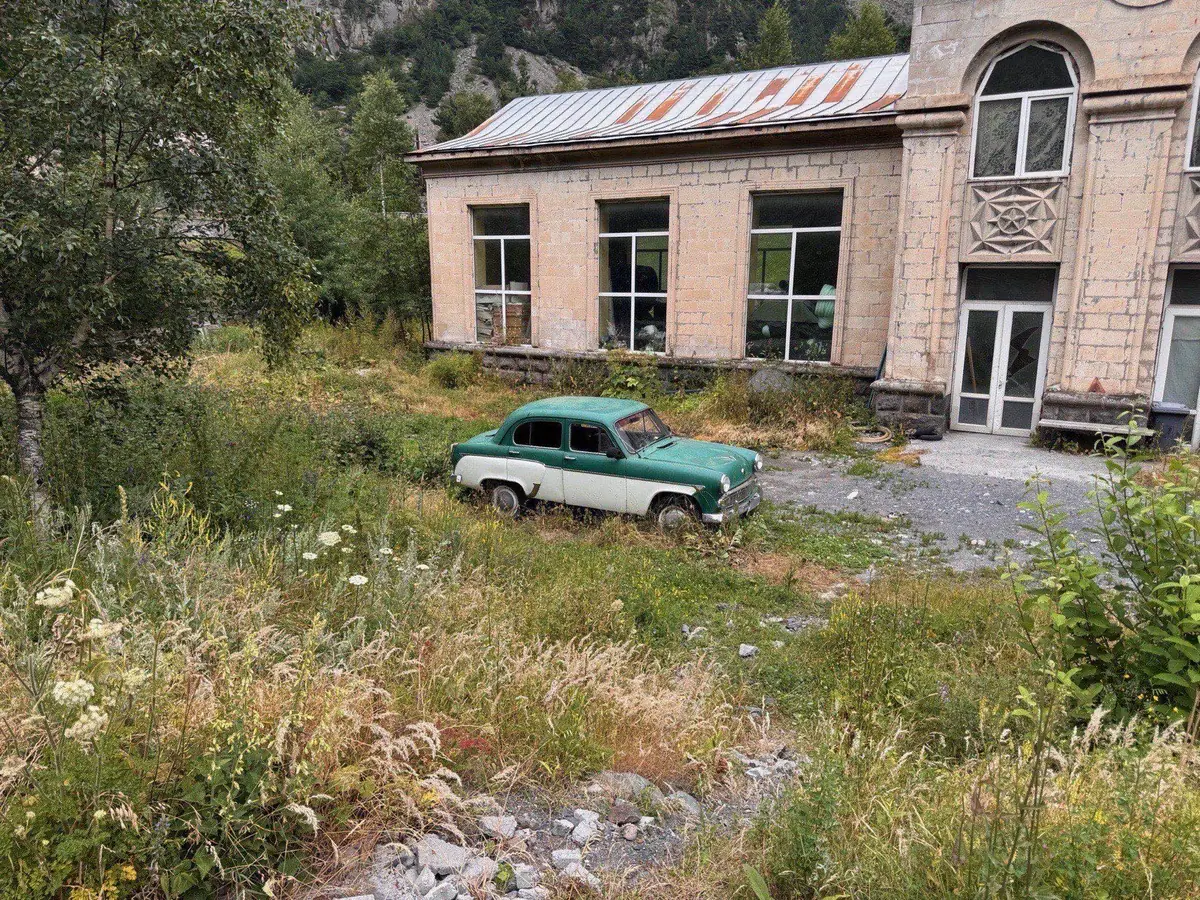
Wandering the city before and after the car return, I couldn’t help studying the cars here more. Georgia is a paradise for lovers of old cars; many of the vehicles are secondhand from Europe, which means that, unlike the streets full of brand-new electric cars in China, here you can see old cars of every brand and era, many of them quite interesting. As a wagon enthusiast, there were plenty of cars here that delighted me, like a BMW 5 Series Touring, a Golf Variant, and Soviet-made wagons.
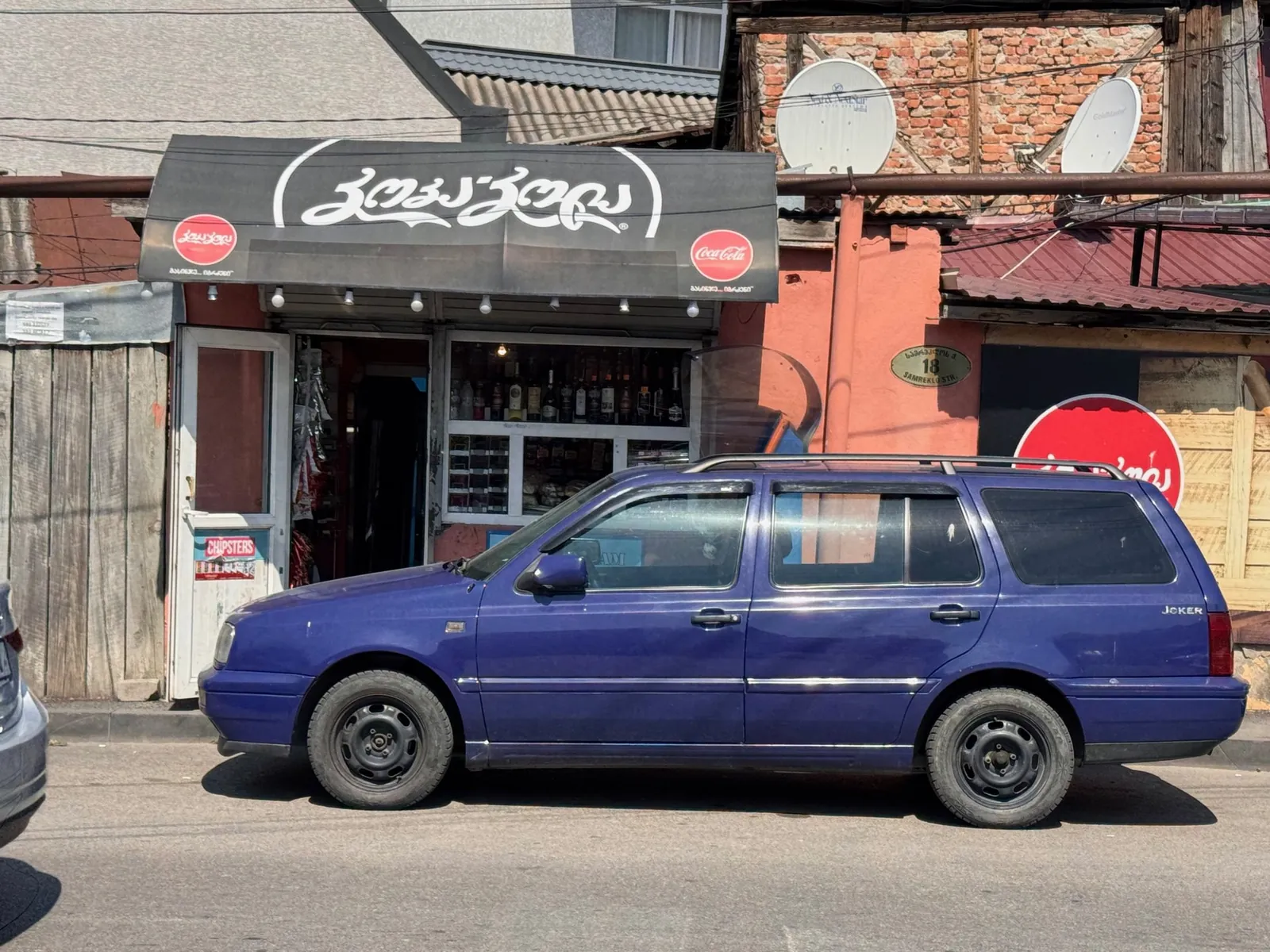
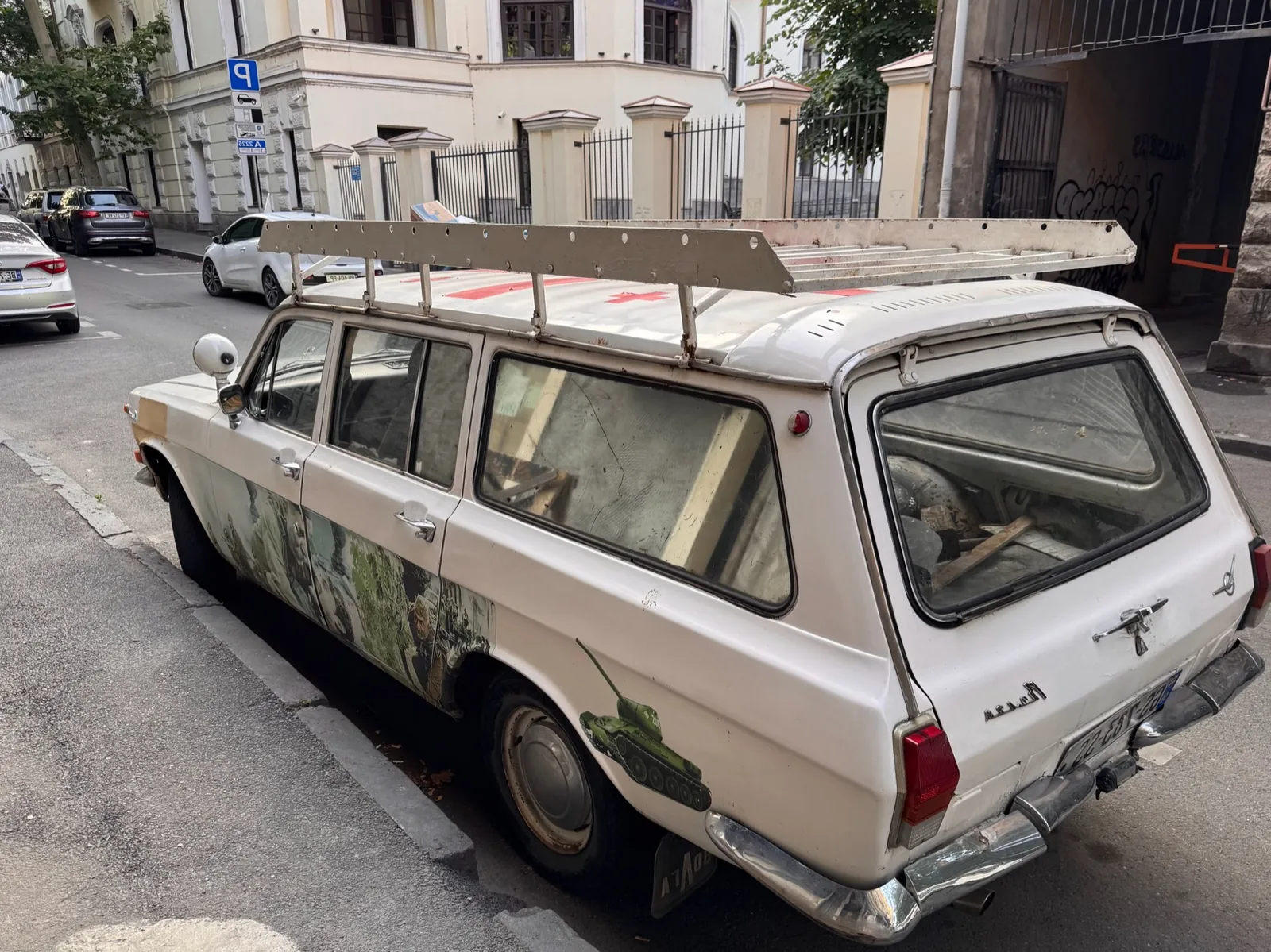
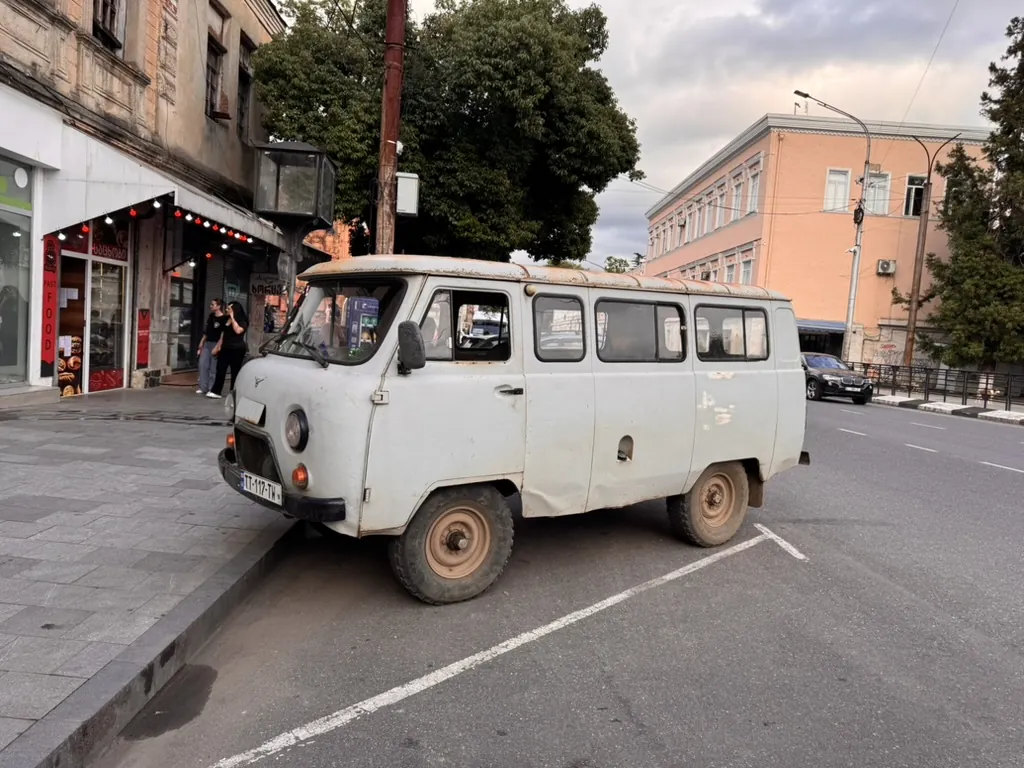
In summary, I think the cars here roughly fall into four categories: (1) Japanese cars: a very high proportion, including Mitsubishi, Honda, Toyota, and more — it seems Japanese cars are beloved worldwide for their stable mechanical quality; (2) German cars: mainly Mercedes, BMW, Volkswagen, and Opel, with fewer Audis. Although Audi, Mercedes, and BMW are lumped together as “BBA” in China, clearly in Georgia Audi is a tier below Mercedes and BMW. Local young people especially love BMW. (3) Other old cars: many cars whose badges I’d never seen, which I’d guess were made in the former Soviet Union, Russia, or Eastern Europe — a large proportion, and quite interesting. (4) Teslas: brand-new Teslas stand out conspicuously on the local streets, and I’d guess those who buy them count as well-off locally.
The next day — the day we flew home — we first grabbed a quick bite at a Subway near the hotel, then took a taxi to the airport. We flew from Tbilisi to Almaty, then transferred to Beijing. We landed at 5 a.m. and were home by 7; I didn’t even bother to shower, just collapsed into bed and slept straight through to noon.
Epilogue | Beyond Faith, Within the Journey
Over ten days, I walked into a newly built cathedral, a 14th-century hilltop church, and a monastery preserving saints’ relics, and saw crosses in a near-abandoned village. I still have no religious faith, and I can’t understand prayer, relics, and wishes from the inside as a believer does; but as an outsider, the devotion of the faithful, the sanctity of the rituals, and the quiet power of these places are no longer just exotic images in a photograph. I still stand outside faith, and yet it moved me all the same; toward a devotion I can never quite enter, I am left with a long, quiet respect.
Before I set out, that snow-peak church was just a photo that drew me in; after coming back, I remember the church in shadow, the snow peaks lit by sun, the relics carried up the mountain in times of war, and I remember the dogs, the strangers, and the roads. Faith was a very important part of this trip, but not the whole of it.
To be honest, as I settled into the seat on the flight home, all I wanted was to get back quickly. The country isn’t as comfortable as I’d imagined: the car-return ordeal had worn me down, and I only wanted to be gone, half-dreading another WhatsApp message from them; add to that food that seldom suited us and the fatigue of the road, and it was never as effortless as travelling in Japan, where the days slip by easily. Whenever the language failed, every exchange with a local asked a small steeling of the nerves — not knowing quite what response I’d meet. These, too, are the honest side of the road, and I don’t want to leave them out.
Yet once the dust had settled and I looked back over the ten days, what I found I couldn’t let go of were the alpine meadows of the Caucasus — scenery so beautiful it hardly seemed real. If you ask me, hiking is the very heart of this trip; come to Georgia, and do not miss the chance to measure these mountains on foot. Beyond that — and this is pure personal fondness — I loved the Soviet traces the country has kept: the buildings, the old cars, the air of another era. The Soviet Union was once closely bound up with my own country; the stories we heard as children, the texts we read, the culture we absorbed all carry its shadow, and to stand among these remnants stirred a strange familiarity. And the wine — I’m no drinker, yet tasting what this land distills from an eight-thousand-year winemaking tradition, that richness, and how no two pours were alike, won me over completely.
So looking back, the journey was hardly a smooth one: dangerous enough, thrilling enough, and tiring enough — and for exactly that reason, all the more unforgettable. It wasn’t effortless the way a trip to Japan or Vietnam can be, yet it let me see, firsthand, how wide and varied this world really is. It was, I still think, a most precious and unforgettable journey.